

No promotions, just belief: Jithu Satheesan Mangalathu on Sambhavam Adhyayam Onnu’s slow success

Mail This Article


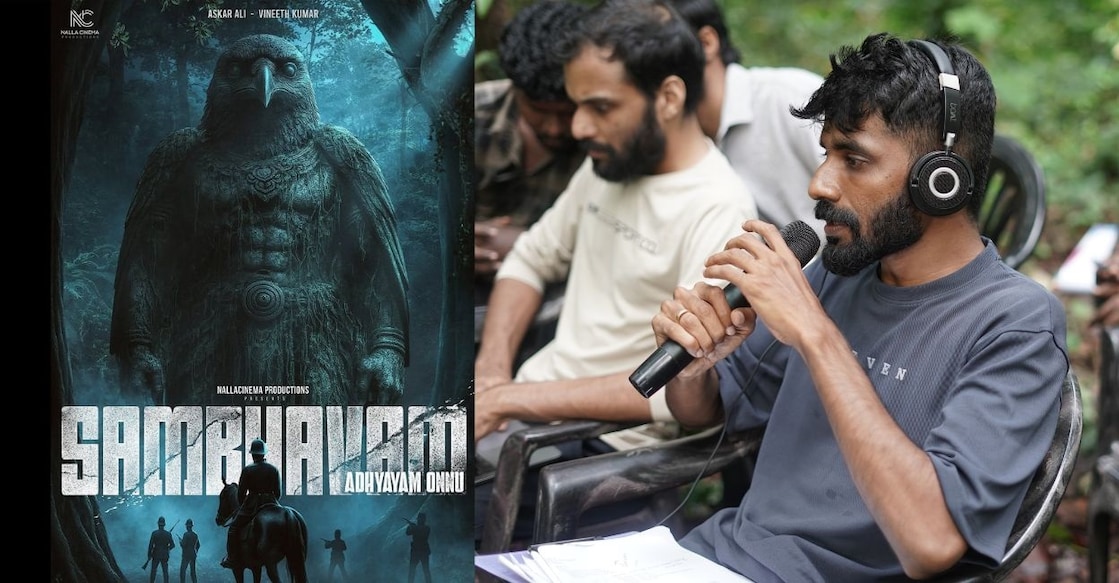
When Sambhavam Adhyayam Onnu hit theatres, it didn’t arrive with noise. No aggressive promotions, no overhyped campaigns. For a film attempting a genre Malayalam cinema has rarely explored, a mix of time loop, fantasy, and horror, that almost felt like a gamble. But days after its release, something interesting began to happen. Conversations picked up. Viewers who watched it started recommending it. Slowly, steadily, the film found its audience.
At the centre of this unexpected momentum is 32-year-old filmmaker Jithu Satheesan Mangalathu, a director who seems to have trusted his material enough to let it find its own space.
“I like films and series in this genre, like Dark or Christopher Nolan’s movies,” Jithu says. “So I thought, why not try something like this in Malayalam?”
Time-loop narratives are not new to global cinema. They have been explored, refined, and popularised across industries. But in Malayalam cinema, they remain largely untapped. That is what makes Sambhavam Adhyayam Onnu stand out.
Set in a dense forest along the Kerala–Tamil Nadu border, the film follows a police officer, Anand (played by Askar Ali), investigating a series of disappearances. The terrain is eerie, almost sentient. People who enter rarely return. And somewhere within this haunted woodland lies a loop that traps time itself.
For audiences used to more linear storytelling, the film offers something different — and, as word of mouth suggests, something engaging enough to hold attention till the very end.
Letting the film speak
In an industry where pre-release buzz often dictates opening numbers, Jithu and his team took a different route.
“We barely did any promotions before release,” he says. “We wanted the content to speak for itself.”
It’s a strategy that could have easily backfired. Instead, it seems to have worked in the film’s favour. The initial response may have been modest, but as viewers began discovering the film, positive word of mouth helped it gain traction.

Jithu admits they expected this — at least to an extent. “We thought it would take a few days for the film to get picked up. But in a way, it’s also luck that people resonated with it quickly.”
The origins of Sambhavam trace back to a short film of the same name. Jithu had originally made it as a portfolio piece, but it went on to receive encouraging responses.
“The interval portion of the movie is actually the climax of the short film,” he explains. “The same actors from the short film are part of the movie as well.”
That continuity gives the feature a certain rawness and authenticity. It also reflects Jithu’s journey — from experimenting with ideas in short formats to expanding them into a full-length narrative.
It was this short film that eventually led to the feature. The producer, impressed by the concept, approached Jithu, and after discussing multiple ideas, they decided to build on Sambhavam.
A post-pandemic shift in audiences
Jithu believes timing played a crucial role in the film’s reception. According to him, audiences today are far more open to unconventional storytelling.
“Post-Covid, people have been exposed to a lot of world cinema, especially in this genre,” he says. “So I felt there is a wide audience here that would watch such films.”
Streaming platforms have undoubtedly expanded viewing habits, introducing audiences to complex narratives and non-linear storytelling. Sambhavam Adhyayam Onnu taps into that shift, offering something that feels both familiar in concept and fresh in execution within a Malayalam context.
Built on instinct, shot on speed
The film was shot in just over a month, a relatively short schedule for a concept-heavy project. It also features several first-time actors, many of whom were part of the original short film.
For a genre that depends heavily on mood and immersion, this could have been a limitation. Instead, it seems to have contributed to the film’s grounded feel.
Jithu’s focus, however, was clear — the experience.
“This was always meant for a theatrical release,” he says. “Sound is very important for the film. Only in theatres can people fully experience it. On OTT, you don’t know how people are watching it.”
What next?
With the film now gaining attention, the obvious question is: what comes next?
Jithu hints at the possibility of a sequel. “I’m still in the writing stage, figuring out which direction the story should take,” he says.
Given the film’s premise, the scope for expansion is wide. Time-loop narratives thrive on layering, and Sambhavam seems to have only scratched the surface.
 Add as a preferred source on Google