
Kerala's millennial MLAs say campaign became ‘handbook’ for people-centric governance

Mail This Article


Though the election campaign lasted less than a month, the millennials elected to the Kerala Assembly this time say the brief period was enough to shape their roadmap for the next five years. For them, the campaign itself became a 'handbook' for the responsibilities ahead, and politics today is no longer defined by age, seniority, or the number of positions held, but by how closely one connects with people, understands their concerns, and responds to them effectively.
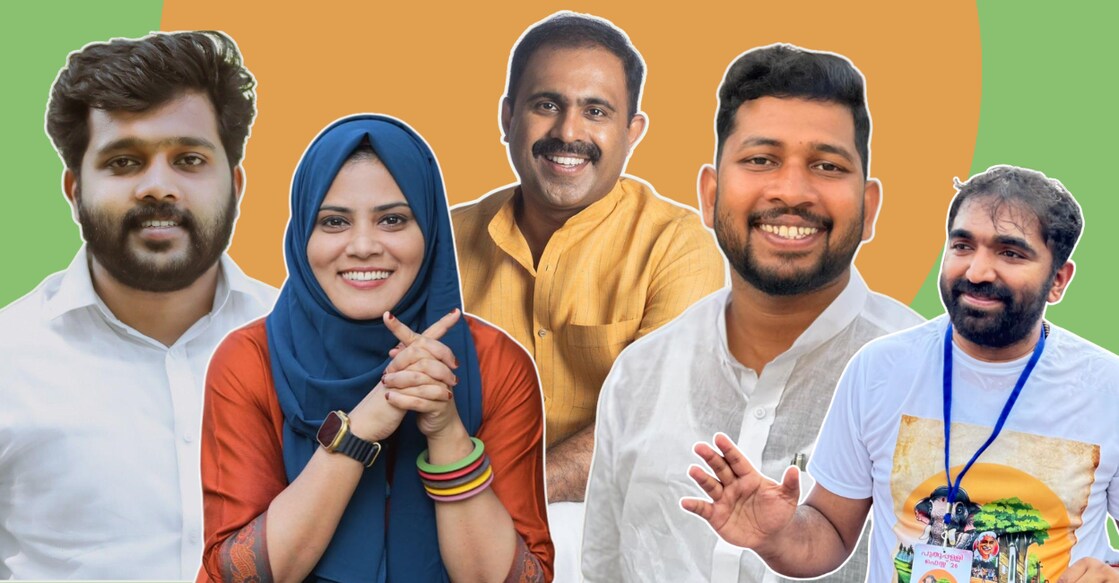
Most of the young representatives elected this time are first-timers, many of whom defeated veteran leaders, sitting legislators and even ministers. They rose through student politics and youth-front activities, and view their victories less as personal achievements and more as a responsibility entrusted to them by the people and political fronts. Around 15 MLAs in the new Assembly are between the ages of 30 and 40.
Thirty-year-old AD Thomas, the youngest MLA in the 16th Kerala Assembly, who defeated senior CPM leader and sitting MLA PP Chitharanjan in Alappuzha, says his ordinary background of fishing community helped him connect easily with his locality. “I was only familiar with campus elections before, but understanding people’s lives helped me during the Assembly campaign,” Thomas, who is also the KSU district president and president of the Chethy Fisheries Development Welfare Cooperative Society, notes.
Fathima Thahiliya, 34, the first-ever woman MLA of the Indian Union Muslim League (IUML), who won from Perambra defeating LDF state convenor and sitting MLA TP Ramakrishnan, says communication and people-centric politics played a major role in her victory. “The most important thing is to stay connected with people and make them feel it. We are millennials, and communication has become much easier because of social media and technology,” she adds.
VT Sooraj, 30, who defeated sitting MLA Sachin Dev in Balusseri, also reiterates that politics is about understanding ordinary lives. “What I learned through college politics and campaigns was enough to understand people’s struggles. Politics is about the ability to see life through the eyes of common people,” says the first-time MLA.
Meanwhile, Abin Varkey, 36, another first-time legislator who defeated Health Minister Veena George in Aranmula, notes that the role of an MLA goes beyond party politics. “So far, we were mostly associated with party workers and organisational activities. Now that has to change,” he says. “It is no longer about only those who voted for me, but about every individual in the constituency, irrespective of political affiliation,” adds the Indian Youth Congress state general secretary.
The young leaders also point to strong anti-incumbency against the Left government as a major factor behind the UDF’s gains. For Thomas, public resentment against the 'arrogance' of the government was reflected in the results. He had gained statewide attention during the Nava Kerala Yatra after staging a protest in front of the Chief Minister’s convoy. Visuals of him being assaulted by the CM’s gunman triggered widespread reactions.
According to Thahiliya, voters today want accessible representatives who stand with them and earn their trust, rather than intimidate them. “I was able to overcome communal narratives and controversies by maintaining direct contact with the people of Perambra, and they gave me their trust,” she notes, adding that many felt betrayed by the previous government, and that sentiment was reflected in the results.
The young legislators also stressed the need for youth-oriented development, particularly in education, employment, and entrepreneurship, in a modern and inclusive way. According to Sooraj, the present era itself is shaped by Gen Z aspirations and expectations. “The world has changed rapidly. Decisions today are increasingly influenced by younger generations. Governance too must adapt to these changes and help reduce youth migration,” he says.
Chandy Oommen, 40, who won a second term from Puthuppally, also highlights issues such as unemployment, the drug menace and the need for an IT park in Kottayam. “People are tired of aggressive politics. They want representatives who are simple, accessible, and approachable,” he says.

However, grassroots development remains a common priority among them. Thomas spoke about drinking water scarcity and harbour-related issues in Mannanchery, while Sooraj highlighted the struggles of tribal hamlets lacking basic amenities. Thahiliya said access to drinking water and housing remained major concerns for many families. Meanwhile, Abin Varkey said he hopes to tap the tourism potential of his constituency. “I believe Aranmula has the potential to emerge as one of Asia’s biggest cultural centres,” he says.
For these young leaders, electoral victory ultimately means greater accountability. “If people choose us over senior leaders and ministers, it is not just happiness; it is a huge responsibility,” adds Abin Varkey.
 Add as a preferred source on Google