

Inside Attukal Pongala, the world’s largest ritual kitchen
Mail This Article


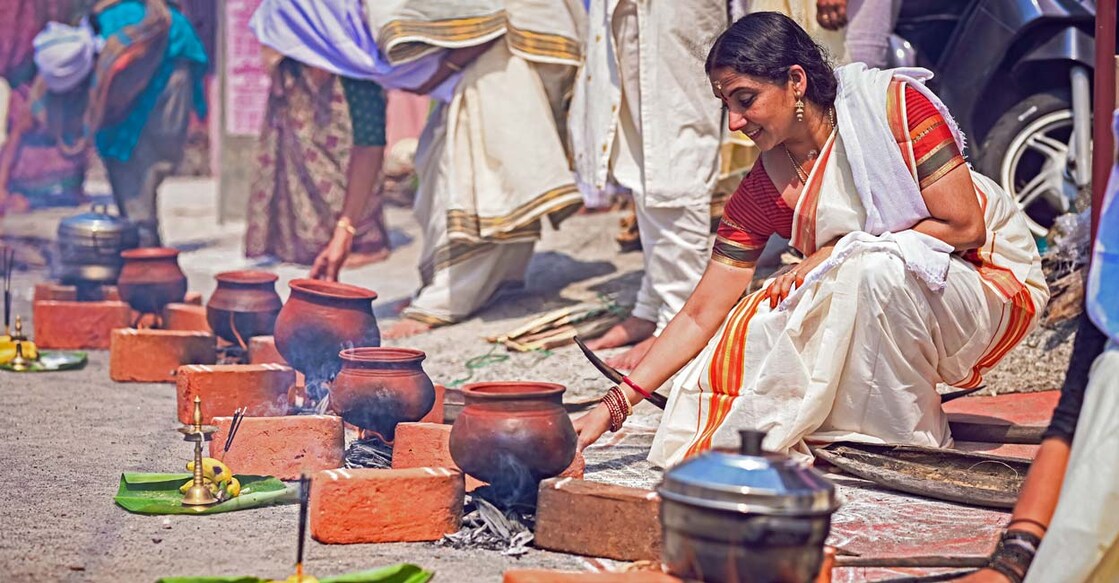
By mid-morning, vast stretches of Thiruvananthapuram are lined with clay pots set over brick hearths, each one simmering with rice, jaggery and coconut. At Attukal Pongala, cooking is not confined to a temple kitchen. It spills into streets and courtyards, as lakhs of women prepare sacred offerings in what becomes the world’s largest ritual kitchen.
As the 10 day festival at the revered Attukal Bhagavathy Temple reaches its most significant day, streets across Thiruvananthapuram will be lined with clay pots set over brick hearths. What unfolds is not simply a ritual but a carefully orchestrated act of community cooking rooted in devotion.
Held on the Pooram day in the Malayalam month of Kumbham, Attukal Pongala is centred on the preparation of sweet offerings for the goddess. Under the sharp March sun, devotees patiently stir rice and jaggery as smoke rises from thousands of fires lit at the same moment.

The ritual begins long before the flame
Preparations start weeks ahead. Earthen pots are bought in advance and stored carefully. Though bronze and steel vessels are sometimes used, clay remains the preferred choice. Temporary stoves are built on the ground using bricks, and dried coconut palm leaves fuel the fire. Devotees who have taken vows to offer 101 pongalas arrange that many small pots in precise rows.
The observance includes dietary discipline. Traditionally, those undertaking the vratham eat one simple rice meal a day and rely on fruits if hungry. Fish, meat and intoxicants are avoided. On Pongala day, a new pot is placed on a freshly prepared hearth. Before lighting the fire, a traditional lamp and a measure filled with grain are set before the stove, and holy water is sprinkled to purify the space.
Devotees do not eat until the pongala boils over and the offering is complete. Many now gently break their fast with tender coconut water, milk or fruit once the nivedyam is ready, and later partake of the prasadam.
What fills the Pongala pot
Rice, jaggery, coconut and banana form the core of most offerings. Markets across the city are busy with shoppers selecting unakkalari, coconuts, small bananas, ghee, rock sugar, raisins, green gram, cashews and sesame seeds. Though ready made pongala kits are available, many devotees prefer to choose each ingredient themselves.
Sharkkara pongala, made with jaggery, coconut and cardamom, is offered for prosperity. Vella pongala or pongala payasam, prepared with raw rice, milk, banana and rock sugar, is often made as a nercha offering in gratitude for a fulfilled wish. Vellachoru, a simple white porridge with rice, coconut and banana, is another common preparation.
Pongala payasam: The signature offering
Pongala payasam is among the most significant dishes prepared on this day. Water is brought to a boil in a clay pot before raw rice, ideally chamba pachari, is added. Once the rice is nearly cooked, jaggery is stirred in. As the mixture thickens, freshly grated coconut is added, followed by cardamom powder, raisins and ghee. The slow cooking over wood fire gives the payasam a depth and smokiness that define its character.
Some devotees prepare pongala in 100 or even 1,000 pots as part of a vow, lining them up in a striking display of devotion.
Therali appam for fulfilment of wishes
Therali appam is believed to be one of the goddess’s favourite offerings and holds a special place in the Pongala spread. Rice flour is mixed with melted jaggery, banana and cardamom, then shaped and wrapped in fragrant Therali leaves (also known as Vazhana leaves, from the Cinnamomum malabatrum or Malabar Plum tree). The parcels are folded neatly, sometimes even strung together like a garland, and steamed in idli vessels until firm and aromatic. The leaf lends a delicate flavour that sets it apart from other temple sweets.
Beyond its taste and aroma, therali is associated with fulfilment of wishes. Devotees believe that offering it with sincerity helps in achieving desired goals and ensuring success in important endeavours.
Mandaputtu to ward off headaches
Mandaputtu is prepared as a vow seeking relief from head and hair related ailments, particularly persistent headaches. Made with roasted and powdered green gram, rice flour, jaggery, coconut and cardamom, the mixture is shaped by hand into large balls. Women often mark simple eyes and a nose on the surface, giving the offering a symbolic head shape.
The dumplings are then steamed for about twenty minutes. It is a deeply personal preparation, each one shaped with intent.
Vella payasam: For special wishes
For specific wishes, devotees prepare vella payasam using chamba raw rice and coconut. Rice is cooked in boiling water until nearly done, then coconut is added. A spoon of ghee may be stirred in before the mixture is allowed to thicken and rest. Its simplicity is its strength.
A city that cooks together
In the days leading up to Pongala, shops across Thiruvananthapuram stock clay pots, firewood and ingredients, often offering festival discounts. Around the temple and within a wide radius, temporary stalls spring up to serve the surge of devotees.
Attukal Pongala is a ritual, but it is also a remarkable culinary moment. Thousands of women cook the same core ingredients in countless individual pots, each one reflecting a personal prayer. In the rising steam and scent of jaggery, the city becomes a shared kitchen, bound by faith and flavour.
 Add as a preferred source on Google