

Why is Pesaha appam called INRI appam? The story behind the name
Mail This Article


For Kerala’s Christian households, Maundy Thursday is as much about faith as it is about gathering. The day is marked by the making of unleavened bread and a sweet coconut milk preparation, a ritual that fills homes with the warm scent of rice and jaggery and, more importantly, brings generations to the same table.
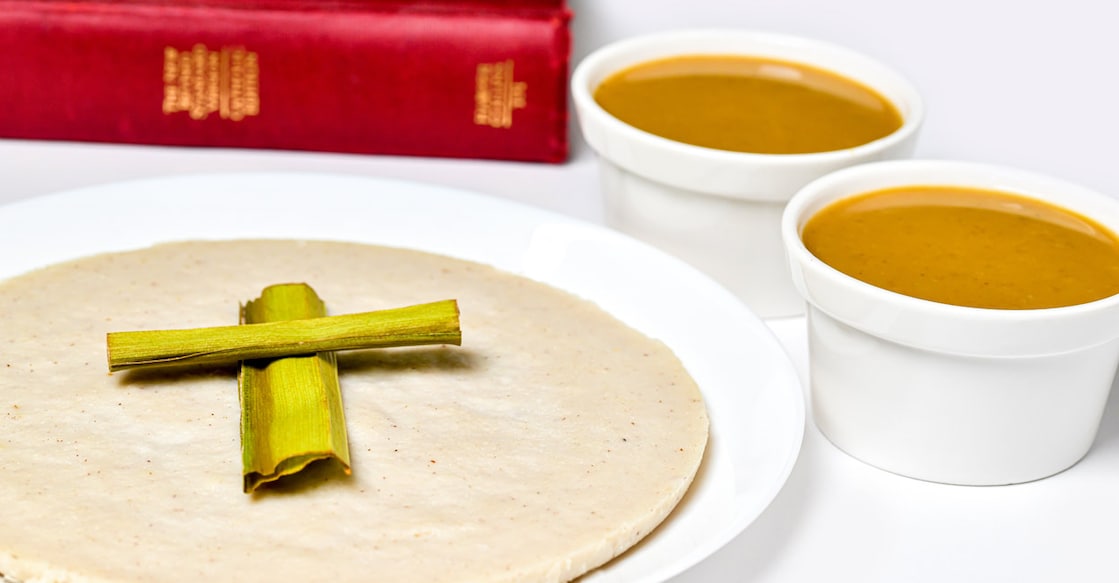
The preparations begin after morning prayers. The head of the family breaks open the coconut that will go into the meal, setting the tone for what follows. Small crosses made from palm leaves blessed on Palm Sunday are placed over the batter before it is steamed. In many homes, a separate pot and ladle are kept aside through the year just for making Pesaha paal, a detail that shows how deeply the ritual is held.
By evening, families gather. The eldest member leads a short prayer, then cuts the appam, dips it in the paal and serves it to everyone, starting with the oldest. Children listen as elders recount the story of the Last Supper and the crucifixion of Jesus Christ, passing down both history and belief along with the food. Those living away often make it a point to return home for this meal. As many say, Pesaha is less about ritual alone and more about coming together and sharing.
Why it is called ‘INRI appam’
The term “INRI” comes from the Latin inscription said to have been placed on the cross of Jesus Christ. It stands for Iesus Nazarenus Rex Iudaeorum, which translates to “Jesus of Nazareth, King of the Jews”. In church teachings, this inscription is closely tied to the crucifixion, a moment that Pesaha remembers through prayer, storytelling and food.
Over time, that inscription found its way into the kitchen. The unleavened bread prepared on this day came to be called INRI appam, linking the act of cooking directly to the story of the cross. In many homes, this connection is made visible too. The cross made from palm leaves placed over the batter before it is steamed marks the appam with the same symbolism.
This is also why the appam is made without fermentation. Tradition traces it back to the Biblical story of the Israelites fleeing Egypt under the leadership of Moses. According to the narrative, they were asked to leave in haste and were instructed not to wait for the dough to rise. They carried unleavened bread with them as they journeyed across the Red Sea to safety. Preparing this appam on Pesaha is seen as a remembrance of that passage, linking the ritual not just to the crucifixion, but to an older story of deliverance and faith.

In many homes, this appam is prepared only once a year, strictly on Pesaha Thursday. It is often made slightly thick, sometimes poured over a piece of wilted banana leaf before steaming, which lends a faint aroma. The first appam alone is marked with a cross, while the rest may be left plain. It is this first appam that is cut and shared during the family prayer at night.
There are small variations in technique too. Some prefer wrapping portions of batter in banana leaves to make thinner appams. Traditionally, the batter is rested for a short while to reach the soft, pourable consistency of idli batter. The flavour comes from a simple combination of coconut, cumin and garlic, giving the appam its distinct character.
Pesaha appam (Indri appam)
Ingredients
1 cup urad dal
3 cups roasted rice flour (idiyappam or pathiri flour)
1½ cups grated coconut
7 shallots
4 cloves garlic
1½ tsp cumin seeds
Salt as required
Preparation
Soak the urad dal for about two hours and grind it to a smooth batter, similar to idli batter
Grind coconut, shallots, garlic and cumin with a little water into a coarse paste
In a large bowl, combine the rice flour with this coconut mixture
Add the ground urad batter, salt and enough water to make a pourable batter
Grease a vessel and pour the batter in a slightly thick layer
Place a small cross made of palm leaves on top
Steam for about 15 minutes
Once cooled, remove from the vessel and cut into pieces.
Pesaha paal
Ingredients
1½ cups powdered jaggery
3 cups second extract of coconut milk
4 tbsp roasted rice flour
½ tsp each cardamom, cumin and dry ginger powder
½ cup first extract of coconut milk
Preparation
Melt the jaggery with a little water and strain
Add the second coconut milk and bring it to a boil
Mix the rice flour with a little water to avoid lumps and stir it into the boiling mixture to thicken
Add the spice powders and let it simmer
Finally, pour in the first extract of coconut milk, mix well and take off the heat.
The appam is broken, dipped into the paal and eaten slowly.
Traditionally, the appam keeps only for a few hours, usually until the next day afternoon. Made prayerfully just once a year, it is often shared with neighbours too, quietly reflecting a larger idea of community and harmony that goes beyond the ritual itself.
 Add as a preferred source on Google