

Munch chocolates, chicken prasadam and kashayam: Kerala’s most unusual temple offerings
Mail This Article


The “mixture and sambharam” temple in Mohiniyattam may be fictional, but the joke lands so well because Kerala already has a long list of temples with unusual offerings and prasadam traditions. In a state where devotion often carries a strong local flavour, it is not uncommon to find temples associated with chocolates, herbal drinks, books or even rituals connected to regional food habits.
That is what makes Kerala’s temple culture so fascinating. Alongside centuries-old customs and rituals, many places have traditions that grew quietly through local stories, personal faith and community practices. Over time, these offerings became part of the temple’s identity, turning ordinary everyday things into something devotees now consider deeply meaningful.
Here are some Kerala temples where the offerings are every bit as memorable as the stories behind them.
The Alappuzha temple where Munch chocolates became vazhipadu
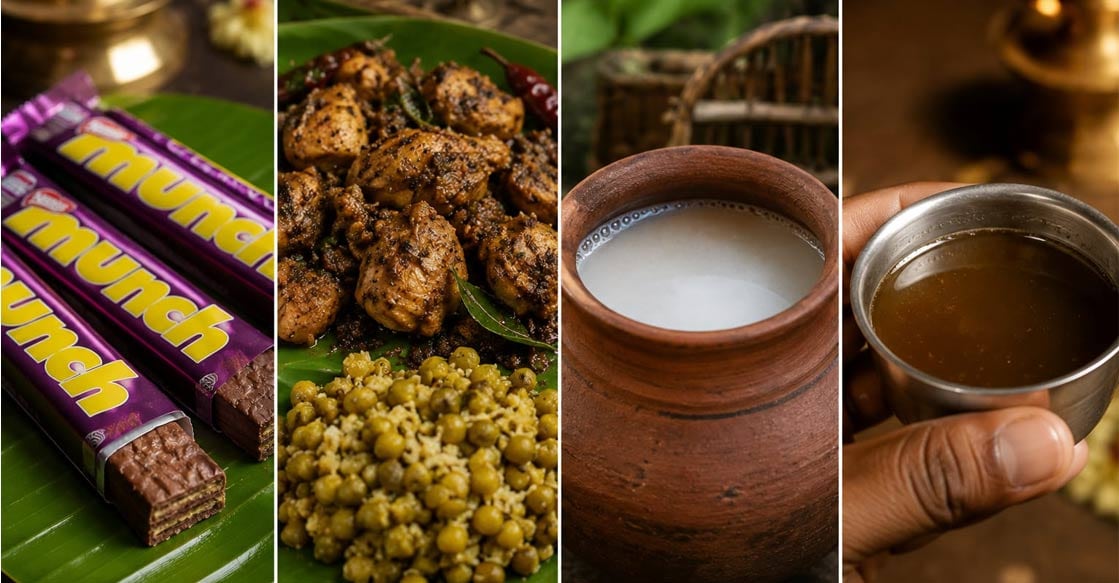
The Chemmoth Sree Subramaniya Swami Temple at Thalavady in Alappuzha is today widely known as the “Munch Murugan” temple, thanks to one of Kerala’s most unusual prasadam traditions. Instead of arriving with coconuts or jaggery, many devotees here come carrying packets and boxes of Nestlé Munch chocolate bars for Lord Balamurugan.
Locals say the custom began years ago through a young boy who frequently visited the temple. One version of the story says the child fell ill after innocently ringing the temple bell and later insisted on offering only a Munch chocolate to the deity while praying for recovery. Another commonly repeated version links the offering to students praying for good exam results. Either way, devotees believe the child’s wish was fulfilled, and slowly other children began repeating the same offering. The practice spread quietly through the village before becoming part of the temple’s identity. Parents started bringing chocolates while praying for their children’s health, studies and happiness. Students began visiting before exams carrying Munch packets in hand. Today, the sight of chocolate cartons stacked among traditional offerings is common at the temple.
The temple itself is dedicated to Balamurugan, worshipped here in a child form. Locals often connect the chocolate tradition to this imagery, joking that if children love chocolates, perhaps “kunju Murugan” would too. The same chocolates offered by devotees are distributed back as prasadam, making it one of Kerala’s sweetest temple customs in the most literal sense.
The Kannur temple known for chicken prasadam
Madayi Kavu, or Thiruvar Kadu Bhagavathi Temple in Kannur, is one of Kerala’s oldest Bhagavathi temples and is closely tied to the folk traditions of North Malabar. Unlike the more standardised vegetarian temple culture many people associate with Kerala, Madayi Kavu has rituals shaped strongly by local customs, older village practices and the fierce character of the goddess worshipped there.
One of the temple’s most discussed traditions is kozhi prasadam. For devotees who conduct specific poojas such as akapooja and sathrusamhara pooja, chicken-based prasadam is distributed from the temple. While this often surprises first-time visitors, locals see it as a continuation of older Bhagavathi worship traditions in North Malabar, where food offerings reflected the lifestyle and food habits of the community around the temple.
There are also legends connected to the custom. One popular story says the goddess, Madayikkavilamma, originally resided at the Rajarajeshwara Temple in Taliparamba but preferred non-vegetarian offerings. According to local belief, a separate temple was later built for her at Madayi. Another legend connects the temple to Goddess Kali slaying the demon Dharaka before choosing Madayi as her abode.
The temple’s rituals continue to preserve that folk character even today. For devotees, the kozhi prasadam is not treated as something unusual or provocative, but as part of a long-standing local tradition tied closely to the temple’s history and the nature of the deity worshipped there.
The temple where Muthappan accepts fish and toddy
Few temples in Kerala reflect the region’s folk culture as vividly as the Parassinikadavu Muthappan Temple in Kannur. Situated along the banks of the Valapattanam River, the temple is dedicated to Muthappan, a unique deity associated with both Shiva and Vishnu but worshipped through traditions very different from conventional temple rituals. Here, worship happens through Theyyam performances, where performers embody the deity in elaborate ritual form. Devotees interact directly with the Theyyam, seeking blessings, advice and comfort.
The offerings made to Muthappan also reflect the deity’s close connection to ordinary life in North Malabar. Fish, meat and toddy are among the offerings associated with rituals here. In local belief, Muthappan lived among common people, sharing their food habits, labour and struggles rather than existing as a distant royal deity.
The temple’s prasadam traditions are therefore is closely tied to the fishing and working communities of the region. For many devotees, this grounded and accessible nature of Muthappan worship is exactly what makes the deity feel personal and approachable.
The Paravur temple where prasadam comes as kashayam
At the Mookambika Temple in North Paravur, the prasadam served after evening poojas comes not in the form of sweets but as kashayam: a warm Ayurvedic herbal tonic prepared using medicinal ingredients.
Dedicated to Goddess Saraswati, the temple has developed a reputation among students and families who believe the kashayam helps improve concentration, memory and wellbeing. Prepared using several Ayurvedic herbs and spices, the drink is distributed after a special evening pooja and has become one of the temple’s defining traditions.
Unlike the richer prasadam varieties associated with major temple festivals, this one feels distinctly Kerala in its practicality. Somewhere between devotion and home remedy, the temple manages to offer blessings and something that tastes like medicine at the same time.
The Thrissur temple where books and pens became prasadam
At Mazhuvanchery Mahadeva Temple near Kechery in Thrissur district, the prasadam reflects the temple’s unusual philosophy that knowledge itself is sacred. Along with regular offerings, devotees here receive books, pens, pencils, informative brochures and educational material. During the 2010s, CDs and DVDs were also distributed from the temple.
The temple functions within the campus of the National Heritage Centre and promotes education, scientific thinking and awareness alongside spirituality. Photographs of scientists and scholars including C V Raman, J C Bose and APJ Abdul Kalam share space with images of Hindu deities inside the premises.
The idea behind the practice is simple: learning can itself become a form of blessing. For children visiting the temple, the experience is slightly different from usual temple visits. Instead of returning home only with sandal paste and flowers, they may also leave carrying a pen, a book and perhaps unexpected pressure to study harder.
Seen alongside these very real temple traditions, the fictional mixture-and-sambharam nercha in Mohiniyattam no longer feels wildly exaggerated. In Kerala, where faith has comfortably made space for chocolates, fish, herbal tonics and books, even a deity developing a fondness for mixture seems entirely within the realm of possibility.
