

Why is this snakebite tough to identify? Doctor explains
Mail This Article


A tragic incident reported on Sunday from Kerala's Mattathur in Thrissur district underscores how easily a snakebite can go unnoticed and how costly such a delay can be. Two children were rushed to the hospital with symptoms resembling gastritis, but it was only after medical evaluation that doctors identified the real cause of their digestive distress - snakebite. One child, named Aljo, could not be saved, while the other remains on ventilator support.
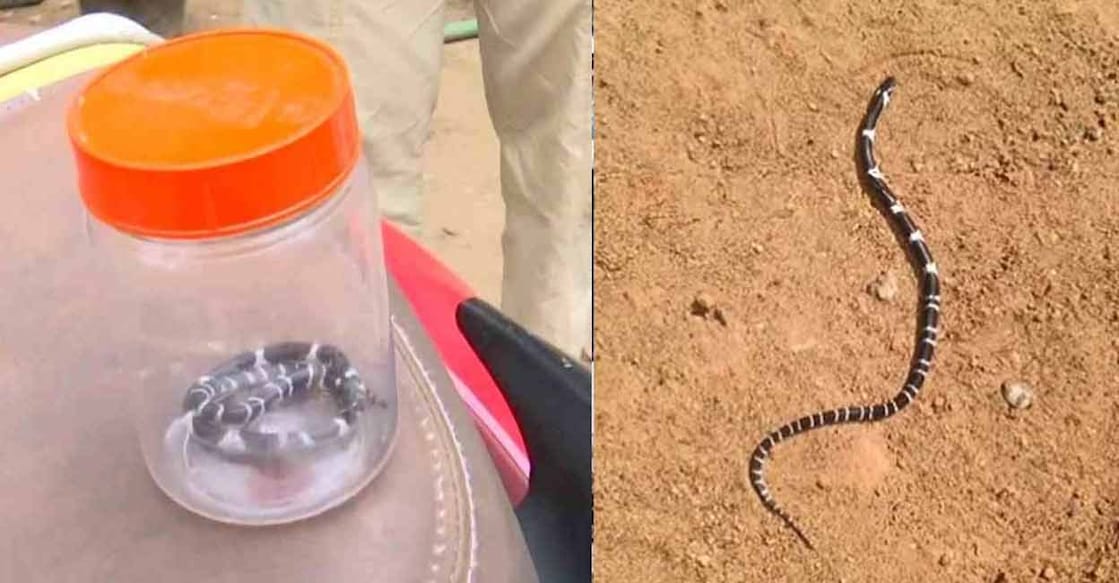
Subsequently, a snake belonging to the krait species (commonly known as Vellikettan in Malayalam) was found in the house. In cases like these, early identification of snakebite is critical. In India, antivenom is available for the venom of four major poisonous snakes: the cobra (moorkhan), the krait (Vellikettan), Russell’s viper (Chenathandan), and the saw-scaled viper (Anali). Dr SL Akhil, Assistant Professor, Department of Emergency Medicine, Government Medical College, Thrissur, explains what's critical in such cases and more.

A bite tough to identify
Krait bites, in particular, are notoriously deceptive. Described as `occult bites,' they leave little to no visible mark at the site, and even the victims may not realise they have been bitten. In the early stages after a bite, symptoms may be limited to abdominal pain or vomiting, which can easily be mistaken for common gastrointestinal ailments.
Treatment for snakebite is now widely available in government hospitals and major private healthcare centres. If identified in time, administration of antivenom can be life-saving. In any suspected case of snakebite, a minimum of 24 hours of hospital observation is essential.
Treatment for snakebite is now readily available in government hospitals and most major private healthcare centres. When identified early, the prompt administration of antivenom can save lives. Any suspected snakebite warrants immediate medical attention and at least 24 hours of hospital observation.

Frequently Asked Questions
1. Are baby snakes dangerous?
Baby snakes, or neonates, or hatchlings can be more dangerous than people generally think. The World Health Organisation advises treating it as a medical emergency, exactly like an adult snake bite, as hatchlings can still inject venom.
2. Why should we be careful about snakes in summer?
Summer is the season when hatchlings of venomous snakes such as the cobra, krait and Russell’s viper are born. Moving in groups in search of safe shelter, they are more likely to find their way into the surroundings of homes and even indoors. The intense summer heat also drives larger snakes out of their burrows more frequently, increasing the risk of human encounters. Snakes are naturally drawn to cool, shaded areas, which further increases the chances of their presence near homes.
There is, however, a common misconception that smaller snakes are less dangerous. In reality, while the amount of venom may be smaller, its potency can be far greater than that of adult snakes.
3. What precautions should be taken to stay safe from snakebite?
a)Keep the surroundings of the house clear by removing bushes and overgrown vegetation.
b)Seal burrows, holes and crevices in and around the home.
c)Ensure the area is free of rodents.
d)Do not leave food waste scattered around the premises.
e)Be cautious if you have pets such as cats or dogs, as they may inadvertently bring baby snakes indoors.
f)If a snake is spotted near the house, maintain a safe distance and immediately alert a trained SARPA volunteer or the Forest Department.
4. Is there any helpline to get snake rescuers?
The Forest Department runs a 24-hour toll-free helpline at 1800 425 4733, backed by a strong network of around 3,600 trained snake volunteers and 28 rapid response teams across Kerala, ready to step in during emergencies.

5. Is it true that snakebite victims should not sleep?
There is no scientific backing for this claim, and experts say it can actually do more harm.
 Add as a preferred source on Google