
Doctors also have lives, families: Oncologist shares how the profession shapes life
Mail This Article


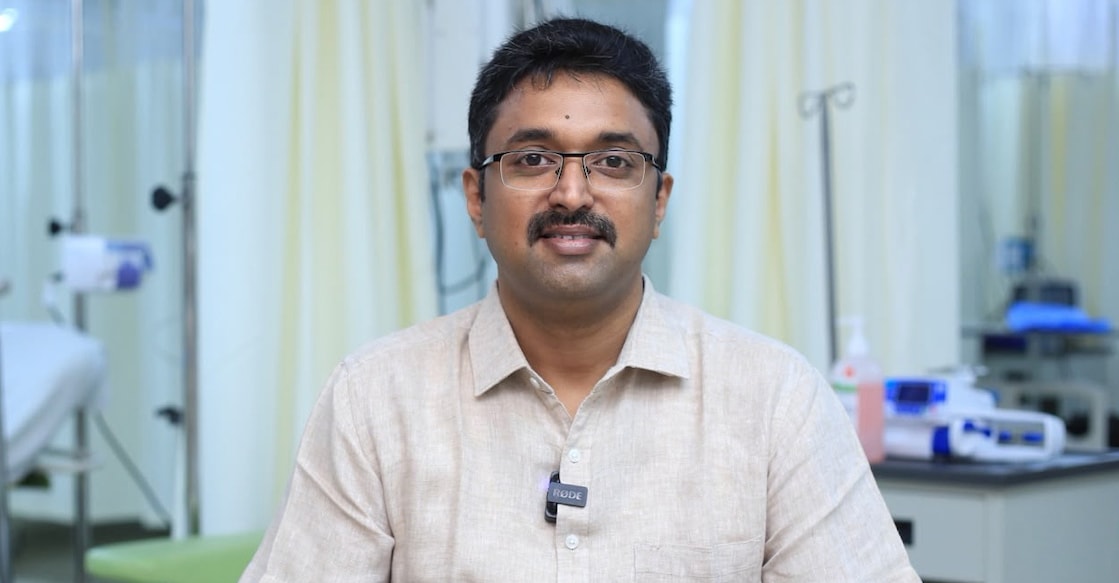
When we have any concerns about our health, we rush to doctors with hope. For many, half their illness is cured by a small smile from the doctor, a chat with him, or an inquiry from him about their health. From advice on maintaining health to what medicines to take, and how much to control their diet, the doctor gives guidance on many things. How many patients stop to think that the same person who advises many has his own life and family? On National Doctors' Day, which falls today, Dr Sanju Cyriac, Head of the Oncology Department at Rajagiri Hospital in Kochi, speaks to us about a life beyond a doctor's professional life.
What inspired you in life to choose the medical profession?
In everyone's life, there are situations and people who inspire them. My father (Dr Cyriac Kurien, Retired Professor - Ophthalmology, Government Medical College, Kottayam) himself was the reason I entered the medical profession. He was also my mentor during my medical college days. I grew up witnessing firsthand the love and compassion he showed to patients. Similarly, I have seen the love and respect that patients have shown my father. I believe this mutual exchange of love and care is what makes this profession special. These are what I think inspired me to become a doctor.
You are someone who constantly interacts with many people's lives. Please share with us the moment of greatest joy in this profession
It is difficult to pick just one moment. Because a doctor's life has many small and big moments of joy. It is not easy to enter the medical profession. Many youthful joys have to be set aside for years of study and training. A doctor is shaped by witnessing people's sorrows and pains up close in hospital corridors and wards. Therefore, I felt great joy each time I passed an exam, completed each stage, and reached the desired field of study. Even greater joy came after I started treating patients independently. Moments when I can stand with a patient, as one of their family members, when the treatment I thoughtfully provided shows results, when we can relieve a patient as a team in a seemingly difficult situation, when the patient and family understand and express their trust and gratitude – it is in such moments that we understand the true meaning of this job. When a patient who comes to us in fear leaves with relief and a smile on their face, I feel great joy as a doctor.
These days, we often hear reports of violence against doctors. According to you, what challenges does a doctor face today?
I feel deep sadness and disappointment when I see such incidents. Most doctors work with the desire that nothing bad happens to the patient in front of them. From the very first day of medical study, the thought that no harm should come to the patient is instilled in us. However, medicine never guarantees 100% cure or safety. In fact, through medical study, we learn about the wonders of the human body and also its limitations. Some diseases are very complex.
Sometimes, even with the best treatment, the expected results may not be achieved. In such situations, it is natural for the patient and family to feel disappointment, pain, and anger. Doctors should understand that. But it is never acceptable for that pain to turn into violence. Violence does not benefit the patient, the family, the doctor, or the healthcare system.

The biggest challenge doctors face today is communication. We have to speak as clearly as possible to the patient and their family about the seriousness of the illness, the possibilities of treatment, its limitations, and the risks. This requires time, patience, and an open mind. However, if we speak defensively, the patient and family may lose trust in the doctors and the institution. Therefore, acting with composure is a big challenge. There are friends and acquaintances who provoke patients and their relatives based on incomplete information. The medical world is not easy to understand. Medical terms are often not understood by patients. Therefore, hospitals should provide systems that explain their illness to patients in a way they can understand.
Do you get time to focus on diet and exercise?
A doctor's life consists of night duties, emergencies, and mental stress. Often, many cannot take care of their own health. This is because they are more concerned about the patient's health. It is difficult to give the same attention to their own matters. However, it is a great source of joy that many doctors in the new era are also paying attention to their own health. Sometimes, patients themselves ask doctors whether they have eaten, exercised, or taken care of their health. Hearing such questions brings joy, and it is also a reminder. It is a time when doctors need to pay more attention to their health. Only if they are healthy can they do what is needed for the patient in front of them, given the patient's illness.
What are some small joys that had to be missed in life due to your profession?
Spending time with family is often not easy for a doctor. This is because sudden needs, patients' needs, extended OPD hours, extended surgery times, and calls received on holidays are all part of a doctor's life.
The families of doctors also pay a price due to this profession. Many family celebrations, small trips, children's school events, and time spent with friends have often had to be sacrificed for the profession. Especially in the initial years of starting work, many such golden moments had to be missed. Unless the profession is brought to a team level, moving away from being an individual doctor, there will be no solution. There are doctors who see a hundred or two hundred patients a day. The truth is, this does not benefit the patient or the doctor.
How do you receive a cancer patient who comes to you for the first time?
Every cancer patient comes to the doctor with much anxiety and many questions. One must present the situation to the patient after understanding their mental state, family background, and the support they receive. Some will go into depression, some into extreme sadness. However, there are also those who approach things with composure. Therefore, one must speak to each patient in the manner that suits them. Things should be said openly. But it is important not to say them like a slap in the face.

You must have seen cancer patients with a lot of life left, and also those who succumb to death midway through treatment. How do you overcome the emotional difficulties in such moments?
When a person becomes a doctor, they go through many emotional moments. I still remember treating a child during my oncology studies. There was an experience where treatment did not work despite moving forward with great hope. At that time, I even considered giving up oncology studies. A senior doctor told me then that cancer patients need doctors like you to laugh and cry with them. Those words kept me going. When I feel a lot of distress, I take breaks. I read books, watch movies, spend time with family, and immerse myself in prayer. This is how I overcome difficult times.
What kind of doctor do you think is the best at handling patients?
A patient coming to a doctor is not expecting elaborate treatment plans. They are looking for someone who listens. Someone who takes their difficulties and distress seriously. A good doctor should be knowledgeable, skilful, sincere, and respectful of the patient. They should be able to explain things to the patient in a language the patient understands. A good doctor should be able to understand not just the disease, but also the patient, their fears, doubts, and hopes. In short, a doctor should be a good human being. Patients will remember such a doctor.
Looking back at your professional life from the time you started practising until today, what moment gave you the most satisfaction?
It is impossible to single out one specific thing that gave me satisfaction. In the last ten years, there have been significant changes in oncology. When I see some patients making comebacks that seemed impossible, I feel great joy and pride. When they come to see me years after treatment, I feel great joy and satisfaction. Being able to bring small joys into people's lives is the greatest satisfaction one can achieve in this profession.
Beyond your profession, you are passionate about writing. When do you find time for this amidst your busy life?
Writing comes naturally to me. An oncologist who witnesses patient experiences daily has no shortage of stories. The purpose of writing these stories is not just to gain fame, but also to convey certain things to the minds of others and make them think. Two of the three books I have written are related to my profession. Another book is about the mistakes made in life. I often jot down things that later become written pieces. Writing is something that brings me joy beyond my profession.
As a doctor, how much family support do you have to move forward successfully?
For a doctor to advance professionally, family support is essential. Often, there have been situations where valuable moments and trips that should have been spent with family had to be cancelled. The support of a family that understands this, recognises it as part of the job, and knows that it brings about changes in a patient's life is immense. For me, too, family support is very important. Sometimes, the support they provide without saying anything is the greatest strength.
His wife is Dr Chanchal Kurian and their children are Jonathan, Rachel, and David. He is also the author of the books Aadyam Vannathu Avalairunnu (She came first); Cancer and butterflies; The memories of an oncologist; Cancer - Questions.
 Add as a preferred source on Google