

'I chopped her': Kerala psycho killer Chenthamara thought he covered tracks, 2 calls nailed him

Mail This Article
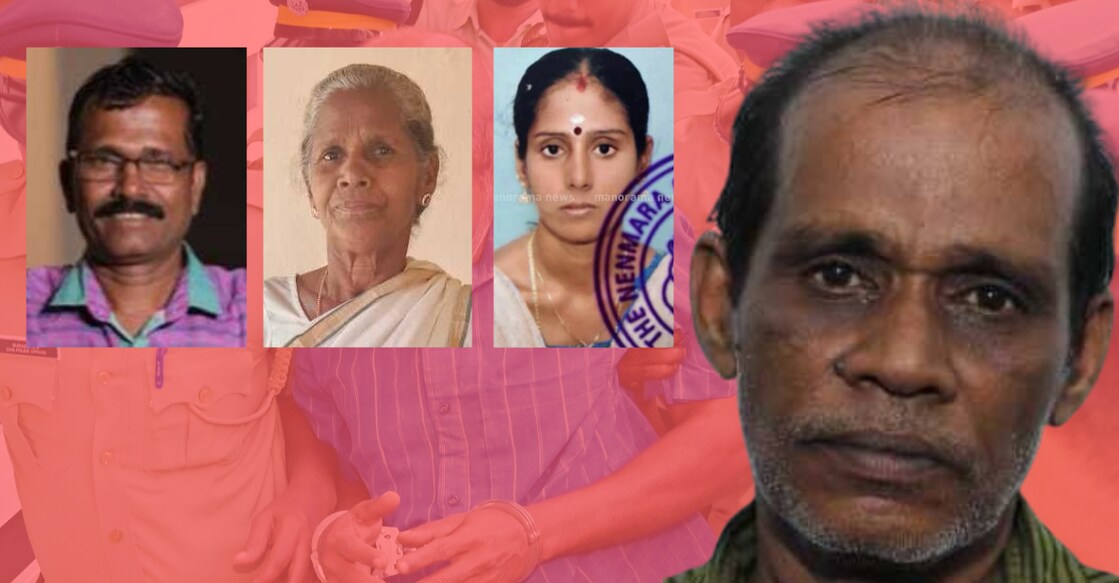
Chenthamara, 60, who was sentenced to double life term in Nenmara Sajitha murder on Saturday was vicious in his execution, but also exercised caution not to leave behind evidence. In August 2019, he entered her house, got hold of her and dragged her to another room where he inflicted fatal injuries on her neck and left hand with a sword stick. There were 14 incised wounds in total and three on her neck proved fatal. The long, deep wounds had cut her jugular vein, nerves, blood vessels and one wound was so deep that it cut the spinal cord underneath.
Even after acting with such murderous intent, he went to the rear side of his house, poured kerosene on his green coloured shirt and set it ablaze. He also disposed of the SIM card from his mobile phone by throwing it beyond recovery; all calculated moves to erase evidence. Rage got the better of him, though. He made two phone calls after the murder - one to his brother Radhakrishnan and another to Sumesh, a cleaner in the tanker lorry Chenthamara drove.
He rang up Radhakrishnan and told him that he had chopped Sajitha to death. In response, Radhakrishnan advised him to commit suicide by drowning in a dam or a river. Fifteen minutes later, he called Sumesh. He couldn't reach him. Sumesh returned the call and Chenthamara told him, "I murdered a woman". Sumesh was told that Chenthamara was going to take poison and kill himself and they would not meet again.
The prosecution presented it as evidence under Chenthamara's extra-judicial confession. Call data records proved that Chenthamara had called Radhakrishnan and Sumesh immediately after the commission of murder and acknowledged the crime. Additional Public Prosecutor, M J Vijaykumar, told the court that this convergence of oral testimony and documentary evidence lends credibility to the statements of Radhakrishnan and Sumesh (prosecution witnesses) and elevates their evidentiary value. It was pointed out that as the accused’s acknowledgement was made voluntarily to persons not in authority, and without coercion, it constitutes a clear instance of extra-judicial confession.
"Such confessions, when supported by independent corroborative material like call records, are admissible and relevant under law, and can be relied upon to establish guilt," Vijaykumar stated in the court.
While Chenthamara took care not to leave anything behind, the prosecution relied on forensic evidence, which included ash and burnt sand. The fibre material collected from sand, ash and the stick matched with his shirt pocket flap. Chemical examination also confirmed the presence of kerosene in these items.
Chenthamara harboured a grudge towards Sajitha, Pushpa and Vasantha after he strongly believed that his marriage with Vilasini failed because of their intervention. He had even tried to kill Vilasini in 2019. She was a worker under the employment guarantee scheme and Chenthamara asked her to terminate the services of Sajitha, Pushpa and Vasantha. When Vilasini refused, he attempted to kill her with a sword stick but Vilasini fled and sought shelter in her neighbour's house.
When Chenthamara was granted bail in the murder of Sajitha, he killed Sajitha's husband, Sudhakaran and his mother, Lakshmy, in January 2025. In his judgment, Additional Sessions Judge-4, Kenneth George, has directed that if the government issues an order for the release of the convict on parole, adequate and effective measures shall be undertaken to ensure the safety and protection of the person and property of the surviving relatives of the deceased Sajitha, as well as her neighbours, including eight prosecution witnesses.
 Add as a preferred source on Google