
How C S Ranga Iyer responded to a racist American book about 1920s India

Mail This Article


Journalist, independence activist and social reformer C S Ranga Iyer is best remembered for his strong fight against untouchability. His key belief at a time when the Indian independence movement was gaining momentum under Mahatma Gandhi’s leadership was that the country needed to simultaneously dismantle caste barriers and that there could be no true freedom without social equality.
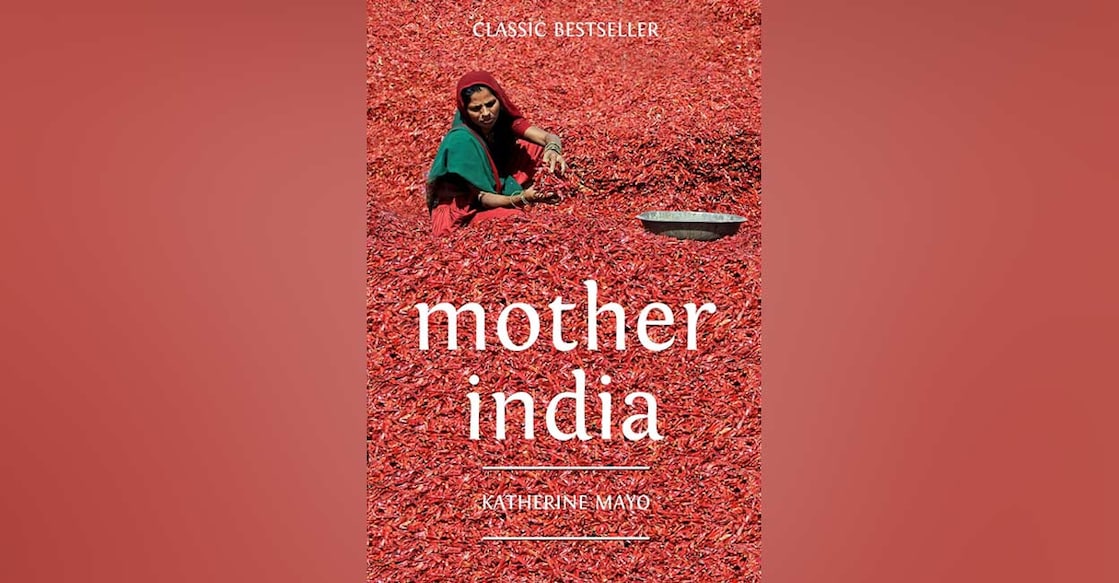
In 1927, American historian Katherine Mayo published ‘Mother India,’ a provocative book that strongly critiqued Indian society and concluded that the country should not be independent. A New York Times book review published on June 5, 1927 ran with the headline- “India is her own worst enemy.”
One could easily equate the harshness of Mayo’s writing with the contemporary vitriol aimed at India from “MAGA” supporters on social media platforms that oppose Indian immigration to the US. While many Indian social media users return the attacks in kind, in 1927 Iyer, who was a member of the Indian Legislative Assembly took the moral high ground. He wrote a book, titled ‘Father India’ that brilliantly addressed these issues and exposed Mayo’s work for the racist colonial drivel that it was.
“Satirically, the American tourist calls her book Mother India in whose name the English-hating Nationalist appeals to the masses,” Iyer wrote in the book, adding that Mother India, Motherland and Bandemataram are phrases that the anti-Indian loathed.
“The American who lived and moved in the anti-Indian circles imbibed their sentiment,” Iyer observed. “Her book, which breathes their scorn, is a tirade on India written in the style of a Cassandra-like propagandist. It slanders a great and simple-hearted nation of ancient descent.”
Information in the public domain about Iyer says he was born in the Madras Province. In the book, he wrote that he hailed from Malabar.
Iyer took on the stereotypes of Mayo’s book about different parts of India, but there seemed to be a particular level of expertise when it came to Kerala.
In a chapter titled “Errors and Exaggerations,” the Indian social activist noted that Mayo visited a couple of hospitals and after speaking to a couple of doctors about their patients decided that the “entire race is unclean and immoral” and infected with “unmentionable diseases.”
He took these allegations head on, talking about how there was a common belief in Kerala that “the countrymen of Vasco da Gama” brought syphilis with them. The phrase ‘Parangipun’ in Tamil and Malayalam shows that this is a disease of ‘Paranghis’ or Europeans,” Iyer wrote. He said there was no other word for the disease in either language and that such an illness was unheard of in remote villages.
Iyer added, “Even though the condition of the cities is not satisfactory it is not so appalling as the condition of the American towns, where venereal infection is unspeakably extensive and intensive.” He mentioned how the number of venereal hospitals and specialists in America testified to the “terrific prevalence” of syphilis.

However, Iyer, unlike the keyboard warriors of contemporary India, chose to show a great degree of restraint and not mirror the nastiness of Mayo. He wrote, “Notwithstanding all this, it will not do for an Oriental to say that every American is either crooked or deformed, that every Western woman is venereally infected because there happen to be several cases in the hospitals,” he wrote. “But this is exactly what Miss Mayo does. She says that venereal disease is universal in India and she holds that responsible not only for the terrorist movement in Bengal, but also for the innumerable deaths of infants and babies.” Iyer rightly attributed the high infant mortality rate in India to poverty.
Mayo also wrote that Nairs were “entitled to stab a puliah” on the spot. Iyer, who was staunchly against caste discrimination, and very well aware of the social ills of Kerala at that time, responded to this allegation. “If the Nair had carried on his alleged vocation of stabbing the puliah, the entire tribe of untouchables would have been exterminated years ago,” he wrote. “We all know the fate of the Australoids– now anxiously preserved as a zoological curiosity. We also know how the Red Indians were lynched off the face of the earth by Miss Mayo’s barbarous progenitors.”
Mayo also cited the Malabar Rebellion of 1921 as an example of how Hindus and Muslims could not get along even in Kerala. Iyer responded to this as well. “The Malabar tragedy was a terrible catastrophe, like of which was never known in the history of that beautiful country,” Iyer wrote. As one belonging to Malabar, I can, of course, speak with greater authority than Miss Mayo.” He said the riots were “purely of a socialistic nature” and a result of oppression of the peasant class.
Speaking of the communal harmony that existed in Kerala at that time, Iyer took the example of Vaikom. “There is a great temple, facing the backwater in Vaikam,” he wrote. “‘Vaikathappan,’ the father of Vaikam, as the Moplas and Hindus call him, is supposed to control the seas and the waves. In the backwaters, gales are not infrequent, and the tiny boat of the plucky Mopla can be saved only by ‘Vaikathappan,’ the Hindu god.” Iyer wrote about how Muslims would pray to that god before crossing the waterways and even give prasadam to the passengers.
“Secondly, the Moplas have been the best protectors of the Hindu temples,” he wrote. “Even in the worst days of the riots, it has been a point of honour with them to leave alone the idol and the priest. The fact is, iconoclasm is not a part of their lives.”
Nearly a century after Mayo’s and Iyer’s books, India has a host of social and economic problems, despite the immense economic growth of the last few decades. With many in the West still harbouring the same kind of attitude towards India, C S Ranga Iyer’s approaches are still the best ways to tackle both Western propaganda and India’s problems.
 Add as a preferred source on Google