

Union Budget 2026: Capex at ₹12.2 lakh crore, Sitharaman announces high-speed rail, rare earth corridors
KEY EVENTS
Mail This Article


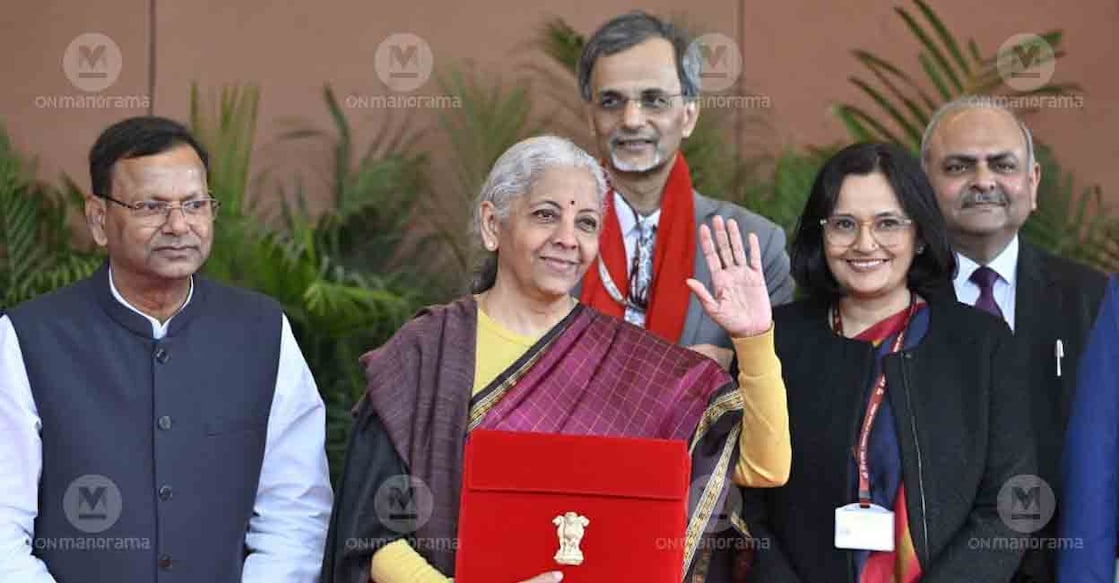
New Delhi: Finance Minister Nirmala Sitharaman on Sunday unveiled a growth-heavy Union Budget 2026–27, raising the outlay on electronics manufacturing to ₹40,000 crore, hiking capital expenditure to ₹12.2 lakh crore and announcing seven new high-speed rail corridors and a dedicated freight corridor. She also tabled the 16th Finance Commission report governing Centre-state tax devolution for 2026–31.
The Budget, her ninth consecutive, also proposed ₹20,000 crore for carbon capture and utilisation, ₹10,000 crore to develop India as a biopharma manufacturing hub, major tax relief under the Liberalised Remittance Scheme, and a clutch of healthcare, skilling, tourism and MSME-focused measures, amid global economic uncertainty and domestic growth challenges.

7 high-speed rail corridors: To promote environmentally sustainable transport, Sitharaman proposed seven high-speed rail corridors connecting Mumbai-Pune, Pune-Hyderabad, Hyderabad-Bengaluru, Hyderabad-Chennai, Chennai-Bengaluru, Delhi-Varanasi and Varanasi-Siliguri. A new dedicated freight corridor from Dankuni in West Bengal to Surat in Gujarat was also announced.
Notably, Kerala did not feature in the new high-speed rail proposals, even as southern states such as Tamil Nadu and Karnataka were included. Work on the Ahmedabad-Mumbai high-speed corridor is currently underway.
Manufacturing: The Budget raised the electronics manufacturing outlay to ₹40,000 crore in FY27, with plans to set up high-tech tool rooms, launch a container manufacturing scheme and establish three chemical parks to reduce import dependence.
Rare earth corridors: Sitharaman also announced rare earth corridors in Tamil Nadu, Kerala, Odisha and Andhra Pradesh to cut India’s reliance on China, alongside support for critical mineral processing facilities in mineral-rich states.
Green transition and climate action: An outlay of ₹20,000 crore was proposed for a carbon capture and utilisation scheme covering hard-to-abate sectors such as steel and cement. Incentives for indigenous manufacturing of seaplanes were also announced to boost tourism-linked green mobility.
Healthcare, biopharma and skilling: The Finance Minister proposed ₹10,000 crore over five years under the Biopharma SHAKTI initiative to develop India as a global biopharma manufacturing hub, including setting up 1,000 accredited clinical trial sites, strengthening CDSCO and expanding NIPER capacity.
She also announced the addition of 1 lakh allied health professionals across 10 disciplines over five years and training of 1.5 lakh caregivers aligned with the National Skills Qualifications Framework. Three new All India Institutes of Ayurveda were proposed, along with customs duty exemptions on select cancer drugs and rare disease treatments.
Taxation and financial sector measures: Under the Liberalised Remittance Scheme, TCS was cut to 2 per cent for education, medical treatment and overseas tour packages.
MSMEs, women and employment: A ₹4,000 crore top-up to the Self Reliance India Fund was announced to support MSMEs, along with a new cadre of ‘corporate mitras’ to help small firms with compliance. Community-owned SHE Marts were proposed to help women SHG entrepreneurs transition into enterprise ownership.
Tourism, culture and education: Key tourism announcements included an East Coast Industrial Corridor, five tourism destinations in Purvodaya states, Buddhist circuits in six northeastern states, a National Destination Digital Knowledge Grid, and ecologically sustainable mountain and turtle trails, including in Kerala. Five university townships near industrial hubs and one girls’ hostel in every district were also proposed.
Governance and institutions: The Budget allocated ₹39.14 crore to the Central Information Commission and Public Enterprises Selection Board, ₹30 crore to the Lokpal and ₹54.56 crore to the Central Vigilance Commission.
Reiterating the government’s reform agenda, Sitharaman said India has chosen “reforms over rhetoric”, noting that nearly 25 crore people have exited multi-dimensional poverty and that growth dividends would reach farmers, scheduled castes, scheduled tribes and the youth.
 Add as a preferred source on Google