

Mamata Banerjee's defiance after poll drubbing: What happens if a CM refuses to quit?
Mail This Article


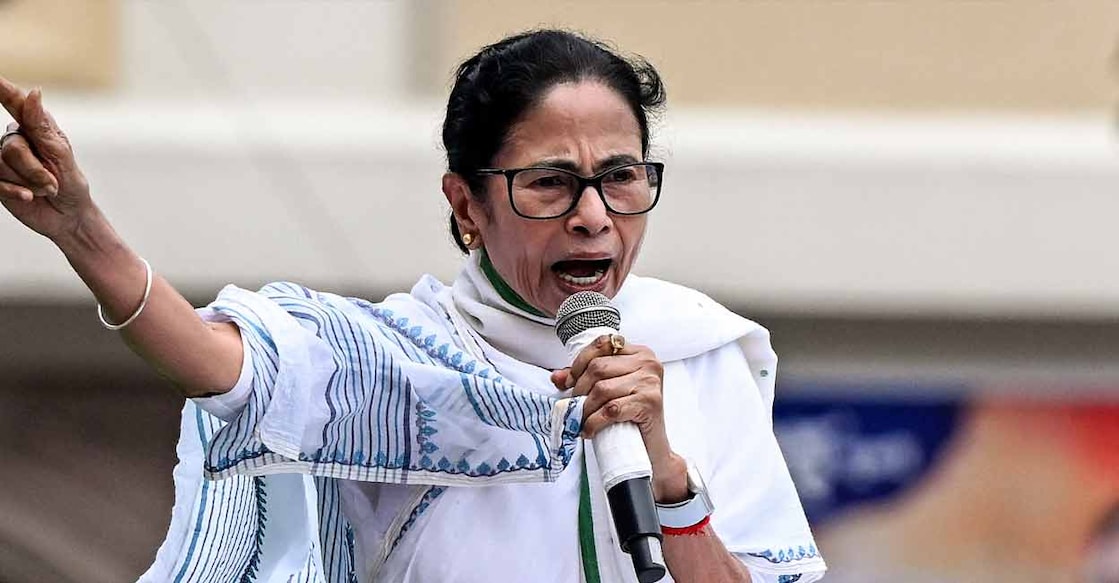
In the aftermath of the 2026 Assembly election results, a rare constitutional confrontation has emerged in West Bengal. Mamata Banerjee has said that she will not step down as Chief Minister despite a decisive verdict against her party. The BJP secured a clear majority in the 294-member Assembly, winning 207 seats and ending the TMC’s 15-year rule, while the TMC managed 80 seats.
Banerjee’s stance raises a fundamental question: what does Indian law provide for when an elected leader refuses to resign despite losing the mandate?
The constitutional position
The answer lies primarily in Article 164 of the Indian Constitution, which states that the Chief Minister and the Council of Ministers hold office during the “pleasure of the Governor.” In practice, this “pleasure” is not discretionary but is tied to whether the government enjoys the confidence of the legislative assembly.
Once election results are formally notified, a government that has lost its majority effectively loses its legal basis to continue. If the Chief Minister refuses to resign, the Governor can withdraw this “pleasure” and dismiss the government.
In normal circumstances, an outgoing Chief Minister submits his/her resignation promptly and continues briefly in a caretaker role. However, if that does not happen, the Governor can proceed independently.
The Governor may invite the leader of the majority party, in this case, the BJP, to form the new government without waiting for the incumbent’s resignation. If the outgoing leadership refuses to vacate office, the Governor can formally dismiss the Council of Ministers.
Floor test and judicial precedent
The principle that a government’s majority must be tested on the floor of the House was firmly established in the landmark S R Bommai vs Union of India judgment.
In a fresh election scenario with clear numbers, a floor test becomes largely procedural. Once the new Assembly is constituted, the incoming majority proves its strength, and the outgoing government ceases to have legitimacy.
If the incumbent CMs have also lost their own seat, their position becomes even weaker, as they are no longer a member of the newly elected House.
Under Article 164(4) of the Indian Constitution, a non-legislator can serve as a minister or Chief Minister for up to six months. However, this provision is meant for those who intend to seek a mandate, not for those who have just lost one.
A defeated Chief Minister cannot use this clause to continue indefinitely. Any executive decisions taken in such circumstances could be challenged in court as being beyond legal authority.
Limits of a caretaker government
Even if the outgoing Chief Minister continues briefly during the transition, their powers are significantly restricted. A caretaker government cannot take major policy decisions, introduce new schemes, or make significant appointments. Its role is limited to routine administration.
Possibility of President’s rule
If the situation escalates into a constitutional breakdown, for instance, if the outgoing government obstructs the transition of power, the Governor can recommend the imposition of Article 356 of the Indian Constitution.
This would place the state under central rule temporarily until a stable government is installed.
 Add as a preferred source on Google