

Fuel price hikes, food inflation, monsoon risks: Finance Ministry report warns of testing times for India
Mail This Article


The monsoon is not here yet, but along with rising crude oil prices and inflationary pressures, the risks of a possibly weak monsoon figure prominently in the Department of Economic Affairs' Monthly Economic Review for May released on Saturday.
Stating that the country's economy continued to show resilience despite growing global uncertainty triggered by the conflict in West Asia, the report warns that at the same time, rising crude oil prices, inflationary pressures and the risk of a weak monsoon could weigh on growth in the coming months.
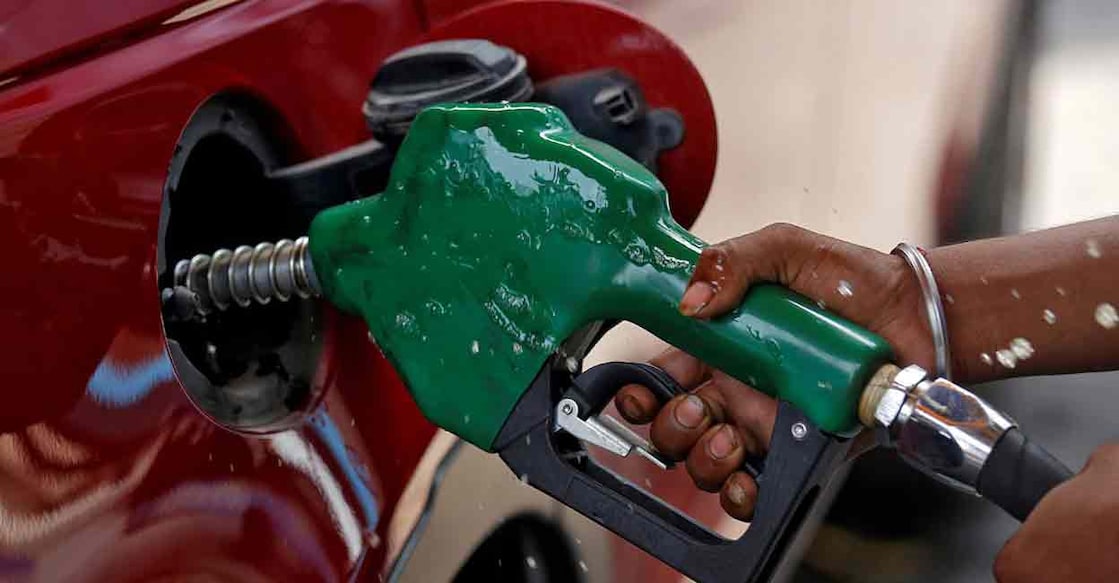
In simple layman's terms, petrol and diesel could become costlier, notwithstanding the recent hikes, since the West Asian conflict is pushing up global crude oil prices. Food prices may also rise since poor rainfall can affect crop production and lead to higher prices for vegetables, fruits, pulses and other food items; and thirdly, inflation could increase and businesses may pass on higher costs to customers, leading to higher retail prices.
Back to the report. It says the global environment has become materially more challenging since the onset of the West Asia conflict, with elevated crude prices, tightening financial conditions, and weakening growth momentum across major economies posing headwinds that India cannot fully insulate itself from. With forecasts pointing to a below-normal monsoon and a likely moderation in economic activity, overall consumption demand may face headwinds in the coming months.
"The current divergence between retail inflation and wholesale prices signals that upstream cost pressures are building, and the passthrough to consumers, while limited so far, may not be far behind. The recent hike in petrol and diesel prices may activate both direct and indirect transmission channels, and any further escalation in energy prices could narrow the existing cushion more quickly than anticipated. A deficient monsoon could add food price pressures on top of energy-driven ones," it says.
Stating that the duration of the Strait of Hormuz disruption remains the single most consequential variable for India's external and price outlook, the report notes that the West Asia conflict has emerged as a major shock to the already fragile global recovery, with its effects increasingly visible across energy markets, supply chains, trade routes and global financial conditions.
"For India, these external pressures are beginning to transmit, selectively but perceptibly, into domestic economic conditions. The Indian economy maintained its growth momentum in April 2026, with E-way bill generation, PMI indices and electricity consumption remaining in expansionary territory. However, the moderation in the Eight Core Industries Index and fuel consumption signals that global headwinds are gradually finding their way into select segments of domestic activity," the report warns.
"The sharp rise in upstream price pressures, along with recent increases in fuel prices, suggests a gradual pass-through to retail inflation through higher transport, energy and food-related costs in the coming months. Adding to these nearterm risks, the IMD has projected overall monsoon rainfall at around 92 per cent of the longperiod average. Buffer stocks of rice and wheat at 817.53 lakh tonnes and adequate reservoir storage provide suitable cushion to foodgrains. However, any significant rainfall deficit coupled with current geopolitical conditions could translate into food inflation, weakening rural demand and aggregate growth," it adds.
