

Los Angeles gallerist Rajiv Menon who nurtures South Asian art in Hollywood

Mail This Article


Often, migration blurs cultural memories. Thirty-seven-year-old Rajiv Menon, the US-based gallerist, chooses to sharpen them. He does it by making a space for South Asian art at the heart of Hollywood. Here, the art and its creators are not nostalgic, not peripheral — but central to his vision. His gallery, Rajiv Menon Contemporary, is nearing its first anniversary, marking a year of quietly reshaping how diaspora and American audiences encounter contemporary Indian art.
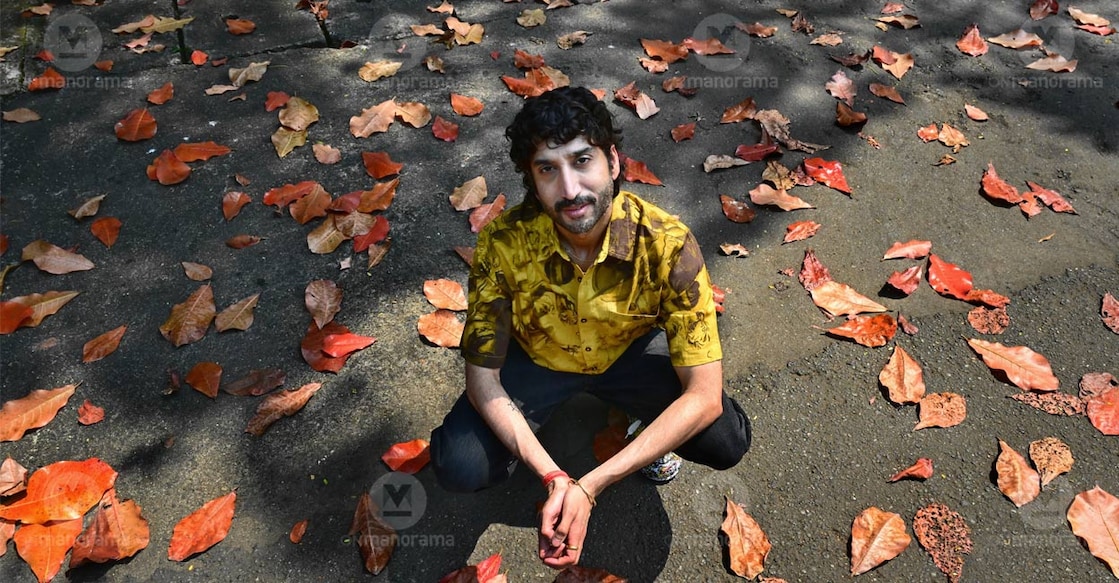
“I don’t even have good handwriting,” he says with a chuckle. Lone strands from messy curls brush his forehead. As we settle down for a chat on a balmy day in Kochi, he glances over the manicured greenery around him and the swing that dangles from the tree. He takes in everything, but not like an artist. He feels his purpose is more of a communicator.
“I’m not an artist. But speaking about art is my deepest form of expression.” Rajiv sees himself as a translator — someone who listens closely to artists and helps audiences understand the worlds they come from. “Putting that into words,” he says, “is its own art form.”

Early Influences: Texas, travel and texts
Born and raised in Houston, Texas, Rajiv grew up in what he calls a “global city.” Museums, cultural diversity and exposure to history shaped his imagination early on. His parents, Govind Prasad and Amrita, were central to that formation. His father worked in the Merchant Navy, and both parents travelled extensively before settling in Texas. “They were brave enough to build a life in a new country,” he says. “That courage — especially the courage to start something of your own — comes from them.”
For Rajiv, travel was never framed as luxury, but as education. So was literature. As a teenager, he found himself drawn to Indian and Indian-American writers who wrestled with questions of belonging, migration and memory. “By 15 or 16, I knew culture would be my life in some way,” he recalls.
College years in Washington, DC, and New York sharpened that conviction. At New York University, where he later completed his PhD, he immersed himself in visual culture, film and theory. Scholars like Gayatri Gopinath and Rajeswari Sunder Rajan encouraged him to remain critically engaged with his roots in Kerala and India. “They taught me to look at the world closely — and to question it.”
From television to the world of art
After college, Rajiv spent nearly a decade working in television in New York. But beyond office hours, he gravitated toward galleries and artists’ studios. It was there that he began noticing a disconnect. “India was becoming more visible globally. Diaspora artists were producing powerful work in the US. But there wasn’t enough effort to connect those spaces,” he says. “Young Indian Americans cared about their heritage, but contemporary art wasn’t always part of that engagement.”
In 2023, he made a decisive move — leaving television to launch a gallery dedicated to South Asian art. He had never curated before. “It was completely new territory. But I felt compelled to try.” The response, he says, was overwhelming.
Why Hollywood?
Choosing Hollywood was deliberate. “It’s one of the world’s centres of visual culture,” he explains. “If South Asian art is placed here — not on the margins — it signals that it belongs in the main conversation,” he says, adding that Rajiv Menon Contemporary operates as a space of exchange between South Asia and North America. For Rajiv, art must move beyond decorative stereotypes.
“In the US, Indian culture is often reduced to surface imagery. Art allows for complexity — political, emotional, philosophical.” He is equally invested in how diaspora communities see India. “Sometimes, India in the diaspora exists only in memory. I want people to engage with the India of today — evolving, plural and dynamic.”
Resisting simplified identities
With a background in postcolonial theory, Rajiv is wary of how “South Asia” is frequently flattened into a single narrative. “Each artist has a different understanding of what South Asia means,” he says. “When you see those perspectives together, you realise the region can’t be fixed into one definition.”
Plurality, for him, is not a slogan but a method. His literary grounding shapes how he curates. “I read a painting the way I read a novel — thinking about structure, voice, and what larger story it’s telling.”
A space of hospitality
The gallery remains free and open to the public. It hosts community gatherings, including Onam celebrations, blending cultural familiarity with contemporary practice. “I want Indian hospitality in the gallery,” he says. “People should feel comfortable asking questions.” Writers, filmmakers, fashion designers and students walk in regularly. Accessibility matters to him as much as excellence. “The work should be rigorous — but the space should be welcoming.”
Recently, the gallery presented artists at the Jaipur Centre for Art (JCA) and India Art Fair in New Delhi, introducing diaspora artists to Indian audiences. Several works were acquired by Indian institutions — a milestone Rajiv describes as deeply affirming. “There’s a perception that diaspora art is disconnected. I wanted to show that it’s thoughtful, relevant and part of the larger conversation.”
Kerala: Memory and meaning
Though raised abroad, Kerala remains emotionally resonant. His father spent part of his childhood in Fort Kochi, and the family’s roots extend to Kannur and Thrissur. “Landing in Kerala always feels intense,” he says. “There’s something immediate about that belonging.”
He speaks with particular pride about the Kochi-Muziris Biennale. “It’s among the most important art events globally. The intellectual depth and political engagement are remarkable.” Watching artists he collaborates with exhibit there reinforces his commitment to building transnational bridges.

Fashion, film and the language of culture
Rajiv’s interest in culture extends beyond galleries. He actively supports Indian fashion, challenging the idea that it is static or purely traditional. “It’s innovative and global,” he says. “Wearing Indian designers abroad is also a way of amplifying them.”
Cinema remains another passion. Malayalam films such as 'Kumbalangi Nights' and 'Jallikattu' resonate deeply with him, and he admires Adoor Gopalakrishnan’s storytelling. “Film carries culture across borders in powerful ways.”
Travel as inquiry
Rajiv spends nearly half the year travelling. His method of understanding a new place is consistent: museums first, then galleries, then conversations with emerging artists.
“That’s how you grasp a city’s pulse,” he says. Even food is part of that inquiry — an inheritance from a childhood where curiosity was encouraged.
The larger vision
His long-term ambition is clear. “I want an Indian artist to become a household name in the US.” For Rajiv, contemporary art can shift perceptions of India, which Western institutions often confine to antiquity. “Indian culture isn’t frozen in the past. It’s alive and constantly changing.”
At the centre of his work is a refusal to choose between identities. “I can be Indian, American and global at once,” he says. “These aren’t contradictions. They’re expansions.”
Supported by parents who built their own business and a brother working in technology, Rajiv chose a different path — culture over convention. A year into his gallery’s journey, he continues to build conversations across oceans, insisting that South Asian art not only belongs in global spaces but helps redefine them.
