

Sabarimala women entry: Kerala govt calls for ‘wider consultation’ with Hindu scholars, social reformers
Mail This Article


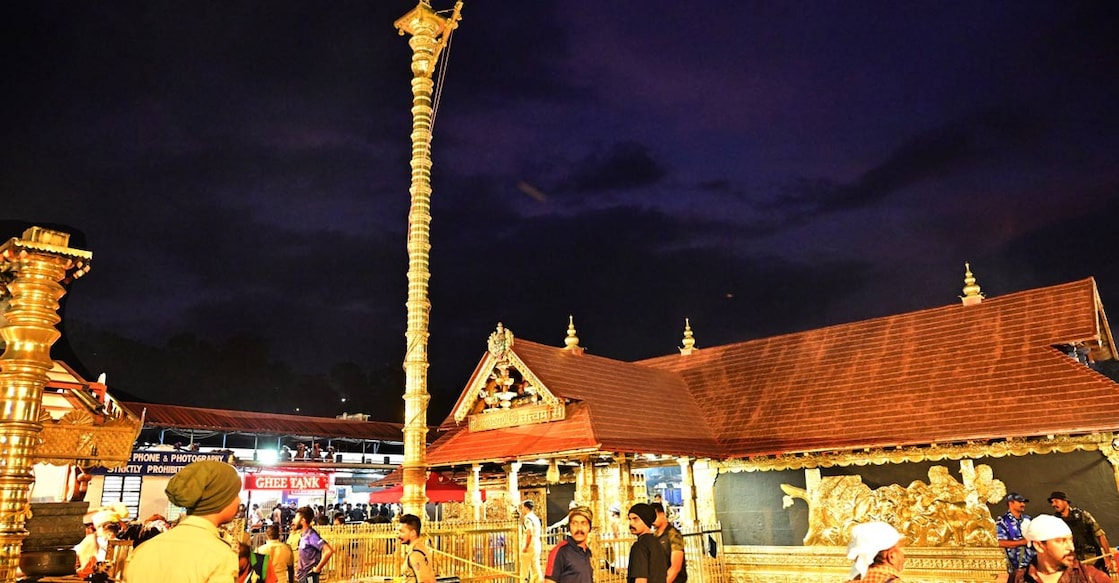
In a shift from its earlier position on the entry of women of a particular age group into the Sabarimala Temple, the Kerala government has told the Supreme Court of India that any decision on altering the long-standing practice should come only after wide consultation with religious scholars and social reformers within the Hindu community.
The ruling Left Democratic Front (LDF) government stopped short of spelling out a clear position on the issue in its latest submission, a move that comes ahead of the upcoming Assembly elections in the state. By emphasising consultations with religious scholars and social reformers, the government has sought to strike a balance between the sentiments of devotees and its earlier stand favouring the entry of women.
In written submissions filed in the pending review proceedings related to the Sabarimala verdict, the state said practices connected with beliefs followed for many years should not be examined in isolation but through a broader consultative process involving experts with deep knowledge of Hindu traditions.
The submissions were filed in the review petitions arising from the 2018 judgment in the case of Indian Young Lawyers Association vs State of Kerala, which struck down the restriction on the entry of women aged between 10 and 50 years at the Ayyappa shrine.
The state said Article 25 guarantees freedom of conscience and the right to profess and practise religion, including rituals, ceremonies and modes of worship that form an integral part of a faith. However, the right is not absolute and may be subject to restrictions related to public order, morality, health and other provisions of the Constitution.
It also emphasised that Article 25 allows the state to introduce laws for social reform and for opening Hindu religious institutions of a public character to all classes and sections of Hindus, including women.
The government argued that the concept of “morality” in Articles 25 and 26 should be understood as constitutional morality, rooted in principles such as equality, non-discrimination, protection of liberty and the welfare of society. The state submitted that determining whether a particular practice is an essential religious practice should primarily depend on the doctrines of the religion and the beliefs of the community following it.
According to the submission, courts should examine whether a belief is genuinely and conscientiously held by devotees rather than judging whether the practice appeals to reason or sentiment.
The state also suggested that, in most cases, persons who do not belong to a religious denomination may not have sufficient interest to challenge its practices through a public interest litigation, unless the issue involves grave human rights violations.
The Kerala government reiterated that, given the sensitive nature of the Sabarimala issue and the strong response from devotees, any judicial review of the long-standing practice should follow wide consultation with religious scholars and social reformers.
The dispute traces back to a petition filed in 2006 under Article 32 of the Constitution seeking directions to allow women between the ages of 10 and 50 to enter the Sabarimala temple and challenging Rule 3(b) of the Kerala Hindu Places of Public Worship (Authorisation of Entry) Rules, 1965. The petition argued that the restriction violated constitutional guarantees of equality and religious freedom.
In September 2018, a Constitution Bench of the Supreme Court ruled that the exclusion of women of menstruating age from the temple was unconstitutional. The majority judgment held that the practice violated women’s right to freely practise religion under Article 25 and that Rule 3(b) of the 1965 Rules was unconstitutional and ultra vires the parent Act. The court also held that devotees of Lord Ayyappa did not constitute a separate religious denomination.
While Justices R F Nariman and D Y Chandrachud delivered concurring opinions, Justice Indu Malhotra dissented, holding that issues of faith and religious practice should ordinarily be left to the devotees.
Several review petitions were later filed challenging the verdict. In November 2019, the Supreme Court decided to keep the review petitions pending and referred broader constitutional questions relating to religious freedom to a larger bench.
A nine-judge bench was subsequently constituted to examine the wider issues, including the scope of religious freedom under Article 25, the rights of religious denominations under Article 26, and the extent to which courts can review religious practices.
The matter continues to remain pending before the Supreme Court.
