

Back from Gulf, family enters dairy farming business; scripts success story
Mail This Article


Reji Thomas of Kunnumpurathuveetil, a native of Nellimoodu near Kulathupuzha, had spent over two and a half decades working in Kuwait with his family. Yet the idea of starting a venture back home never left his mind, a dream that his wife, Mini, shared just as passionately. Coming from families with agricultural roots, they already knew the perfect field in which to begin their journey.
Once their daughter, having completed Class 10, returned to Kerala for further studies, Reji and Mini also came back from abroad to make the place their permanent home. Though the first three to four years were occupied with their daughter’s education and other responsibilities, their dream of starting a venture never faded. It was around this time that the couple discovered a one-and-a-half-acre fallow plot available for sale near Kochu Kalunku, near Madathara.
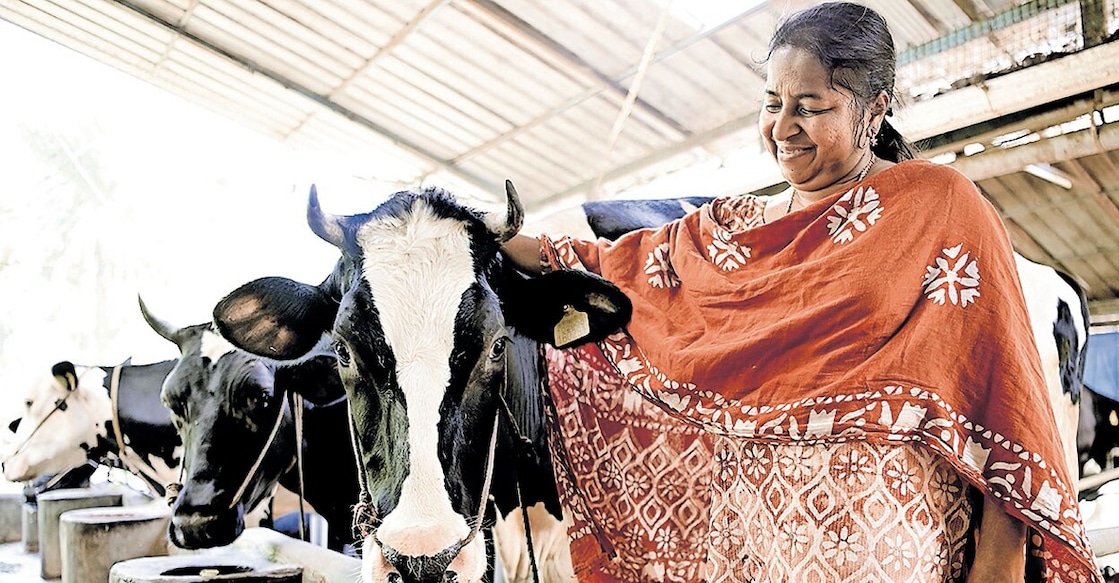
At the time, Reji was working as a finance controller for an oil company in Kuwait. After returning home, he purchased the plot and laid the foundation for their Golden Hill Valley Farm. They began slowly, planting turmeric, pepper and chili, and soon Mini bought a cow to learn the intricacies of dairy farming. Five years ago, after learning that a dairy farm in Perangamala was up for sale, they purchased fifteen cows along with all the necessary equipment to establish a fully functional farm. With dedication and care, the farm soon flourished, and before long, Mini was recognised with the award for the best dairy farmer in the district.
Golden Hill Valley Farm currently has 60 cows, including 24 in milk. Daily production ranges from 300 to 350 litres, and over the past year the farm produced about 1.25 lakh litres of milk. A significant portion of this milk is supplied to the Muttathara unit of the Chadayamangalam Dairy Cooperative, while the rest is sold locally at 56 rupees per litre. Income, however, is not limited to milk alone. Mini also sells dried manure from the farm at 120 rupees per bag, providing an additional and valuable source of revenue.
Of the current herd, 50 cows are HF (Holstein Friesian), all bred right on the farm. By using seeds sourced from the Kulathupuzha farm of the KLD Board, the farm also maintains the genetic quality of its HF cows. The remaining animals are of the Jersey and Sindhi varieties.
High-tech facilities
The operations at Golden Hill Valley Farm are fully modernised. Automated drinkers ensure the cows have water whenever needed, and the wooden floors are designed for both comfort and hygiene. Fans installed in multiple directions help maintain a cooler atmosphere, while baby-care cattle sheds provide a safe space for calves after birth. Special arrangements allow calves to be gradually released after three months. Monthly checks are conducted to ensure the health of the hooves, which are kept clean through combing. To guarantee a steady supply of green fodder, grass is being grown on three and a half acres of land.
The operations at Golden Hill Valley go far beyond dairy farming. The land surrounding the dairy is cultivated carefully, with not a single inch left fallow. Nutmeg trees planted five years ago are now ready for harvest, alongside 600 pepper plants and around 200 areca palms. Ginger and turmeric are also grown in substantial quantities, while 75 coconut palms with good ield and various banana varieties contribute further to the farm’s income. In the early years, vegetables and tapioca too had been grown, but these were discontinued in view of recurring damage from raids by wild pigs and peacocks.
The farm primarily uses cow dung and slurry as manure for the crops. Using pumps, the slurry is carried through channels directly to the areas under the different crops. Wells and ponds have been constructed to ensure a steady water supply and the ponds are also used to rear fish such as tilapia and rohu, providing an additional source of income.
Golden Hill Valley Farm employs 12 workers, including four men and eight women. Farm operations begin at 3.30 in the morning. A resident worker family is responsible for key tasks such as feeding the cows and handling the sale of milk, while a supervisor oversees all the activities here. Tasks are distributed among the workers to ensure efficiency and the same staff who manage the dairy also take care of the cultivation of crops. The majority of the employees are local residents.
According to Mini, the high cost of fodder is one of the biggest challenges faced by dairy farmers. High-quality cattle feed costs around 1,500 rupees per bag. To manage expenses, she purchases hay from Tamil Nadu when prices are low and stores them carefully. The farm also buys silage. Disease control and managing breeding issues remain constant challenges, but Mini faces them with confidence and determination. She is now preparing to sell HF calves from the farm that are completely free of impurities.
Beyond the existing facilities, steps are underway to modernise the farm, and as a first step, a milking parlour is being established. This will replace the current milking method, which relies on ordinary machines. Mini notes that the new system will allow milking to be completed in a much shorter time. Her daughter, Elika, a research student, also helps and supports her in managing the farm.
 Add as a preferred source on Google