

IUML indicates preference for Satheesan as CM, adds new layer to Congress power debate in Kerala
Mail This Article


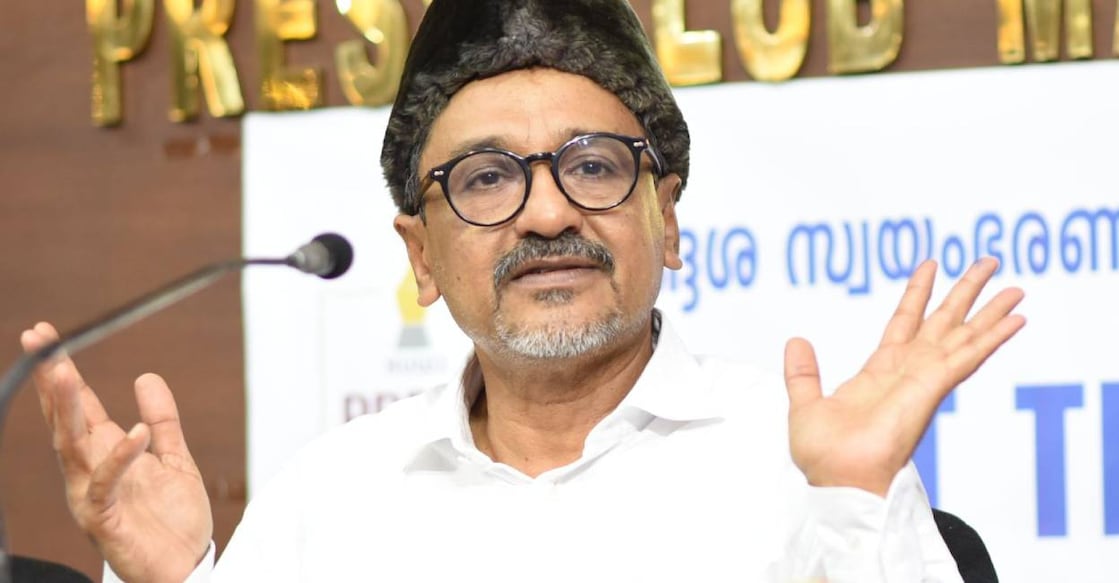
Malappuram: A remark by Panakkad Sadiq Ali Shihab Thangal, state president of the Indian Union Muslim League (IUML), has added a significant political dimension to the ongoing leadership debate within the Congress party in Kerala. His comments, seen as clearly endorsing V D Satheesan for the Chief Minister’s post, come at a time when exit polls have predicted a possible return to power for the United Democratic Front (UDF).
Speaking to the media on Thursday, Thangal pointed to exit poll trends that showed support for Satheesan as a reflection of broader public sentiment. He made it clear that the perception emerging from these surveys aligns with what he described as the people’s opinion.
The statement is politically significant not just for what it says, but for who is saying it. Traditionally, the IUML, despite being the second-largest constituent of the UDF, has refrained from publicly intervening in leadership choices within the Congress. The Chief Ministerial selection has historically been treated as an internal matter of the Congress party. Thangal’s comments, therefore, mark a rare and notable departure from that convention.
The IUML’s position comes against the backdrop of an intensifying, though largely informal, contest within the Congress over leadership ahead of poll results. Senior leaders, including V D Satheesan, K C Venugopal, and Ramesh Chennithala, are widely seen as key contenders. Discussions within party circles have gathered momentum soon after polling concluded, reflecting both anticipation and underlying factional dynamics.
Thangal, while acknowledging that the final decision rests with the Congress leadership, emphasised that public sentiment should be a guiding factor. He expressed confidence that the party’s central leadership would take a pragmatic view, noting that they are 'capable of understanding the situation'.
The IUML’s intervention also reflects its growing confidence about its own electoral prospects. Contesting 27 seats, the party is optimistic of winning a substantial majority, potentially over 20 seats. Such a performance would significantly enhance its bargaining power within the UDF, especially in the government formation stage.
In regions like Kozhikode, where the UDF is attempting to wrest multiple seats from the LDF, IUML’s organisational strength is expected to play a decisive role. A strong showing by the party could make it difficult for the Congress leadership to overlook its preferences on key decisions, including leadership.
The Congress–IUML relationship has been a cornerstone of the UDF since the early 1980s, with Congress as the dominant partner and IUML as the principal ally. While the IUML has occasionally been rewarded with significant positions, including the Deputy Chief Minister’s post in the early 1980s under K Karunakaran, it has largely maintained a calibrated approach in coalition politics.
Against this backdrop, the current statement gains added significance. By implicitly weighing in on the Congress’s internal hierarchy, where leaders like Chennithala, Venugopal and Satheesan represent different generations, the IUML appears to be signalling a preference for a leadership transition within the Congress.
If the UDF does return to power, the Congress high command will have to balance internal equations with external expectations. In that scenario, the IUML’s early signal could carry considerable weight in determining who ultimately occupies the Chief Minister’s office in the state.

 Add as a preferred source on Google