
Kannur's Aralam farm overrun by Sambar deer; concerns rise over threat to agriculture
Mail This Article


Iritty: As efforts continue to manage the wild elephant threat in Aralam Farm, a less visible but rapidly growing concern is emerging with the rising population of sambar deer across the resettlement and agricultural zones.
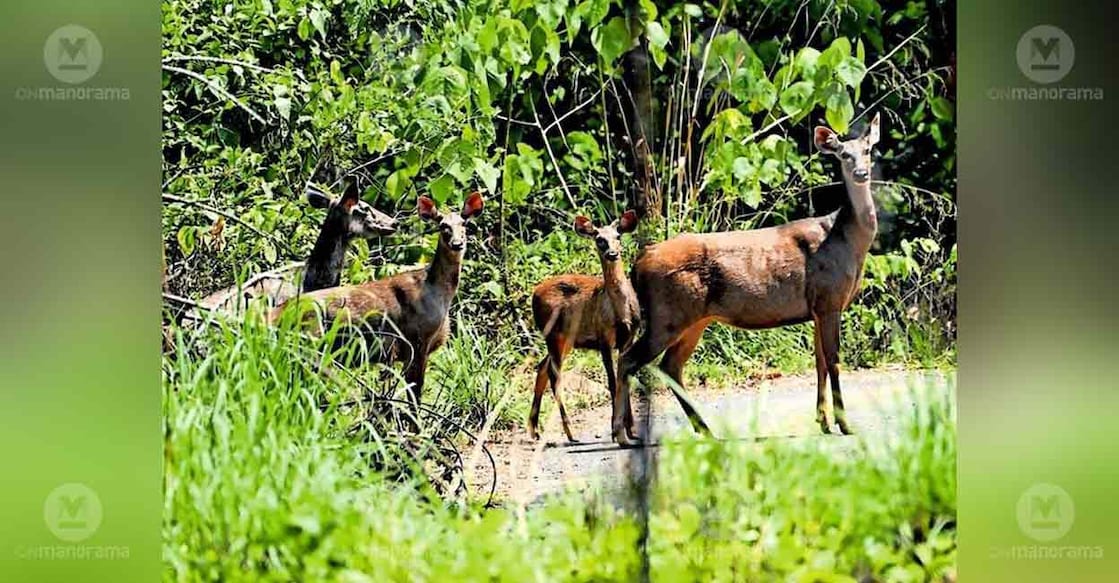
According to farm employees and local residents, around 600 to 1,000 sambar deer (locally known as malan or mlavu) now inhabit the agricultural lands and resettlement areas of the farm here. Their increasing numbers are posing a significant threat to farming activities,besides creating conditions that could encourage a rise in tiger presence in the region.
While ongoing wildlife mitigation efforts remain largely focused on measures such as constructing an elephant-proof wall and driving the wild elephants currently settled in Aralam back into the forest, estimates of the growing deer population have added a new layer of concern. Alongside other wild animals such as macaques, giant squirrels, and wild boars that already trouble the area, the surge in sambar deer numbers is now emerging as a major issue and is second only to the threat posed by wild elephants.
The farm spans 4,000 acres designated for resettlement and 3,500 acres for cultivation and currently accommodates around 1,200 families. The remaining 2,700 acres in the resettlement zone lie largely abandoned and overgrown with forest vegetation. Even within the cultivated areas, several patches have turned wild. Rich in evergreen and deciduous trees, shrubs, dense grass cover and bamboo thickets, the landscape has evolved into an ideal habitat for sambar deer.
In addition to natural forage, the deer feed on cashew apples and other fruits available within the farm. This is also influencing changes in their feeding patterns and behaviour. These animals are usually seen in small groups of five to ten animals and with the species producing at least one fawn per year, their population is growing rapidly. During the day, they take shelter in thickets and moist, overgrown areas and venture out at night in search of food.

Mounting damage to crops and saplings
The sambar deer population in Aralam Farm is posing a serious challenge to both the farm as well as the resettlement zone. They damage cashew saplings by biting off tender leaves and often uproot newly planted seedlings, including cashew plants. Significant losses are also caused as they feed on cashew apples.
Farm workers note that a single deer consumes up to 3 kg of cashew apples a day on average. Cashew apples that fall at night are eaten along with the nuts. Later, while resting in thickets and chewing cud, only the cashew nuts are excreted. Though workers collect and store them for sale, resin from the shells seeps out through the bitten portions, leading to the loss of entire batches.
Meanwhile, pepper vines in the farm are also facing extensive damage as the animals rub and scratch their bodies against these plants.
Male deer shed their antlers every year, during which they often strike and rub them against trees with soft bark. As a result, newly planted saplings introduced as part of compensatory plantation drive are also being widely damaged.
Need for Urgent Relocation
To enable any agriculture-based development in the farm and resettlement areas within it, the sambar deer population must be urgently relocated. Shifting them to forested zones free from such pressures is also essential for their conservation. While the forest offers a relatively safer habitat, deer in farm areas and nearby human settlements remain vulnerable to hunting. At present, the presence of wild elephants has kept hunters at bay. However, once the elephant-proof wall is completed and elephants are driven back into the forest, the risk of deer hunting is expected to rise.
-
2 HOURS 55 MINUTES AGO
Former Kerala Additional Chief Secretary PH Kurian passes away

Since the deer population is dispersed in small groups, relocating them into the forest is indeed a challenging task. To begin with, a proper census must be conducted using the line transect method. Based on this assessment, a structured relocation plan should be prepared. The animals should then be translocated to the Aralam Wildlife Sanctuary through tranquilisation or other appropriate methods. The Forest Department, with the support of agencies such as the Kerala Forest Research Institute, should urgently formulate and implement such a plan, said Dr K P Nitish Kumar, Administrative Officer, Aralam Farm.
Rising risk of tiger presence
Areas with a high deer population are often associated with stronger tiger presence, and in the past two years, tiger sightings have also been reported within Aralam Farm. This, in turn, has raised concerns that any movement of tigers into human settlements could mark a more serious phase of human–wildlife conflict. As tigers are also present in the Aralam Wildlife Sanctuary, relocating deer into the sanctuary may help reduce the likelihood of tigers straying into human-inhabited areas.
Impact on livestock health
Ticks (commonly known as deer ticks) found on the bodies of sambar deer are also posing a threat to livestock, which form an important source of livelihood for families in the resettlement area. These parasites can spread to domestic animals, hindering their growth, reducing milk production, and causing diseases such as theileriosis. They also trigger severe allergic reactions in humans. Farm workers and residents in the resettlement area here have been reporting frequent cases of such allergic conditions.
