

Kochi doctor realised he was autistic at 34, now helps similar children with music therapy

Mail This Article


On Fridays, Dr Lincoln Samuel’s apartment in Kochi comes alive with a different kind of rhythm, the slightly chaotic but purposeful sounds of drumsticks striking pads and keyboards being pressed at uneven tempos. What may sound like discordant notes from the outside is, in reality, part of a carefully designed learning space for autistic children.
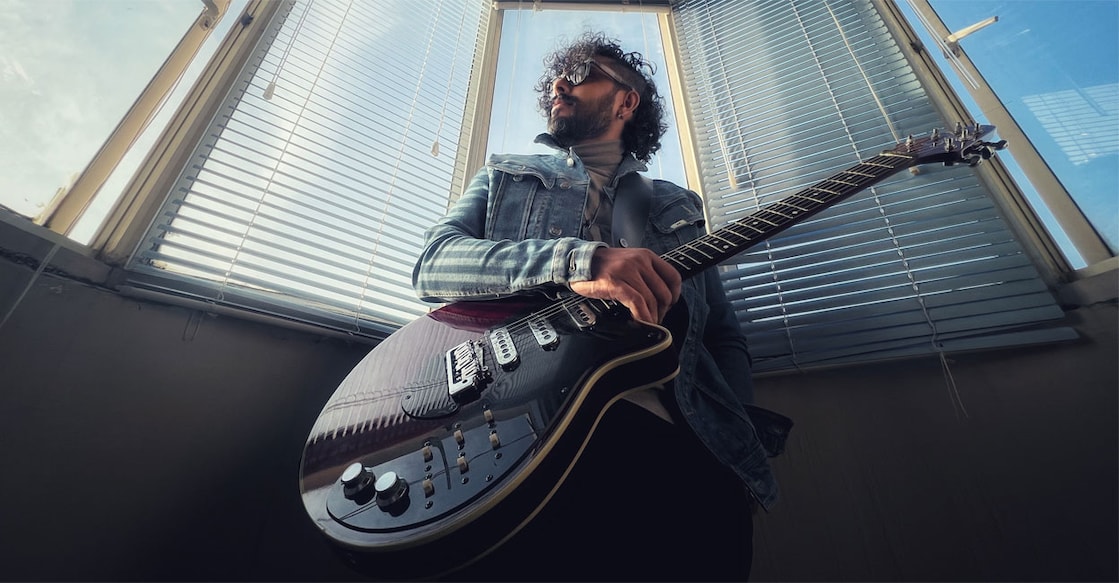
For Dr Lincoln, music has always been more than just a passion. The 42-year-old Kadavanthra native uses it as a tool to help children diagnosed with autism improve their motor functions and cognitive abilities through his initiative, Oscillator’s Academy.
The academy currently has 12 students aged between five and 19 and offers training in percussion, guitar and keyboard.
He previously worked as a senior specialist in paediatric cardiothoracic surgery at a private hospital in Kochi. His journey from surgeon and musician to a teacher working with autistic children, however, was shaped by his own personal experiences.
Speaking about the turning point in his life, Dr Lincoln said he was diagnosed with high-functioning autism level 1 in 2018 after facing difficulties in social interactions and at the workplace. “I was going through a phase where my social interactions were not on par with others. My behaviour was constantly questioned. I had difficulties with co-workers. I had obsessive tendencies with patient care. I was called abrasive,” he said.
Following these challenges, he underwent evaluation and was diagnosed with autism. “I started thinking how difficult it must be for children with low-functioning autism if even I, with high-functioning autism, was often asked not to be myself,” he said.
Two years after the diagnosis, Dr Lincoln returned to music seriously and began working as a music producer. Music had already been a major part of his life during his college years, when he performed with bands and played gigs. “My mother, Dr Shoba Samuel, was the one who pushed me into music when I was seven years old after noticing how curious I was about guitars whenever they appeared on television. It eventually became my passion,” he said.
According to Dr Lincoln, learning a musical instrument helps regulate the nervous system of children with autism. “Having autism is when the neurological system fights back when a person tries to behave ‘normal’. Learning a musical instrument regulates the nervous system,” he said.
“Each child has varying degrees of autism and may also have parallel medical issues. Some may be non-verbal, some hyperactive. Hence, I make sure to collaborate with their therapists while designing the course. For example, I work with special educators to develop visual cues, numerical systems and colour coding depending on the needs of each child,” he said.
Reflecting on his own childhood, Dr Lincoln said he often felt misunderstood. “My teachers would frequently call my parents because of my behaviour. Everywhere I went, I was considered an outsider. That is why I make sure my students get the space to be themselves,” he said.
He added that the academy focuses not just on teaching basic lessons but also on helping students develop aptitude and precision. “I don’t teach them at a basic level alone. I push them to play with aptitude. Learning music trains the brain to become more precise with repetition,” he said.
“I take one-on-one classes from Monday to Thursday between 7.30 am and 12 noon. On Fridays, I conduct group sessions where the children jam freely for an hour. Initially, they play haphazard tunes, but eventually they begin coordinating and it comes together as music,” he said. “That is how they communicate,” he added.
Dr Lincoln explained that children with autism often take longer to learn because of sensory overload and intrusive thoughts. “For autistic children, the learning curve is longer. Their sensory overload needs to be calmed down. I hold their hands while teaching them to play, and through repetition, they learn. It takes time,” he said.
“But they have other interests as well. For example, one of my students is obsessed with diecast cars, another student who is non-verbal is brilliant at physics, and another child is fascinated by lifts and just stands watching them,” he said.
He also credited his wife, Dr Susan Zacharia, a developmental paediatrician specialising in autism, for supporting him through his diagnosis and his work with children. “She assured me that what I do with these children is not something many people can do,” he said.
Parents of children attending the academy say the impact of the music sessions extends far beyond learning an instrument.
The mother of 14-year-old Michelle Vinny, who has Autism Spectrum Disorder (ASD) and has been learning drums under Dr Lincoln since last year, said she has seen significant improvements in her grip strength and posture. “This improvement carries over to many other aspects of her life. With better grip strength, she can turn pages more easily, zip up her clothes, and manage daily tasks better,” said Dhannya Ittymathew.
“Being a psychologist and my husband a neurologist, we identified her condition as early as her ninth month. Her IQ is very high and falls in the genius category, so regular physiotherapy tends to bore her. She is very interested in music, sings, and recites poetry, although her speech still lacks clarity, which we are working on. Besides music, Michelle is a self-taught artist, and her paintings have been displayed at national and international exhibitions,” Dhannya added.
