

Finding Indian Dory: CMFRI discovers new fish species off Kerala coast
Mail This Article


Kochi: For decades, marine biologists believed a tiny silver fish found in the deep waters of the Indian Ocean was the same species as Cyttopsis rosea, a deep-sea fish known from the Atlantic and Pacific Oceans.
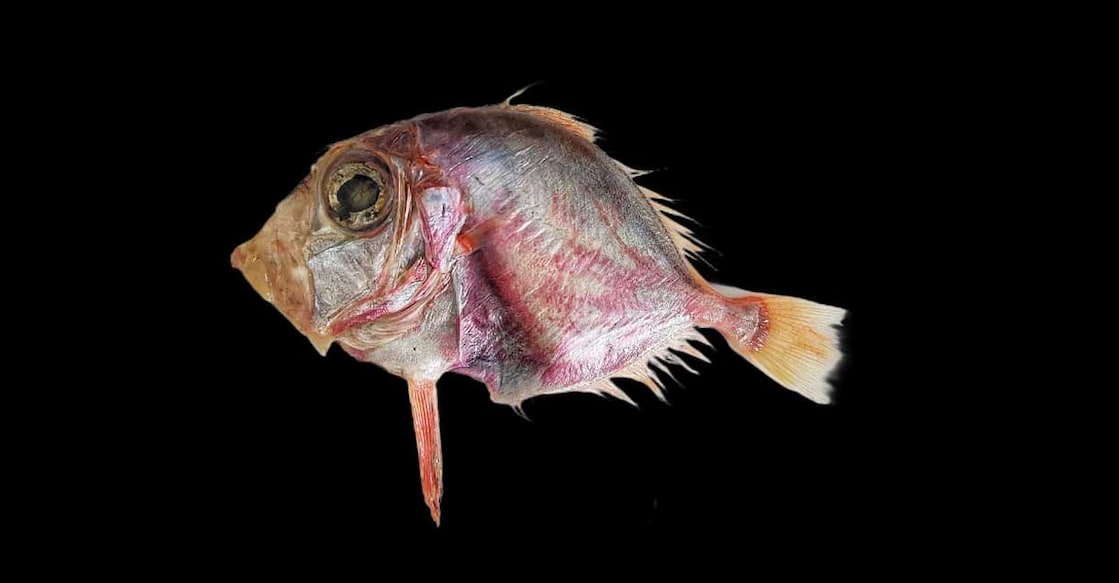
Scientists at the Central Marine Fisheries Research Institute (CMFRI) in Kochi have now proved otherwise, identifying it as an entirely new species hidden in the depths of the Arabian Sea off India's southwest coast.
The newly discovered species has been officially named Cyttopsis indica and will be popularly known as the Indian Dory. The discovery was led by CMFRI scientist Dr R Ratheesh Kumar, and the findings have been published in the Indian Journal of Fisheries.
Ratheesh told Onmanorma that the idea took shape after he came across an international research paper on similar fish found in the Pacific Ocean. The study questioned whether fish recorded from the Indian Ocean could really belong to the same species, considering the vast geographical separation between the oceans.
That prompted the CMFRI team to closely monitor deep-sea catches landed by fishermen.
The breakthrough came at Shakthikulangara Harbour in Kollam, where the continental shelf drops steeply, allowing fishing boats to reach deep waters without travelling far offshore.
During routine sampling, researchers collected six well-preserved specimens measuring just 6 to 7cm each from the catches of commercial deep-sea trawlers.
“We ourselves conduct experimental fishing, but we don't continuously reach such depths,” Ratheesh said. “It's the Kollam fishermen who go out there, especially between October and January when they target deep-sea export shrimp like Plesionika and Heterocarpus. They pull up these fish from depths of 350 to 500m.”
Back in the laboratory, the scientists carefully compared the fish's physical features with known species and also carried out DNA analysis.
The fish differed from its closest relatives in several characteristics, including the arrangement of its fins and scales. Genetic analysis provided the strongest evidence, showing enough variation from related species to confirm that it was an entirely distinct species rather than a regional variant of Cyttopsis rosea.
The findings ended decades of mistaken identity and established Cyttopsis indica as a species unique to the Indian Ocean.
Can we eat it?
Despite the discovery, the Indian Dory is unlikely to become a commercially important food fish anytime soon.
The small fish resembles Mullan (Silverbelly) and is currently regarded by fishermen as ‘trash fish’, which is an accidental catch in shrimp trawls that is generally sent to fishmeal processing plants.
According to Ratheesh, deep-sea fish survive under immense pressure by storing high levels of waxy compounds in their bodies, making some of them unsuitable for direct human consumption.
“Because of these waxy lipids, some of these deep-sea fish are not immediately consumable for humans. We can only utilise them after conducting proximate composition analysis to find out if there are non-consumable traits, and finding ways to safely isolate or remove those waxy esters,” he said.
Another challenge is availability. The species is caught only occasionally because most commercial fishing vessels in India operate at depths of 50 to 90 metres. Fishing deeper waters is expensive due to high fuel costs and uncertain returns.
Opening a window into the deep sea
Scientists say the discovery is a reminder of how little is known about India's deep-sea ecosystems.
With coastal fish stocks facing increasing pressure from decades of intensive fishing, researchers believe deeper waters could hold valuable biodiversity and future marine resources.
The central government has been encouraging deep-sea exploratory fishing, while CMFRI has been mapping promising fishing grounds for deep-sea species such as squids and ribbonfish to better understand their distribution and commercial potential.
The new discovery shows that the deep waters off India's coast still hold many scientific secrets waiting to be uncovered, offering new insights into marine biodiversity and potentially expanding the country's understanding of future ocean resources.
 Add as a preferred source on Google