
What killed people in Wayanad? Konkan Railway Corp says landslide, but GSI forecast was green for fatal day

Mail This Article


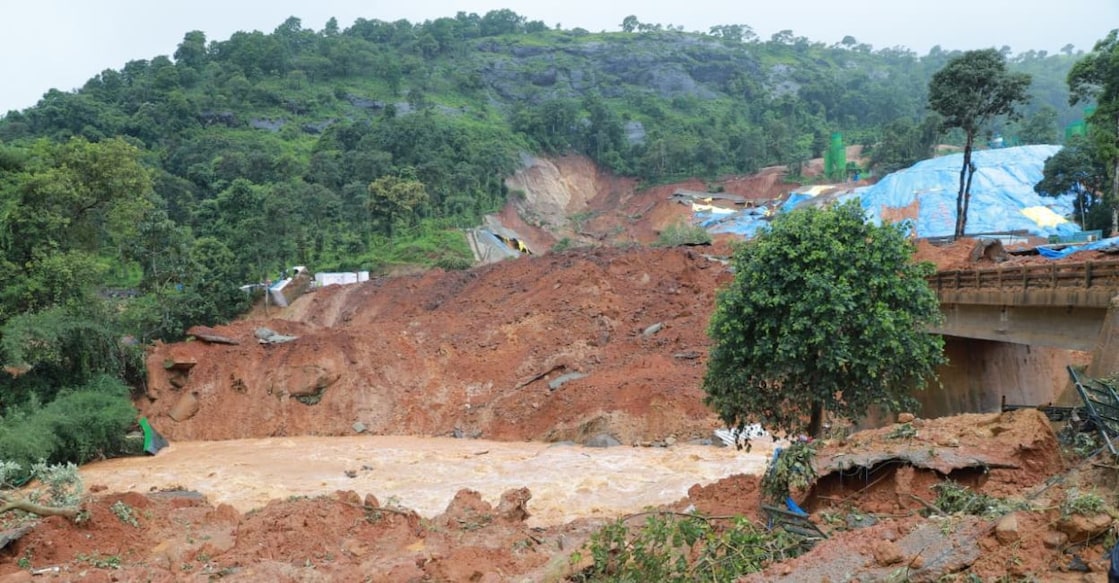
The Konkan Railway Corporation Limited (KRCL), the Special Purpose Vehicle (SPV) entrusted with the construction of the Wayanad twin tunnel, has attributed the fatal accident at Kalladi to a landslide triggered by heavy rainfall. This observation confounds the landslide forecast for Wayanad on July 7, when the slope failure claimed 7 lives. The Geological Survey of India's (GSI) forecast for Wayanad for the same day was green. Besides, the landslide susceptibility map places the area under low/moderate category.
The GSI, as part of the multi consortium LANDSLIP project, has developed a prototype regional Landslide Early Warning System (LEWS) for India. Since 2025 monsoon, GSI has been providing operational and experimental landslide forecast bulletins for 21 districts in eight states. In Kerala, an experimental forecast for ground testing is given for Wayanad and Idukki and is shared with the state and district management authorities. The operational forecast is currently live for Darjeeling, Kalimpong in West Bengal and Nilgiris in Tamil Nadu, according to the centre's statement furnished in the parliament.
GSI sources confirmed that there was no forecast of a landslide in Wayanad on July 7. A field-level inspection following the accident has also given indications of a slope failure. The KRCL, in its official statement, however, termed the incident as an unusual occurrence. According to the KRCL, 240 mm rainfall was recorded in 24 hours in Wayanad on July 7. The site where the landslide originated is 240m away from the excavated area.
"Since the landslide occurred at 110 m over the tunnel crown because of the elevation difference, a huge pressure inclined to the downward slopes of the cut & cover area where slope protection works were carried as per approved design and drawings. Nearby trees fell and the soil was swept away in a single movement," the KRCL statement cited.
Officials associated with weather forecast and disaster management said that rainfall in higher measures were recorded in the surrounding areas on the same day, but no erosion or landslide was reported. In 2024, when landslide happened in Chooralmala and Mundakkai in Wayanad, 572mm rainfall was recorded in 48 hours. "On July 7, around 30 mm rainfall per hour was recorded in the area. This location is not prone to landslide and even then the measure of rainfall was too low to trigger any kind of natural failure," an official said.
The KRCL hasn't mentioned the amount of rainfall recorded in the weather station operated by the contractor Dilip Buildcon Limited on the day of accident. Two key conditions for granting Environmental Clearance for the project included micro-scale mapping of landslide vulnerable zones to delineate critical areas and installation of automated weather stations along with telemetry data transmission in the northern and southern node of the tunnel road to provide warning signals regarding extreme rainfall events and stoppage of tunnelling activities.
As per the report submitted by the state government in the High Court, the 24-hour rainfall measured till 11.30 am on July 7 was 226 mm at the weather station in the work site where the debris collapse occurred. The slope failure at Kalladi happened around 11 am. The officials said that there was no slide in the region and that it was a slope failure caused by saturated soil.
Minutes of a meeting held following a site visit by senior PWD officials on June 25 shows that concerns were raised over accumulated soil in the project site and about the need to remove it to mitigate chances of erosion.
"The soil had begun to sag due to saturation from heavy rainfall. It wasn't adequately packed. The same incident happened during NH works in Kasaragod and Idukki gap road. While this type of slope failure is an expected hazard during such constructions, the company has to answer why people were deployed in the region when the work was stopped," an official said.
The technical staff was present in the morning hours to monitor any slope moments in the muck disposal area, according to the KRCL. The high-level meeting minutes shows that there was clear instruction to halt all kinds of works when rainfall is recorded above 250mm.

 Add as a preferred source on Google