

Smart scheduling, clever intercropping help this Kannur farmer reap riches all year round
Mail This Article


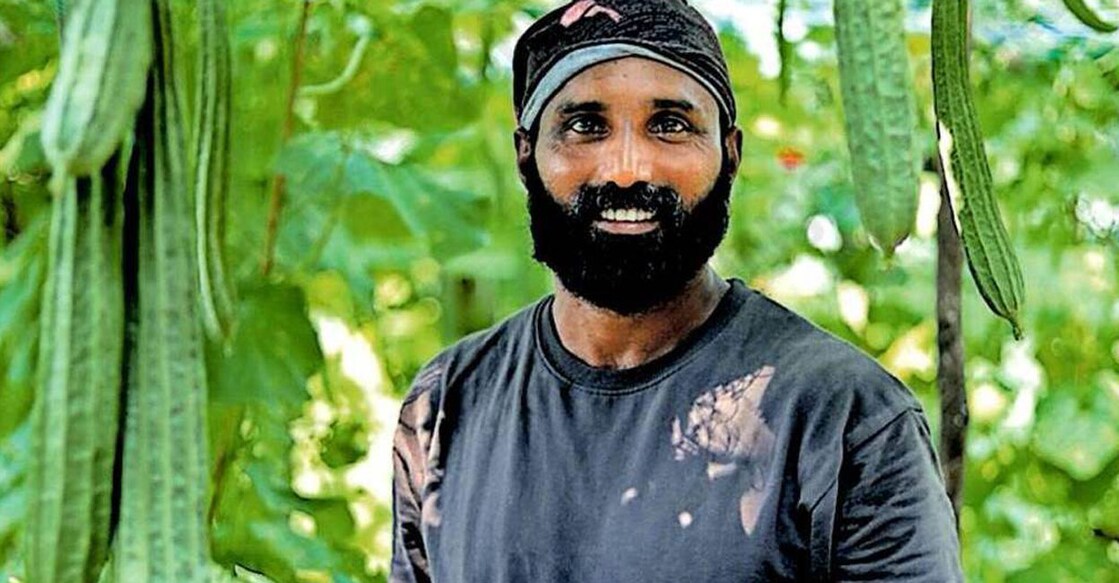
If you ask Rajeesh from Kallavalli House in Keezhattur, Kannur, how to make farming consistently profitable, his answer is surprisingly simple: "Farm with a strategy." For Rajeesh, this translates to cultivating crops when market prices peak, minimising production costs, and securing direct marketing channels.
While it sounds straightforward, Rajeesh has spent 25 years mastering this formula. Cultivating over 10 acres of both owned and leased land, he has never had to record a loss in his accounts. He inherited his passion and early knowledge from his late father, Damodaran, and mother, Janaki, both of whom were seasoned farmers.
Maximising monsoon profits
While the monsoon in Kerala often dampens vegetable yields, Rajeesh views it as an opportunity. Reduced state-wide production triggers a price hike, and he strategically selects crops that thrive in this season to capitalise on the demand. His annual cycle begins right after the Vishu festival in April with thorough land preparation. He chooses sloping terrains with excellent drainage and ample sunlight, which minimises irrigation costs entirely during the rainy season.
To prepare the soil, he uses machinery to clear wild growth, which is then dried and burnt to neutralise pests. This is followed by an application of lime. Once the first couple of showers hit, he applies organic manure consisting of cow dung and poultry manure mixed with Pseudomonas, creating raised beds that prevent waterlogging. During the monsoon, while the yield is lower than in summer, the premium prices more than make up for it. As the crops begin to flower, he applies a booster mix of urea and potash along with a diluted slurry of cow dung and oil cake. Pest control is managed ecologically using fruit fly traps and yellow sticky traps.
A calendar for all seasons
Rajeesh runs a highly structured, year-round farming calendar split into distinct seasons. The second phase runs from September to January, where the land is machine-tilled for vegetables and bananas, with winter varieties sown in November. The summer crop cycle spans from January to May, targeting the high-demand Vishu market. His primary crop during this period is the golden cucumber (Kanivellari). Last season alone, he harvested and sold 7 tonnes of cucumber, commanding ₹20 to ₹25 per kilogram.
Smart intercropping and crop protection
A cornerstone of Rajeesh's success is companion planting. He regularly intercrops pumpkin and ash gourd in tapioca basins; as the tapioca grows upright, the creepers cover the ground, giving him two distinct harvests from the same plot. Similarly, he pairs ladies' finger (okra) with cucumber, a practice he says naturally minimises pest infestations. Recently, his watermelon crop yielded impressive returns, with yellow watermelons fetching ₹35 per kilogram and the Kiran variety selling at ₹25 per kilogram. Rajeesh is supported in his daily operations by his siblings Ramakrishnan, Rajeevan, Rajesh, and Sreedhari.
To protect his hard work from wild boars and porcupines, Rajeesh installs robust perimeter netting before planting begins. During the harvest phase, night vigils paired with occasional firecrackers keep crop damage to an absolute minimum.
Editorial note
For those interested in learning more about his successful farming model or sourcing fresh produce, Rajeesh can be contacted directly at +91 9495262747.
