

Conflict in West Asia is a symptom of a larger disease
Mail This Article


The region of West Asia, never known for protracted peace, is in flames and fury! The new wave of violence has come up due to the launch of Operation Epic Fury and Operation Roaring Line, or the attack by the US and Israel on Iran on February 28. Since then, the entire region has come under the shadow of the war.
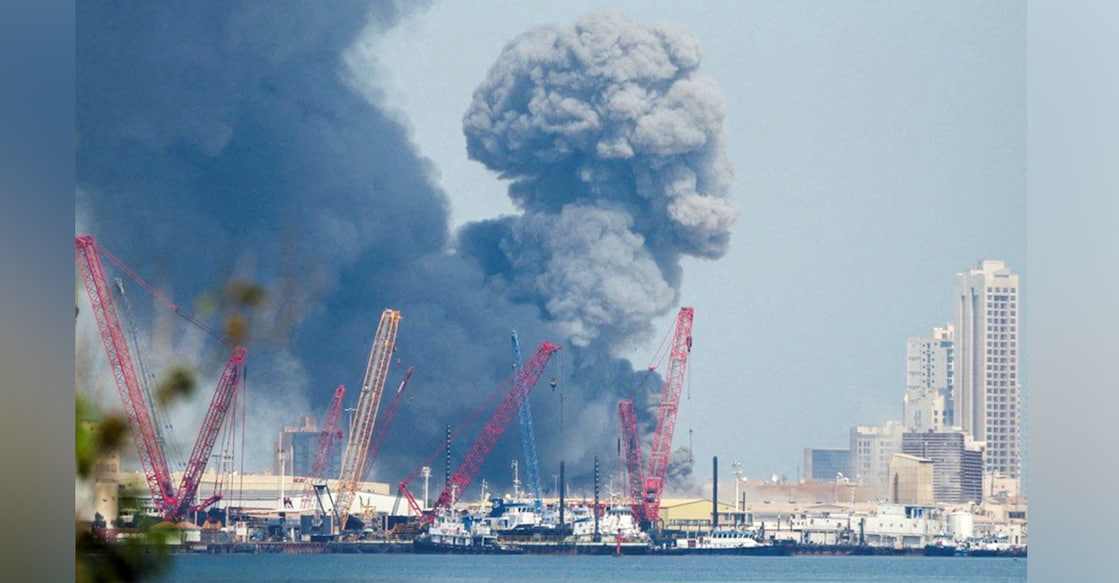
Iran has retaliated to these strikes by launching ballistic missiles and drones, hitting not only Israel but also military bases of the US in the region as well as the airports of Dubai, Abu Dhabi and Manama, according to some media sources. The conflict has become so wide that it has become a daunting task to cover everything in one article. Several new developments have been taking place with each passing minute.
One of the most consequential developments that has taken place by the time of writing this article has been the killing of Iranian supreme leader Ayatollah Ali Khamenei by the joint US-Israeli airstrikes on February 28, causing widespread protests not just in Iran but around the world. The attack on Khamenei, who took the helm in Iran in 1989, following the death of Ayatollah Ruhollah Khomeini, the charismatic leader who had spearheaded the Islamic revolution a decade earlier, occurred during the holy month of Ramadan.
Khamenei, a popular but controversial figure, was not just the supreme leader of Iran but also a religious leader of Shiites all over the world. He was instrumental in shaping the military and paramilitary apparatus that formed both Iran’s defence against its enemies and provided it with influence well beyond its borders. His killings have sparked protests from Iraq to Pakistan and Kashmir.
As a theocratic state, it was he who called the shots and was more powerful than the Iranian President and had his parallel armed forces by the name IRGC (Iranian Revolutionary Guard Corps). He had been accused of imposing a strict and narrow version of Sharia under which the rights of women and minorities were severely curbed. Several videos have emerged showing many people, especially women, celebrating his death.
The attack on Iran has come at a time when it was already in a diplomatic dialogue with the US under the mediation of Oman over Iran’s nuclear program. In any case, the massive military build-up by the US for several weeks around Iran had made it clear that Iran could be attacked at any time.
It is believed that Iran, considerably weakened due to its failing economy and sanctions that have been there for decades, was supported by the Russians and the Chinese, who had provided weapons and intelligence to it about US aircraft carriers and other ships in the Mediterranean Sea. It is to be seen how far these countries will go and continue to help Iran, now that the conflict has turned full scale.
Despite a successful attack by the US-Israeli forces in the initial days of the conflict, which has annihilated America’s long-time enemy, many scholars argue that their end goal, which is regime change in Iran, may not be possible only through airstrikes, and would require boots on the ground, irrespective of the popularity of the theocratic regime.
It is because Iran is neither Iraq nor Venezuela. Unlike Saddam or Maduro, the country’s authority is not based on the cult of Khamenei, but on the ideology of the Islamic Revolution of 1979, which led to the establishment of the Islamic Republic of Iran, and is very much institutionalised. Therefore, the structure would not fall merely because the supreme leader is absent or because the regime has become extremely unpopular among Iranians, as witnessed during the massive protest that began in December 2025 in almost all major cities and towns in Iran.
Also, unlike the 12 days war between Iran and Israel in 2025, where Iran was caught off guard and where the US struck using its B2 Spirit stealth bomber on nuclear site, followed by Iranian symbolic attack on the Al Udeid, the US military base at Qatar, this time Iran has responded quickly and within hours of being attacked, the Iranian missiles and drones were successful in penetrating the skies of major American allies like the Saudi Arabia, Qatar and Jordan.
Iran, since the Islamic revolution of 1979, has been a thorn in the eyes of the US and its proxies, or the ‘axis of resistance’, -- the Hezbollah in Lebanon, the Hamas in Gaza and the Houtis in the Red Sea area -- have been waging a war against the interests of the US and its allies, especially Israel. Its position has considerably weakened after the October 7 attack by Hamas on Israel and Israel’s targeting of the three Iranian proxies.
With the killing of the supreme leader, two possibilities may emerge. Either there will be a chaotic situation for the want of a new leader who would command a personality cult like Khamenei's and be able to take everyone along, which looks bleak. Or Iran would want other countries of the world, especially the American allies in the region, to feel the heat. Iran’s decision to block the Strait of Hormuz, a chokepoint through which nearly a fifth of the world’s oil supply passes, is a case in point.
In the age of AI and narrative war, it is difficult to differentiate between reality and fiction, and much of the news and information is being planted by both sides. The internet is flooded with videos and images of attacks and counter-attacks, whose authenticity cannot be verified.
Therefore, it is not easy to say which way the war will go. But stock markets are expected to fall sharply, and there are already reports that insurance premiums for oil-carrying vessels in the region around Iran are on the rise.
This escalation of conflicts in contemporary times, be it between Iran and Israel, Russia and Ukraine or Pakistan and Afghanistan, reflects not just a decay of global institutions for diplomacy like the UN, but an overall decline of diplomacy as a means to resolve conflicts and issues between countries, something that is detrimental to world order and global peace.
The US-led world order, which came up after the Second World War and survived for several decades, for all its anomalies, still had some space for multilateralism and negotiations. That order is in steep decline, and the US's reckless, unilateral policies are to blame. But the question that emerges is whether the new world (dis) order, that is fast emerging, will only function on the ‘might is right’ or ‘my way or the highway’ kind of principles, or will it still have some scope for international law, rule-based world order, ethics and morals? The question is very difficult to answer.
(Pavan Chaurasia is a Research Fellow at the India Foundation)
 Add as a preferred source on Google