

Spain lift World Cup as Ferran Torres sinks Argentina in extra time
KEY EVENTS
Mail This Article


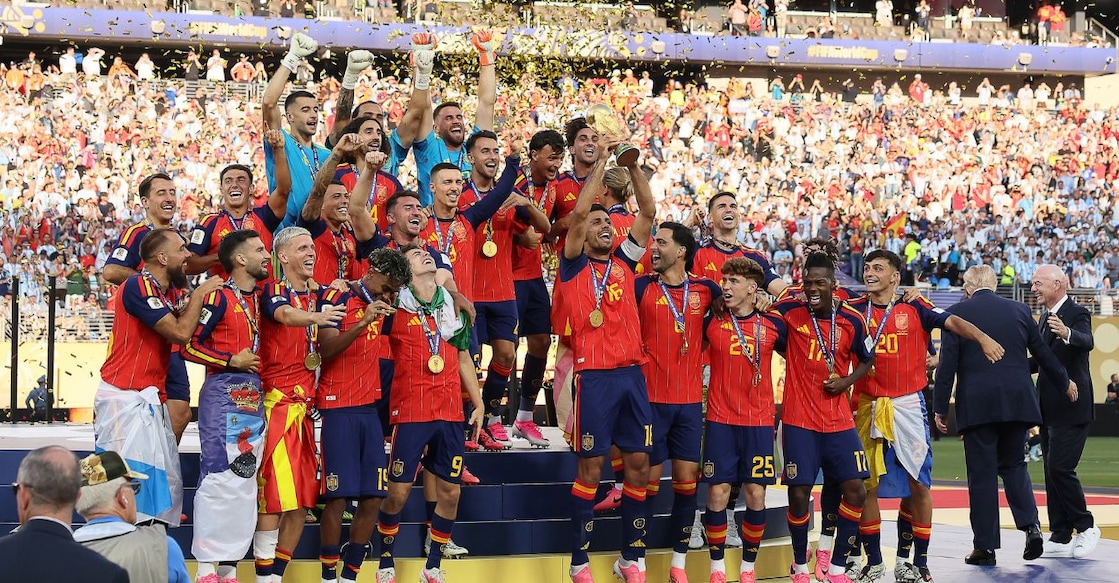
Ferran Torres finally delivered the breakthrough after Spain's relentless pressure, scoring in the second half of extra time to hand the European champions a 1-0 victory over Argentina and their second FIFA World Cup title at the New York New Jersey Stadium.
The triumph ended Argentina's reign as world champions and marked Spain's first World Cup crown since their historic triumph in South Africa in 2010.

The decisive moment came from a brilliantly crafted move. Pedro Porro floated a teasing cross into the penalty area, where Nico Williams rose highest to head the ball back across goal. Torres timed his run to perfection, took a couple of quick strides and calmly slotted the ball past Emiliano Martinez and the covering defender, finally breaking Argentina's resistance after more than 100 minutes of frustration.
Spain's winner was a fitting reward for a dominant display. They controlled possession for most of the contest, created the better chances and repeatedly tested Martinez before Torres' clinical finish finally settled the World Cup final.
The goal was the reward Spain had long deserved. Having dominated possession and created chance after chance throughout the contest, La Roja finally found the clinical finish that had eluded them for 106 minutes.
Spain finished with 20 attempts on goal, keeping Martinez busy throughout the night. The Aston Villa goalkeeper produced 10 saves and was the principal reason Argentina remained in the contest for so long.
For Williams, the assist was a moment of redemption. Earlier in extra time, he thought he had put Spain ahead after slotting home from close range, but the effort was ruled out after a foul by Mikel Merino on Nicolas Otamendi was spotted in the build-up.
Spain also had reason to feel aggrieved moments later. Torres raced clear from just beyond the halfway line, rounded Martinez and found the net, only for the assistant referee to raise the offside flag. Replays suggested Torres had been onside, making it one of the most contentious moments of the final.
Argentina, meanwhile, offered little going forward. Remarkably, Lionel Scaloni's side failed to register a shot on target and managed just one attempt in the entire match—a speculative effort from Lionel Messi in the 117th minute that failed to trouble Unai Simon.
For much of the contest, Argentina were forced into a compact 4-4-2 defensive shape as Spain dictated possession with their patient passing and movement. Messi was largely anonymous, while Julian Alvarez repeatedly dropped into midfield in an attempt to help his side retain possession. Unai Simon was virtually a spectator for most of the evening.

Lamine Yamal remained Spain's biggest attacking threat throughout the second half, repeatedly stretching Argentina with his pace, dribbling and deliveries from the right flank. Ferran Torres, Dani Olmo and Pau Cubarsi all came close before the breakthrough finally arrived.
Argentina's task became even more difficult late in normal time when Enzo Fernandez was shown a second yellow card and sent off, forcing the defending champions to play the remainder of the final with 10 men.
Earlier in the second half, Rodri and Pedri repeatedly found pockets of space around Argentina's disciplined defence but were unable to convert Spain's dominance into a goal. Pau Cubarsi forced another fine save from Martinez with a powerful long-range strike in the 80th minute, while Pedri and Olmo also tested the Argentine goalkeeper from distance.
Spain had controlled proceedings from the opening whistle. Lamine Yamal nearly broke the deadlock in the fifth minute after being played through by a perfectly weighted pass, but Martinez reacted sharply to deny the teenager. Marc Cucurella's overlapping runs and Rodri's command of midfield ensured Spain remained firmly in control, while Argentina rarely ventured into the final third.
For more than 100 minutes, Argentina's disciplined defending and Martinez's heroics frustrated Spain. But when Torres finally found the net, it was a breakthrough that had felt inevitable after one of the most one-sided World Cup finals in recent memory.
Attack vs Defence
The final pitted the tournament's most prolific attack against its stingiest defence. Argentina had scored a tournament-high 19 goals in seven matches in the run-up to the final, while Spain had conceded just once and kept six clean sheets on their road to the final.
This was only the second World Cup meeting between the two nations. Their only previous encounter came in the 1966 World Cup, when Argentina defeated Spain 2-1.
Messi was once again at the heart of Argentina's campaign, scoring eight goals and providing four assists to guide Lionel Scaloni's side to a second successive World Cup final.
Spain's success has been built on defensive solidity and midfield control, with Rodri orchestrating play from the centre of the park, while teenage sensation Lamine Yamal has provided the attacking spark.
 Add as a preferred source on Google