

Remembering invaluable ‘Warne' as RR, RCB fetch billions in sales ahead of IPL 2026
Mail This Article


As is one’s wont, this time also a newsworthy action commenced outside the playing arena even before the first ball of the 2026 edition of the Indian Premier League was delivered on March 28. The news of big-ticket purchases of two of the original eight franchisees who have been part of this marquee championship right from its start in 2008 made big headlines.
That the teams whose ownership changed hands were Royal Challengers Bengaluru (RCB), the reigning champions, and Rajasthan Royals (RR), who won the very first edition of the tournament, was a mere coincidence. What was not an accidental “co-occurrence” was the huge purse that were exchanged with these transactions, which served to underline IPL’s position as one of the wealthiest sporting leagues in the world.
RCB was bought by a consortium comprising of Aditya Birla Group, Times Group, Bolt Ventures and Blackstone (BXPE) for an amount of $1.78 Billion (Rs 16,200 crores) from United Spirits Ltd, an arm of Diageo. RR was bought by a US-based consortium headed by Kal Somani, with other members being Rob Walton (owner of NFL Denver Broncos) and Sheila Ford Hamp (owner of Detroit Lions). The amount paid to Emerging Media Ventures, headed by Manoj Bedade for this transaction was $1.63 Billion (Rs. 15,300 crores). Thus the sale of two franchisees fetched an amount of close to $3.4 Billion (Rs. 31,500 crores).
One fun fact involved herein is that Aryaman Birla, the scion of the Aditya Birla Group who heads the consortium that bought RCB and is tipped to take over as its Chairman, was once a member of the Rajasthan Royals squad but could never get an opportunity to play for this side in IPL.

Aryaman was a promising junior cricketer who turned out for Madhya Pradesh in national-level tournaments, but could unfortunately not reach the level of excellence in the game. He moved away from cricket in 2019 and focused on his studies, which helped him to take his MBA from Harvard University and a Master's in Global Finance from Bayes Business School. For the record, Aryaman is the son of Kumaramangalam Birla and grandson of Aditya Vikram Birla. So, one can say that business runs in the family of this former cricketer, who also becomes the first player to reach the level of Chairman of a franchisee in IPL.
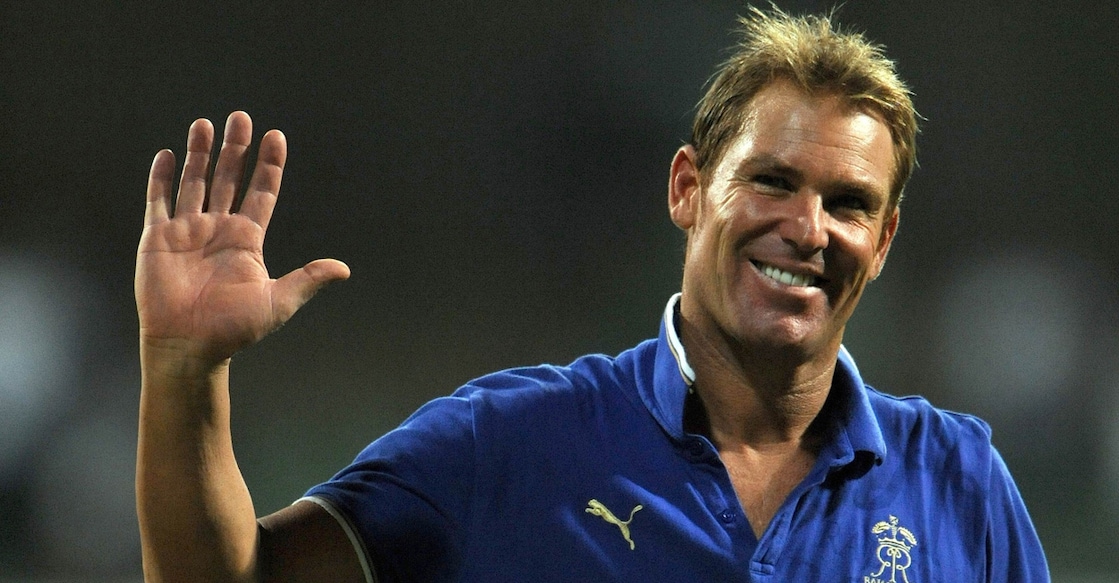
Another interesting nugget of information that came out in connection with the above transfer of ownership was the family of Shane Warne standing to receive $6,57,000 (Rs 450 crores) on account of this sale. It was revealed that Warne had bargained with the franchisee and was given 0.75% of the shareholding of the franchisee for each of the four years he played for this side. It is reported that this amount was paid to the wife and kids of Warne.
This brought back memories of Warne and the magic he wove around the first edition of IPL. Though he had toured India on numerous occasions, Indian crowds were not fortunate to see this great leg spinner at his best. Indian batsmen, led by Sachin Tendulkar and VVS Laxman, had mastered the art of tackling Warne. So, despite toiling hard and bowling with a large heart, Warne found success hard to come by while bowling against the Indian batsmen, who batted with supreme confidence in home conditions.
Warne had announced his retirement from the game at the close of the 2006-07 cricket season. The Ashes Test against England in Sydney, which ended on January 2, 2007, was his last appearance in international cricket. He had conquered all the peaks in the game, so far as bowling was concerned, as could be seen from the bag of 1,001 wickets in Tests and One Day Internationals (ODIs). The only regret he could possibly have felt was being overlooked for the captaincy of Australia despite being the deputy of Steve Waugh for many years. In fact, Waugh had stated publicly about the cricketing wisdom, shrewdness and powers of observation that Warne possessed, which would have made him a great skipper. However, his numerous “sexcapades” and the well tabulated set of indiscretions in his personal life convinced the powers that be in the Australian Cricket Board that it was not desirable to make him the captain of the national side.
RR was undoubtedly the weakest of the lot when the line-up of franchisees was announced. While the big names in Indian business and movie world bought out the major franchisees, it was a virtual unknown who won the rights for the side from Jaipur. Emerging Media Ventures, owned by Manoj Bedade, won the ownership of this franchisee for an amount of $67 Million, which made it the least expensive amongst the eight sides in the championship.
This parsimony was reflected during the auction of players as well. RR did not boast of the presence of any of the top names in the Indian cricket circuit. They had only two members of the national squad of that time in their ranks, Yusuf Pathan and Munaf Patel, and neither of them were regulars in the playing eleven of the country.

Mohamed Kaif had put his best days behind him while Ravindra Jadeja was still a promising youngster, without any exposure to top-level cricket. The overseas players in their ranks, Graeme Smith, Shane Watson and Kamran Akmal, were all good, but none had the explosive ability to turn a match on its head. The only big name that the side could boast of was Warne, who was performing the role of a cricketing supremo, combining the roles of a captain and coach.
RR started poorly, losing the first match they played, against Delhi Daredevils, by a huge margin of nine wickets. This gave the impression that this side would justify the pre-season prediction of figuring at the bottom of the list. But, they made a miraculous recovery and shocked the star-studded Deccan Chargers Hyderabad, who thought they had the game in their bag after batting first and scoring 214 runs. Led by Yusuf Pathan, who struck a brilliant 61 off a mere 28 balls, RR managed to pull off the first major upset of the championship, winning the match with only one ball to spare. This was also the first time that a side had successfully chased a target in excess of 200 runs in the IPL.
This victory electrified the entire side and they started playing like a team possessed. They went on a winning spree that saw them defeat all other sides by big margins, losing only two matches after that in the league phase. They made mincemeat of the Delhi Daredevils in the semifinals and got the better of Chennai Super Kings (CSK) in the final to lift the trophy, with the winning runs coming off the last ball of the match.
The stunning performance of RR and the positive brand of cricket they played contributed in a big way to the success of the first edition of IPL. The fact that a team which did not boast of any superstar could lift the trophy while many a star-studded side fell by the wayside, ignited the interest the public and fascinated them. This also helped the cause of IPL by helping this championship to develop a strong base amongst the followers, which served as a template for its growth in the succeeding years. The impact of the achievements of RR was such that even the sceptics, who saw IPL as an ostentatious display of money and glamour, were forced to do a rethink and change their views, albeit grudgingly.
RR’s success was scripted by Warne, who led the side with elan, while marshalling the meagre resources available with him in a brilliant manner. He was a supreme tactician, motivator par excellence, a magnetic presence and a great communicator, besides picking up wickets regularly and coming up with sweet little cameos with the willow. This success was made sweeter by the blossoming of young talents such as Ravindra Jadeja, Yusuf Pathan and Swapnil Asnodkar under Warne’s able tutelage. He was the pivot around which the entire team revolved and he ensured that the side did not lose either their focus or confidence while moving forward to keep their tryst with the winner’s medal.
IPL too have a lot to thank Warne for. Without him, the championship would have taken longer to develop firm roots in the global cricketing calendar. He succeeded in laying the framework of a superior competitive culture, which was adopted by the other sides in the succeeding years. This was partly the reason why Warne could not repeat the success that he achieved with RR in 2008 in the remaining three years he played for this side in IPL.
Shane Warne is worth much more to IPL and RR than the amount of Rs 450 crores reportedly paid by the buyers of the Rajasthan franchise to his family for his “sweat equity”. The true value of “Brand Warne” will remain inestimable to the valuers and accountants of wealth, for it rests, along with the memories of the great purveyor of the art of leg spin, in the hearts of cricket lovers across the world.
 Add as a preferred source on Google