

Explained | Districts as Export Hubs initiative
Mail This Article


• India’s total exports of goods and services touched an all-time high of $825.25 billion in 2024-25, growing further to an estimated $863.11 billion in 2025-26.
• For decades, export activity stayed concentrated around a handful of established industrial clusters and port cities.
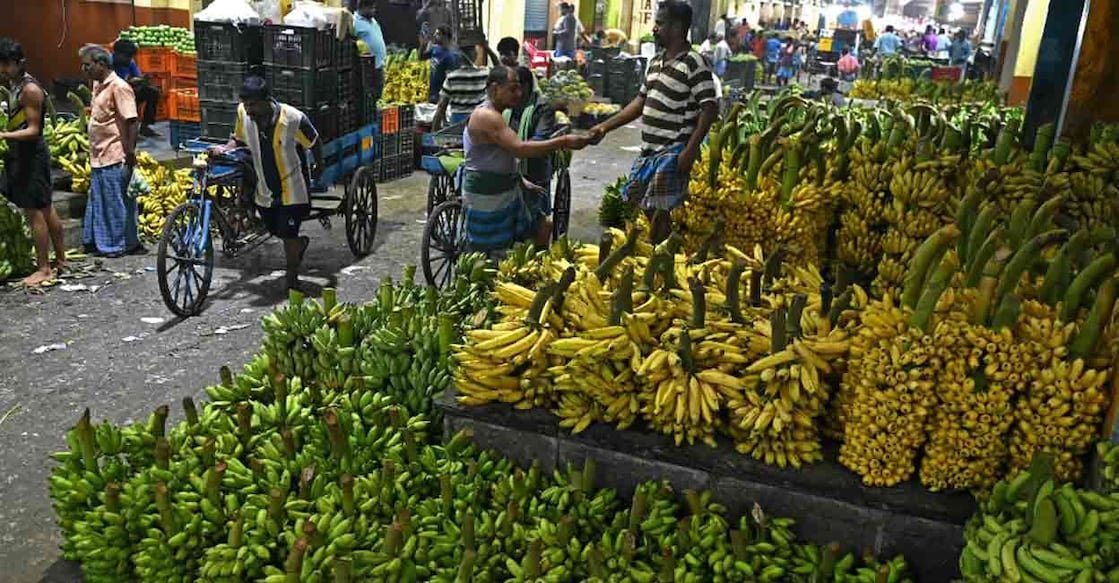
• Small towns, rural districts and remote regions rarely found their way into shipment manifests, even though many held unique, high-quality products.
• Recognising this opportunity, the government brought in a district-led export strategy in the form of Districts as Export Hubs (DEH) initiative, enabling every district to contribute to India’s export growth by leveraging its unique strengths.
From ODOP to DEH
• One District One Product (ODOP) programme began as a Uttar Pradesh state initiative in 2018. It was built around Moradabad’s brass industry, before it was scaled nationally.
• ODOP set out to select, brand and promote one distinctive product from each district, converting local identity into economic opportunity.
• To strengthen this approach, the Department of Commerce through the DEH initiative under the Directorate General of Foreign Trade (DGFT) has expanded the focus from product promotion to a comprehensive export promotion and ecosystem strengthening.
• At present, the DEH initiative covers more than 770 districts across the country.
Highlights of DEH initiative:
• The DEH initiative was launched to harness the strengths and resources of every district and unlock its export potential.
• Each district is treated as a unit of export planning, not merely a unit of production.
• It is helping local enterprises access global markets, improve competitiveness and drive district-led economic growth.
• DEH is best understood as a convergence framework, not a funding scheme.
• Rather than introducing a separate financial scheme, DEH leverages the funding available under various ongoing central and state schemes.
• It promotes exports, manufacturing and employment generation at the grassroots level.
• In doing so, it addresses district-specific export challenges and enhances district export competitiveness.
Implementation of the scheme
• Districts as Export Hubs initiative runs on a layered system of coordination between the Centre, states and districts.
• The Department of Commerce provides overall policy direction, while the DGFT anchors implementation, facilitates stakeholder coordination and monitors progress.
• At the state level, State Export Promotion Committees (SEPCs) guide implementation and ensure convergence across departments.
• At the district level, District Export Promotion Committees (DEPCs), identify export opportunities, resolve local challenges and coordinate with industry, exporters and other stakeholders.
• A key responsibility of the DEPCs is preparing District Export Action Plans (DEAPs). These plans map products and services with export potential, assess infrastructure and logistics, identify export bottlenecks.
• They also recommend interventions to improve competitiveness and market access.
