

How John Abraham’s nearly-lost ‘Amma Ariyan’ was tenaciously restored through 4,000 corrections for Cannes

Mail This Article


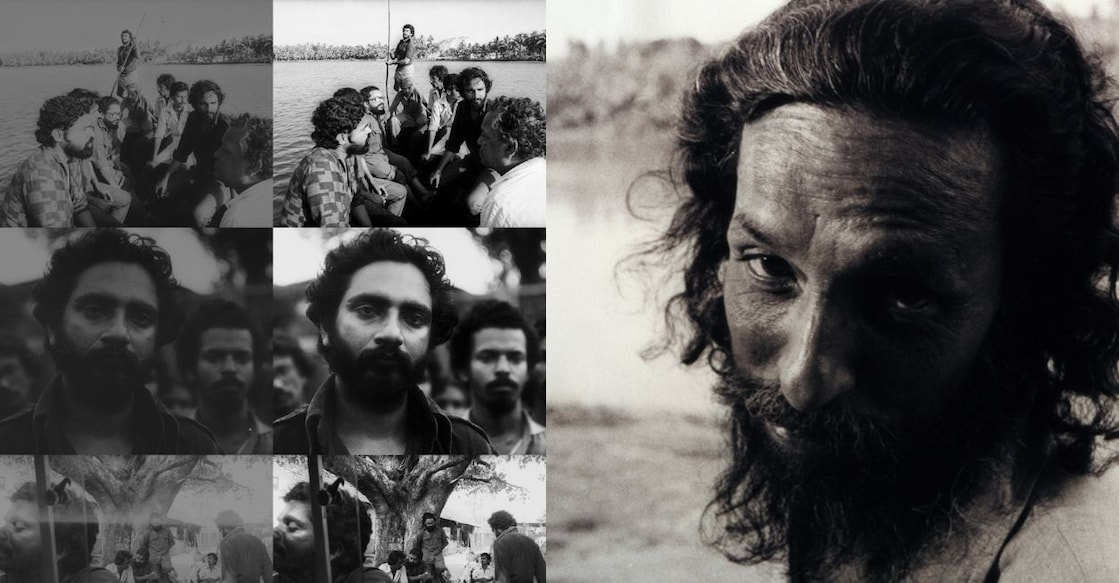
Nearly four decades after it first travelled across Kerala in makeshift screenings funded by ordinary people, John Abraham’s ‘Amma Ariyan’ is heading to Cannes.
The 1986 Malayalam classic, long regarded as one of the most radical films in Indian cinema, will receive the world premiere of its restored 4K version at the Cannes Film Festival 2026, becoming the only Indian feature selected for a premiere at this year’s festival.
For those who worked on the film, the moment feels less like a victory lap and more like the continuation of a journey that never really ended.
“I think this is a film that never got its due when it was made,” editor Beena Paul tells Onmanorama. “It has a cult status in Kerala, especially among film students, but outside that circle, many people still haven’t discovered it. This is a film that needs to be seen”.
That sense of rediscovery sits at the heart of the restoration. Directed by the iconoclastic filmmaker John Abraham, ‘Amma Ariyan’ was his final film before his death in 1987 at the age of 49. Deeply distrustful of cinema driven purely by commerce, Abraham envisioned the film as an act of collective participation rather than a conventional production.

Made under the banner of the Odessa Collective, which Abraham co-founded, the film was financed in an almost mythical fashion. Members travelled from village to village, beating drums, staging street performances and screening films to raise money directly from the public. The result was a politically charged, formally daring work that blurred the lines between documentary and fiction.
Set against the political unrest of 1970s Kerala, the film follows a young man named Purushan as he journeys to inform a mother about her son’s death. Along the way, the narrative expands into something more meditative and sprawling: a reflection on grief, memory, ideology and resistance.
For Shivendra Singh Dungarpur, director of the Film Heritage Foundation, the restoration began with a memory from his student days at the Film and Television Institute of India.
“I was absolutely mesmerised when I first watched the film,” he says. “P K Nair used to screen it for us at FTII and constantly spoke about John Abraham and his genius. I knew this was a film that had to be restored.”
That process, however, proved painstaking. No original camera negative survived. By the time restoration work began two years ago, only two usable prints remained in the National Film Archive. One had subtitles, though in poor condition, while the unsubtitled print ultimately became the primary source for the restoration.
“The condition of the prints was extremely poor,” Dungarpur says. “There were scratches, broken splices, emulsion damage and severe sound deterioration. Some portions were barely audible.”
The restoration, undertaken by the Film Heritage Foundation at L’Immagine Ritrovata in Bologna in collaboration with the Odessa Collective, required extensive manual intervention. More than 4,000 corrections were reportedly carried out on the soundtrack alone. Cinematographer Venu and Beena Paul closely supervised the work to preserve the film’s original texture and rhythm.
“When restoration happens at this level, everything becomes manual because of the condition of the material,” Dungarpur explains. “We were constantly in touch throughout the process. It was an incredible journey.”
He recalls the reaction from those who viewed the restored version at Cannes with visible emotion. “Some of the people there told us this was among the finest films they had seen. For me, that was deeply moving. This was a revolutionary film funded by ordinary citizens. To represent India with this film feels very special.”
For Beena Paul, the restoration is inseparable from the experience of making the film itself.
“It wasn’t just about editing,” she says. “It was about why all of us decided to make the film in the first place.”
She remembers Abraham as a filmmaker with immense clarity of vision, even if that vision was not always immediately visible to the younger collaborators around him.
“I was very young then, and he had a very strong personality,” she says with a laugh. “At the time, it could be difficult to fully understand what he was seeing. But I learnt a great deal from him.”
What continues to strike her is how contemporary the film still feels. “It is deeply political, yes, but it is also about the human condition. The emotions and the political anxieties within it remain relevant even today. That is why the film has endured.”
The return of ‘Amma Ariyan’ also brings renewed attention to the fragile state of film preservation in India. According to Paul, even locating surviving material from that period was a challenge.
“Restoration and preservation are incredibly important, and we still do not take them seriously enough,” she says. “This negative itself was almost impossible to find.”
Yet perhaps the endurance of ‘Amma Ariyan’ lies precisely in that fragility. Conceived outside the mainstream, carried from village to village by hand, and preserved decades later through collective effort, the film continues to resist disappearance.
At Cannes this year, ‘Amma Ariyan’ will not simply return as a restored classic. It will arrive as proof that some films outlive the systems that once ignored them.
 Add as a preferred source on Google