

Students bond with stray dogs on this Kerala campus, CAWA sets example in population control

Mail This Article


As local bodies in Kerala struggle in managing stray dogs, the Kerala Agricultural University campus at Vellayani, Thiruvananthapuram strikes a picture of co-existence. Instead of driving away the stray dogs on the campus, the university has embraced them. Along with Compassion for Animals Welfare Association (CAWA), an organisation that actively engages in dog rescue and sterilisation, the authorities have implemented dog-population control measures on the campus.
The initiative has also forged bonds between the dogs and the students and the sterilised dogs, also act as guardians preventing entry of other dogs from outside the campus.
It all started when a video of a dog casually trotting into a classroom during a lecture went viral on social media. The clip caught the attention of the CAWA. The group saw on the campus an opportunity to demonstrate something the state urgently needed — the reassurance that dogs and humans can peacefully coexist.
The drive was carried out under the Rabies Free Kerala project, a CSR project of Indian Immunologicals Limited (IIL), which is a subsidiary of the National Dairy Development Board (NDDB).

The enthusiastic students lined up to volunteer their time. The management was open to the initiative. Above all, there was the positive attitude students and staff showed towards the animals, something often lacking elsewhere. With the support of students and the management, CAWA soon got to work.
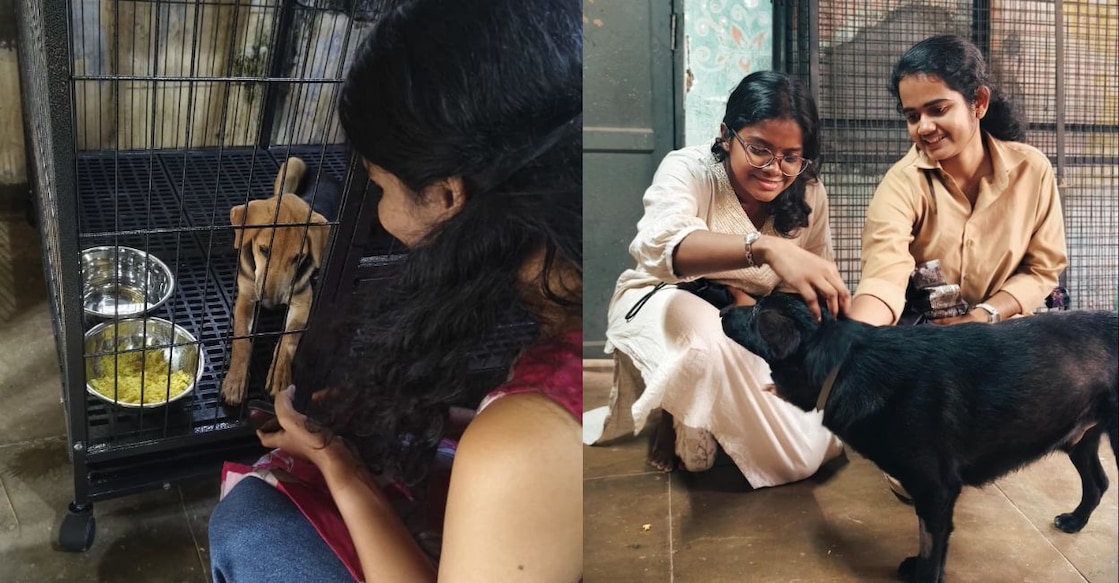
“We brought all the equipment and set up makeshift operating rooms. We also arranged cages to keep the dogs in after surgery to ensure they healed properly,” Lionel Fabian Gomez, Manager, Vaccinations, at CAWA Kerala, tells Onmanorama. “Sterilisation programmes are indisputably the most effective solution to the growing stray dog population in the country. But the real challenge lies in deciding what to do with the dogs afterwards,” he adds.
It is commonly misconceived that sterilisation must go hand in hand with relocation, involving the removal of stray dogs from their habitats. However, Lionel disagrees.
“When stray dogs are removed from a territory, the area doesn’t stay empty for long. Dogs from nearby regions sense the vacuum and move in, making the expensive exercise redundant,” he explains.

Instead, CAWA releases sterilised dogs back into the same area from which they were picked up. According to Lionel, this helps keep away other strays while keeping the local dog population in check.
“Dogs are highly territorial. They won’t allow unfamiliar dogs to enter and occupy the region,” he says. This territorial instinct is fundamental to the success of the programme.
Apart from birth control, sterilisation has also had a noticeable impact on canine behaviour. It helps reduce aggression, thereby lowering the chances of dog-bite incidents. But the positive outcomes do not end there. “We provide them with three meals a day. That too chicken and eggs,” Lionel says with a laugh.
According to him, post-operative care plays a crucial role in rehabilitation.
“The care given during recovery time helps the dogs heal well and bond with humans. They respond with friendly behaviour that continues long after they are returned to their territories,” he says. “We absolutely do not compromise on care,” he adds.
Archana Anilkumar, a third-year student who volunteered for the programme, recalls one particular dog that became especially attached to the volunteers.
“There was this black dog we cared for during its recovery. It became very close to us. Even after we dropped it back at the location where it was picked up, it somehow found its way back to us,” she recalls.
The impact of the programme, which successfully sterilised 23 dogs, soon became evident. After its implementation, the stray dog population stabilised, diseases were brought under control, and aggression visibly declined, Archana notes.
“The dogs also benefitted greatly because we were able to care for them better afterwards,” Archana says.
The college continues to look out for its canine population, with the student union actively involved in their care. Archana says the Asthra Student's Union collaborated with the Social Services League to care for and feed the dogs. This consistency, she adds, has helped stabilise their behaviour.
The campus dogs, now accustomed to students and staff, also act as a buffer against unfamiliar and potentially aggressive stray dogs entering the area.
Lionel says that, inspired by the story at KAU, other colleges have also reached out to CAWA to implement similar programmes on their campuses.
“When the proposal was brought to me, I felt that it was an impressive and innovative approach to the stray dog problem on campus. The benefits are long-term, where the population can be managed without harming the animals,” Jacob John, the Dean (Agriculture) at KAU, told Onmanorama.
 Add as a preferred source on Google