

Kerala farmers brace for crisis as Hormuz blockade derails fertiliser supply

Mail This Article


The ongoing crisis in the Middle East and disruptions in the Strait of Hormuz have cast a shadow over India’s economy, with Prime Minister Narendra Modi recently urging citizens to reduce their dependence on petroleum products and cut the use of chemical fertilisers. The remarks come at a crucial time, as India is heading into the Kharif season, one of its main cropping cycles, when demand for chemical fertilisers is expected to rise sharply.
Modi’s speech underscored India’s vulnerability to the escalating conflict between the United States and Iran, and the resulting disruption in the Strait of Hormuz — a vital shipping corridor through which a significant share of global oil trade passes. For India, the strait is a critical gateway for crude oil, fertilisers and more than 75 per cent of its natural gas supplies. Any prolonged disruption could trigger supply shortages and price pressures across sectors.
“If the war drags on, we fear it could affect fertiliser supply,” said Youseff N M, a farmer from Kerala’s Palakkad district. Farmers say any shortage or spike in fertiliser prices in June and July, when agricultural demand typically rises, could affect crop yields. For now, however, the impact of rising fertiliser prices has not yet been fully felt, as the Rabi season has ended and agricultural activity remains subdued ahead of the southwest monsoon. “Right now, it is the off-season for agriculture. But in a month or two, the real impact could be felt,” Youseff said.
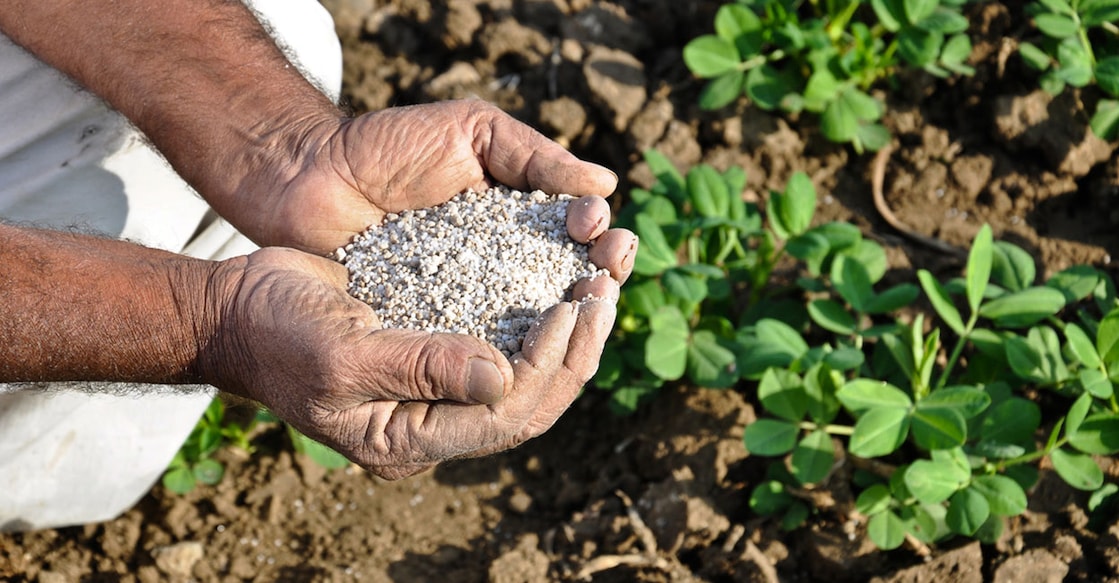
According to the Ministry of Chemicals and Fertilisers, the country’s fertiliser requirement for the upcoming Kharif season has been assessed at 390.54 lakh metric tonnes (LMT). The major fertilisers used during the season include urea, potash, DAP (Diammonium Phosphate), SSP (Single Super Phosphate), Factomfos and NPK blends.
Potash is entirely imported, and more than 90 per cent of the country’s phosphate requirement is sourced from abroad, including from Saudi Arabia, Russia, Morocco and China. The World Bank has projected the fertiliser price index to rise by 30 per cent in 2026, with phosphate- and potash-based fertilisers expected to drive the increase.
Early signs of price pressure are already visible in the domestic market. According to Saju Vechoor, a fertiliser dealer in Kottayam, the price of potash has risen to ₹2,000, while that of Factomfos has increased to ₹1,750 from ₹1,425 in recent weeks. “Factomfose could rise further to around ₹1,900. We are still uncertain about how prices will behave in June and July when demand typically picks up,” he said.
The government, however, has sought to allay concerns, saying adequate stocks are available to meet kharif demand. According to the Ministry of Chemicals and Fertilisers, around 180 LMT — or 46 per cent of the seasonal requirement — is already available as opening stock, significantly higher than the usual pre-season level of about 33 per cent.
On the supply front, the Centre said Indian missions abroad are working to facilitate alternate sourcing channels as part of efforts to diversify imports amid the ongoing geopolitical uncertainty. In addition, the government said nearly 25 LMT of urea has already been secured through global tenders.

Gas dependence remains a weak link
Despite government assurances on stock availability, concerns remain over India’s continued dependence on imported natural gas, a critical feedstock for domestic urea production.
While India meets nearly 75 per cent of its urea requirement through domestic production, output remains closely tied to liquefied natural gas (LNG), which is used to produce ammonia — a key input in urea manufacturing.
-
2 HOURS 50 MINUTES AGO
Messi's Kerala visit: How did sponsor represent govt without approval?

According to a report by the Food and Agriculture Organisation (FAO), India’s urea production fell by around 800,000 tonnes in March 2026, marking a nearly 30 per cent shortfall, after fertiliser plants reportedly received only 60–70 per cent of their allocated gas supplies amid energy disruptions triggered by the conflict.
The data suggest India’s fertiliser security remains vulnerable to prolonged supply shocks despite healthy stock levels. The fifth meeting of the Informal Group of Ministers (IGoM) held on Monday said India currently has natural gas reserves for 60 days.
“The government may say the situation is under control, but prolonged disruptions in the Middle East could still affect fertiliser availability during the cropping season,” said Prabhakaran, a former official at Fertilisers and Chemicals Travancore. He warned that a sustained supply shock could tighten availability just as agricultural demand begins to rise.
“If the crisis drags on, we fear it could affect availability,” said Bharath Kumar, president of the Kerala Fertiliser Mixture Producers Association. He added that while government supplies have remained adequate so far, the real test will come when demand rises in the coming months.
However, Saju Vechoor said wholesale inventories have already come under pressure after stocks were distributed to smaller retailers. Only when wholesale stocks are replenished can we say there is no supply concern going forward,” he said.
Food inflation concerns rise
The risks are particularly significant as the Kharif season accounts for a substantial share of India’s annual rice and sugarcane production, both of which rely heavily on urea and other nitrogen-based fertilisers.
Although urea is heavily subsidised in India, a prolonged crisis could further inflate the government’s fertiliser subsidy bill. According to a report by Bloomberg, citing government officials, India’s fertiliser subsidy bill could increase by as much as ₹10,000 crore amid higher global input and energy costs. This comes at a time when India is also grappling with tighter natural gas supplies, a key raw material for domestic urea production.
For now, government stockpiles may provide a temporary buffer. But with Kharif demand set to rise in the coming weeks and the Hormuz crisis far from resolved, India’s geopolitical vulnerability could soon translate into domestic inflationary pressures.
