

7 minutes, 27 wounds in 2 killings: Triple murder convict Chenthamara wanted to kill co-prisoners too

Mail This Article


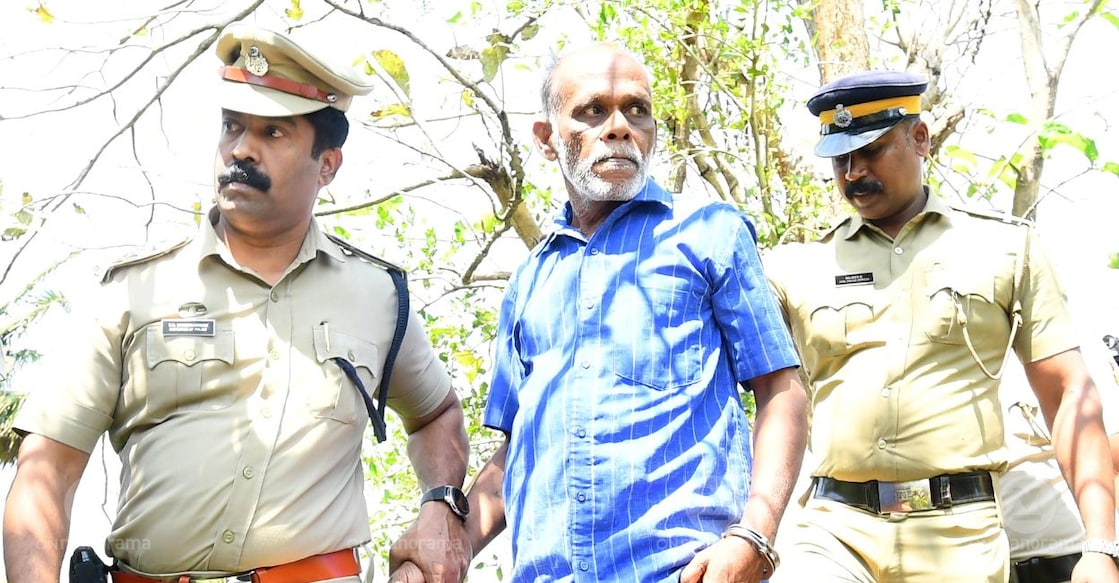
Chenthamara, the 61-year-old man from Palakkad, convicted of three murders, gave a flash of his savage instinct even while serving term in prison. He looked down upon his co-prisoners, who were thieves and accused of cheating. When the officials asked him about his inclination towards prisoners, he replied that he didn't maintain any relationship with them.
"If they come against me, they will be done away with," he told the officials who interviewed him ahead of his sentencing in the murders of Sudhakaran and Lekshmi. His statements have been included in the order issued by the Palakkad court, which sentenced him to death and slapped a fine of ₹20 lakh on Monday. The court had earlier sentenced him to life imprisonment for the murder of Sajitha in 2019.
The prosecution had built a pattern of his cold arrogance, even tracing incidents to his childhood. As a class 8 student, he had assaulted his teacher and discontinued his studies. Apart from three murders which he committed in 2019 and 2025, he had also attempted to kill his wife.

Before concluding the case as rarest of rare which called for capital punishment, Additional Sessions Judge (4), Kenneth George, went through the reports of the District Probation Officer, the medical board and the Superintendent of the District Jail, Palakkad. All these reports were adverse to his interests and stated his intention to repeat the offence and cited a lack of any chance of reformation.
His only glimmer of hope lay in the mitigation reports filed by the counsel following interviews in prison. The reports showed him as genuinely remorseful, even willing to aid the minor daughter of victim Sudhakaran financially. The court brushed it aside as crocodile tears, intended to evade the rigour of stringent punishment.
Chenthamara tried to cloak his barbarous acts with delayed repentance. Still, the judge noted that his benevolence stands in stark contrast to the barbarous murders he committed and that the belated gesture of offering a pittance to the helpless daughters of the deceased cannot be accepted as a mitigating circumstance.
The medical board had also categorically reported that Chenthamara was not suffering from any mental disorder. He would confirm this finding later during examination, and the court rejected the plea of mental illness.
The prosecution had stated that Chenthamara acted with a tiger-like pace, chopping Sudhakaran and Lekshmi to death in just seven minutes. When he was done, he had inflicted 27 fatal wounds on both of them.
The court noted that he swooped down on the victims in a barbaric manner. "The nonchalant audacity of the assailant, who walked away after extinguishing innocent lives, calls for deterrent chastisement," the judge noted in the order, justifying why he treated it as the rarest of rare cases, warranting capital punishment.
The judge also didn't ignore his reactions on the day of the verdict. Chenthamara was initially reluctant to talk to the judge. When reminded about the obligation to elicit information which could influence the sentence, he replied, 'I may be hanged to death'.

When asked about the report of the probation officer that he may repeat his offence, he said he was not Gandhi. The judge wrote in the order that his arrogant and spontaneous replies to queries during the sentencing stage further reveal a hardened disposition and a propensity to repeat such offences.
 Add as a preferred source on Google