

Analysis | Why Pinarayi, Baby and Govindan are right to be angry with party workers for Assembly debacle
Mail This Article


After suffering an electoral loss so devastating that it threatens the very survival of the party, a consensus is gathering in the CPM on consolidating the party around Vladimir Lenin's core organisational doctrine: Democratic Centralism.
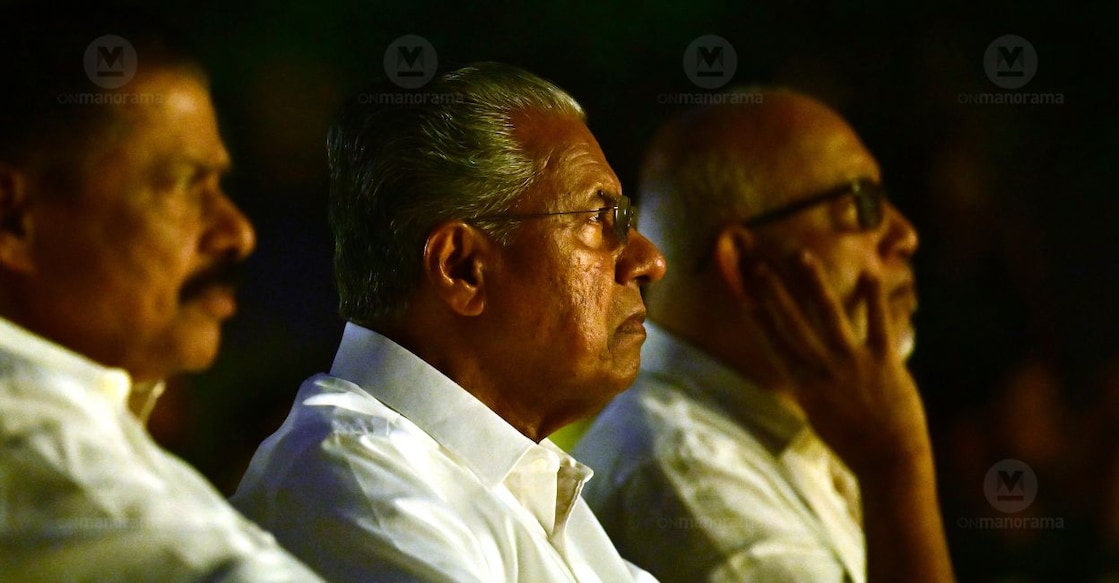
Opposition Leader Pinarayi Vijayan, CPM state secretary M V Govindan and now CPM general secretary M A Baby, too, have said that party loyalists had committed a grave mistake by voting against CPM candidates in the 2026 Assembly elections. This can sound as if the leaders are expecting dumb unquestioned allegiance from party workers but their observations flow from the spirit of Democratic Centralism.
The idea combines two seemingly contradictory principles: freedom of expression and absolute authority. On the one hand, party workers at all levels are granted absolute freedom to speak all they want. But once the Politburo, after listening to the abundance of views, arrive at a final decision, the party rank and file will have to accept what is handed down without so much as even a smirk. In Communist parlance it is called 'freedom of discussion, unity of action'.
In fact, Democratic Centralism is at the heart of the Communist movement. Communist Party of India was offered membership of the Communist International (Comintern) in 1920 only after it had agreed to abide by Lenin's 'Twenty-One Conditions'.
Here is one of the 'Twenty-One Conditions', as sourced from Lenin's Internet Archive: "Parties belonging to the Communist International must be organised on the principle of Democratic Centralism. In this period of acute civil war, the Communist parties can perform their duty only if they are organised in a most centralised manner, are marked by an iron discipline bordering on military discipline, and have strong and authoritative party centres invested with wide powers and enjoying the unanimous confidence of the membership."
It is this ideal of Democratic Centralism that made Pinarayi reprimand recalcitrant party workers at a meeting in Kannur's Taliparambu. "People who have always stood by the CPM thought differently this time. This should never have happened. They should earnestly introspect whether it was right to take an anti-party position," he said on August 31.
The very same Leninist thinking made Govindan utter words that sounded excessively authoritarian a few days later on September 3. "What right do party members have," he asked. "Party comrades do not normally exercise such a right (of voting against the party candidate). Pinarayi was just being critical of comrades who should have naturally voted for the party candidate," Govindan said.
And now the gensek himself, CPM general secretary M A Baby, has questioned the mutinous wisdom of party loyalists who had voted against the party candidates. "Can they vote like that," he said in a tone of mild suprise at the electoral defiance of party workers while talking to reporters in New Delhi on September 6.
Baby called it a violation of the CPM Pledge. "There is a clause in the Party's constitution that says that we will hold the interests of the party above everything else. This is a pledge that all party members should take," Baby said
Every person joining the party will have to sign the Party Pledge, which comes under Article V of the CPM Constitution. It says: "I shall strive to live up to the ideals of communism and shall selflessly serve the working class and the toiling masses and the country, always placing the interests of the Party and the people above personal interests."
The gensek admitted that party comrades could have complaints or resentments about the candidates chosen by the party. "But such complaints or resentments should never have caused them to vote against the party. These should be discussed within the party and resolved," Baby said.
Like Pinarayi, Baby also termed as "wrong" a party worker's decision to stray from her responsibility to stand by the party under any circumstances. Again, like Pinarayi, he said that party workers who had deviated from party principles and voted against the party candidates should realise their mistake.
A senior CPM leader told Onmanorama that it was Democratic Centralism that prompted partymen to stand by the party even during difficult moments. Here are some defining moments in the party that he identified. The ouster of M V Raghavan for coming up with the 'alternative document' that argued for close links with Muslim League, K R Gowri's expulsion for open rebellion, and the removal of M P Parameshwaran, the eminent nuclear scientist who transformed the Kerala Sashtra Sahitha Parishad into a mass movement, for his 'Fourth World' theory that swerved from Marxian ideas of economic growth.
"All these were events that pained large sections of the party but even then they firmly stood behind the party. They swore by Democratic Centralism. Once the party took a decision, all leaders, however disappointed or angry they were, fell in line," the CPM leader said.
"But there is a difference between then and now. Then, the party workers trusted the leadership. Not now," he said. Even Baby said on September 6 that leaders in the higher levels of the party were not free of "parliamentary ambitions", hinting that resentment within the party during the last elections was justified.
This distrust of the leadership had once even forced the party to tear up and flush down the drain a diktat it had imperiously issued. On March 16, 2011, the CPM State Secretariat dropped Opposition Leader V S Achuthanandan's name from the list of Assembly candidates. out of the election. A day later, on March 18, after party workers stormed the streets in protest, the party was forced to eat its own words. Democratic Centralism lay in tatters in the streets.
So September 13, 14 and 15 will pose the biggest test for Democratic Centralism in the CPM. On these three days, the 'Extended State Committee' of the CPM will convene in Kozhikode to have "brutal and honest" discussions on why the party failed and how it should move forward. Nine Polituburo members of the party, including Baby, Pinarayi and Govindan, will attend.
"If the leadership is serious about rectification, it would listen carefully and arrive at just conclusions," a senior CPM leader said. "Only then can the party expect to implement Democratic Centralism in its original spirit. Only then can the leadership fault party workers when they act against the party," a senior CPM leader said.
Otherwise, many senior CPM leaders believe it could signal the beginning of the party's end as a cohesive ironclad unit.
