

Is the ‘Iran narrative’ shifting in the West?

Mail This Article


The crisis in the Middle East following the US-Israeli strikes on Iran is still ongoing. Oil prices have skyrocketed, and the consequences of the conflict are already being felt across the globe and in India.
After a barrage of statements, counterstatements, and exaggerations, Donald Trump has signalled a possible ceasefire. It remains unclear whether he is genuinely seeking de-escalation or merely buying time for the next military move.
With the midterm elections in the United States approaching, Donald Trump and the Republican Party cannot succeed without securing widespread support for military action against Iran. On March 28, cities across the United States and Europe witnessed yet another wave of "No Kings" protests against President Trump. In this context, public perceptions of Iran in general, and of the ongoing war in particular, are of critical importance.

Iran through Western eyes
To many in the West, Iran is a once-modernising country derailed by the 1979 Islamic Revolution. Ever since Ali Khamenei emerged as Supreme Leader, Iran has remained largely isolated and has often been portrayed as a "pariah state."
For most Americans and Europeans, the image of Iran has largely been shaped by dominant narratives of religious authoritarianism, human rights repression, and a perceived 'nuclear' threat to the transatlantic alliance. Extensive sanctions imposed by the United States and its allies have made it difficult for other countries to maintain diplomatic, economic, and cultural relations with the Middle Eastern power.
Despite being one of humanity's oldest civilisations, Iran has remained a "black hole" for many Westerners – a country from which little reliable information emerges. It is thus unsurprising that a prevailing negativity and general antipathy toward the Iranian regime have persisted across much of the West.
A quick look back
Rewinding two decades offers an interesting comparison.
In 2003, US-led coalition forces invaded Iraq, Iran's archrival. The obsessively repeated justification for the attack was that Saddam Hussein's Iraq possessed weapons of mass destruction (WMDs) that could threaten the entire world. These allegations were later exposed as nothing short of a farce – but only after Iraq had been devastated by war, particularly through the "shock and awe" bombing campaign.
The public perception in the West, however, largely favoured the Iraq War. There are some obvious reasons behind such a sentiment. The Iraq War began in the aftermath of the horrific 9/11 terrorist attacks in 2001, which killed nearly 3,000 people in New York City.
It was a fact that the Iraqi government had no direct link to the terror act. But the US government was quite successful in convincing its citizenry and people in Europe that a war against Saddam Hussein was 'unavoidable' in the larger fight against terrorism from countries with authoritarian regimes.
As one of the principal victims of Islamic terrorism at the time, the United States possessed considerable moral credibility when advocating the establishment of democracy in countries such as Iraq.
However, following the United States' humiliating exits from Iraq and Afghanistan, it became clear to the American public that foreign invasions rarely produce positive outcomes, either economically or politically.
Shifting perceptions
Despite a long history of "otherness" towards Iran, few in the West anticipated that the United States would enter into a direct, large-scale military confrontation. The recent military buildup has been widely seen as a pressure tactic to force the Islamic Republic into a nuclear deal on Western terms.
Statements from top American officials indicate that war with Iran has nothing to do with any "lofty ideals," such as improving the human rights situation or installing democracy by toppling the regime. US Defense Secretary Pete Hegseth framed Operation Epic Fury in blunt terms, declaring that it would involve "no stupid rules of engagement, no nation-building quagmire, no democracy-building exercise, and no politically correct wars."
It is important to note that most Americans remain unconvinced about why the United States is engaged in a major conflict with a distant country that poses no direct threat to its territory.
An early poll by Quinnipiac University indicates that more than half of Americans oppose U.S. military action in Iran, marking a sharp contrast with the Iraq War, when public support exceeded 70%. According to a Reuters/Ipsos survey, only 7% of Americans support sending U S ground troops to Iran.
It is no surprise that several European allies quickly and openly distanced themselves from the United States from the very outset of the U S–Israel strikes on Tehran.
As the Norwegian Prime Minister has categorically clarified, most countries in Europe appear to have taken the position that "this is not our war." Italian Prime Minister Giorgia Meloni, a close ally of Donald Trump across the Atlantic, echoed this sentiment, stating, "We are not at war, and we do not want to enter into war."
Our war or Israel's
Another important shift is occurring in how Israel itself is perceived in the United States and Europe. Tucker Carlson, a conservative talk show host with immense influence among Trump supporters, has emerged as an open critic of the pro-Israel stance of American politicians who advocate for war, stating that Israel does not care about the United States and is primarily concerned with its own agenda.
These days, one can observe many Westerners asking, "Is this our war or Israel's?" An increasing number of Europeans now view Israel's war in Gaza as a genocide backed by the Trump administration. More broadly, a perception is gaining ground that the conflict with Iran is driven less by concerns about security threats or human rights and more by allegiance to Israel.
There is no longer a widespread belief that distant countries can be democratised through military invasion.
The war of narratives
Do popular perceptions shape the course of war? History suggests they do. The battlefield is only one arena in which wars are decided.
Extensive and widespread protests against the Vietnam War in Western cities in the mid-1960s to the early 1970s reshaped the war, significantly contributing to the withdrawal of U S troops.
The Vietnam War demonstrates that military interventions by powerful states such as the United States can, at times, transform even unpopular regimes into symbols of resistance. The global outcry following the harrowing photograph of Kim Phuc, the nine-year-old girl running for her life after being burned in a napalm attack – an image that became an enduring symbol of American brutality – is worth special mention.
If the US–Israel-triggered war in the Middle East continues to escalate, public protests already underway are likely to intensify across Western cities, despite historically negative perceptions of Iran.
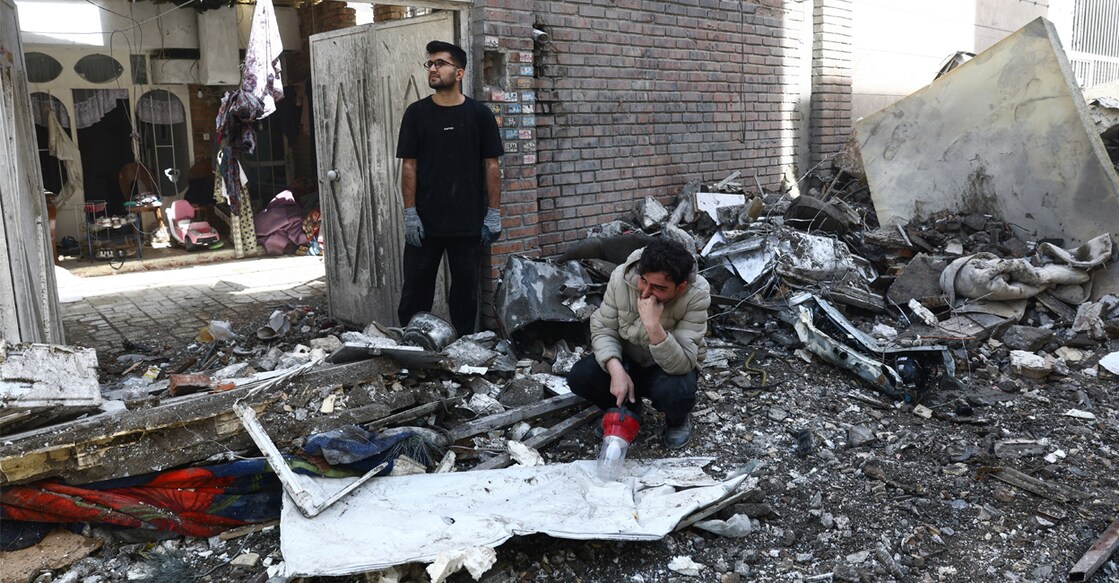
As the humanitarian crisis deepens, US air strikes on an Iranian elementary school that killed more than 165 girls have triggered profound moral dissonance across the Western world.
Should the conflict drag on and become increasingly bloody, Iran may increasingly be seen across the West less as a pariah state and more as a nation resisting imperial pressure.
(Social anthropologist and novelist Thomas Sajan and US-trained neurologist Titto Idicula, based in Norway, write on politics, culture, economy, and medicine)
