

US, Israel launch heaviest strikes yet on Iran as war escalates
Mail This Article


Dubai/Tel Aviv/Washington: The United States and Israel launched what officials described as the most intense airstrikes yet on Iran on Tuesday, even as global markets signalled expectations that US President Donald Trump may seek to end the conflict soon.
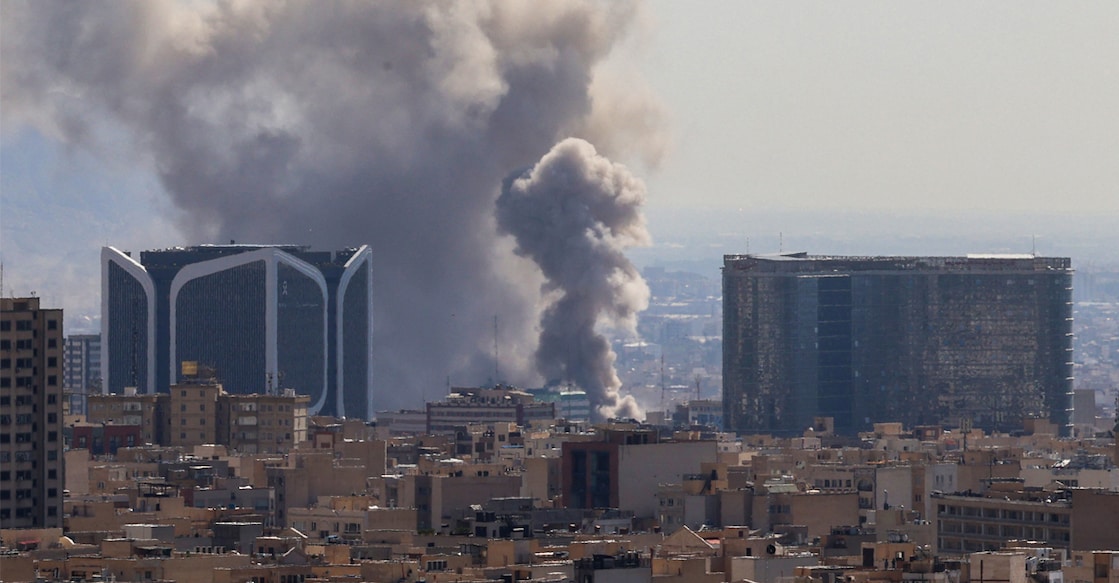
The Pentagon said the day would see the largest number of fighters, bombers and strikes used in the war so far, while residents in Tehran reported some of the heaviest bombardment since hostilities began. Russia's consulate in the Iranian city of Isfahan was damaged in shelling earlier this week, Russian Foreign Ministry spokeswoman Maria Zakharova said.
Tensions also rose in the Gulf after Iran’s Islamic Revolutionary Guard Corps warned it would block oil shipments from the region unless the US and Israel halted their attacks.
Iran also launched fresh missile strikes towards central Israel early Wednesday. Air raid sirens sounded across several areas as Israeli air defence systems intercepted incoming rockets. There was no immediate confirmation of whether any missiles hit the ground.
The Guards said missiles were fired at the US-operated Al Udeid air base in Qatar and the Al Harir base in Iraq’s Kurdistan region on Tuesday evening. Drone strikes were also reported targeting US forces at the Al Dhafra air base in the United Arab Emirates and the Juffair naval base in Bahrain. Iranian state media later reported another round of attacks on US military installations in Bahrain early Wednesday.
The latest Iranian attacks came as Israel carried out strikes on Beirut targeting the Iran-backed Hezbollah group, which has been launching attacks on Israel from Lebanon in support of Tehran.
The White House reiterated Trump’s warning that Iran would face severe consequences if it attempted to disrupt energy supplies through the Strait of Hormuz, a key maritime route that carries nearly one-fifth of the world’s oil and liquefied natural gas shipments.
US Defence Secretary Pete Hegseth told a Pentagon briefing that Tuesday would mark the most intense day of strikes inside Iran since the conflict began.
Later in the day, Trump said on his Truth Social platform that US forces had destroyed 10 Iranian “inactive” mine-laying vessels in recent strikes, though he did not specify the location.
Tehran residents report heavy bombardment
Residents of Tehran described the latest attacks as the most severe so far.
“It was like hell. They were bombing everywhere, every part of Tehran,” a resident told Reuters by phone, requesting anonymity for security reasons. “My children are afraid to sleep now.”
In eastern Tehran, two five-storey residential buildings were hit earlier in the week, leaving large sections destroyed. Rescue teams were still recovering bodies from the site when another missile struck a nearby road intersection.
Markets bet on short war
Despite the escalation, financial markets appeared to be betting that the conflict could end soon.
After surging to nearly $120 a barrel on Monday, Brent crude prices fell back below $90 on Tuesday. Stock markets in Asia and Europe also recovered part of their earlier losses.
White House press secretary Karoline Leavitt said oil and gas prices would fall once the objectives of the joint US-Israeli military campaign were achieved.
A source familiar with Israeli military planning told Reuters that Israel was trying to inflict as much damage as possible before the window for further strikes closed, amid expectations that Trump could end the war at any time.
Israeli Foreign Minister Gideon Saar said the war would continue until Israel and its allies decided it was appropriate to stop, but added that Israel was not seeking an “endless war”.
Iranian leaders signal defiance
Iranian leaders, however, signalled they were not ready to back down.
Parliament Speaker Mohammad Baqer Qalibaf said Iran was not seeking a ceasefire and insisted the aggressor must be “struck in the mouth so that they learn a lesson”.
Foreign Minister Abbas Araqchi also said Tehran was unlikely to resume negotiations with the United States.
A spokesperson for the Revolutionary Guards said Iran would not allow “one litre” of Middle Eastern oil to reach the US or its allies while attacks on the country continued.
Rising casualties
According to Iran’s ambassador to the United Nations, Amir Saeid Iravani, more than 1,300 Iranian civilians have been killed since US and Israeli strikes began on February 28. Nearly 8,000 homes and hundreds of commercial and public facilities have also been destroyed, he said.
Iranian strikes on Israel have killed 12 people so far, while Israeli attacks on Lebanon have also caused casualties.
The Pentagon said about 140 American troops had been wounded during the conflict, in addition to six US soldiers killed at the start of the war.
