

US begins clearing Strait of Hormuz, Iran’s mine-laying boats ‘at bottom of sea’: Trump
Mail This Article


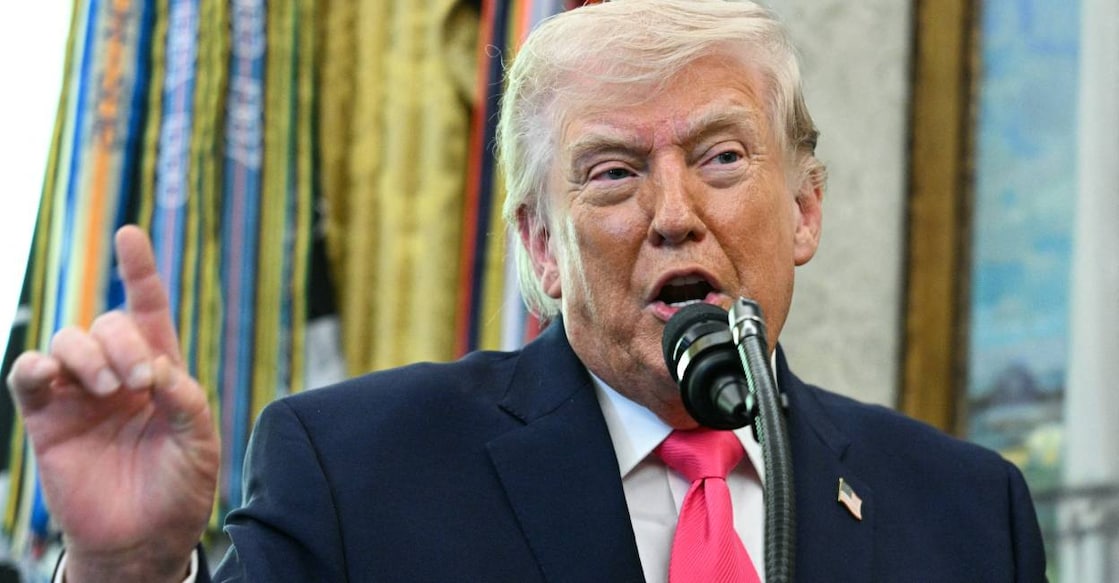
Washington: US President Donald Trump on Saturday said the US military has begun clearing the Strait of Hormuz and claimed that Iran’s mine-laying boats have been destroyed.
In a post on Truth Social, Trump said the process of clearing the strategic waterway was underway, adding that all 28 of Iran’s “mine dropper boats” were now at the bottom of the sea. His remarks came minutes after reports emerged of US naval presence in the strait.
An Axios journalist, citing an unnamed US official, said several US Navy ships had crossed the strait on Saturday. However, Iranian state television, quoting a military official, denied that any American vessels had passed through the waterway.
The Strait of Hormuz, a critical chokepoint for about 20% of global oil and liquefied natural gas shipments, has been effectively shut in recent weeks due to fears of Iranian attacks on shipping. The disruption has rattled global energy markets, slowed trade flows and pushed up fuel prices, including in the US, despite most of the oil not being destined for American markets.
Meanwhile, senior US and Iranian officials held high-level talks in Islamabad on Saturday, hosted by Pakistan, in what is being seen as the most significant engagement between Washington and Tehran in decades. The discussions, involving top representatives from both sides, lasted around two hours before breaking for a pause, according to a Pakistani source. Pakistan’s army chief was also present.

The talks followed earlier mediation efforts by Pakistan Prime Minister Shehbaz Sharif, during which Tehran laid out key conditions for direct engagement. These reportedly included reopening the Strait of Hormuz, release of Iran’s frozen assets held abroad, payment of war reparations, and enforcement of a broader regional ceasefire. Iran has also demanded a ceasefire in Lebanon, where Israeli strikes on Iran-backed Hezbollah fighters have continued, though the US and Israel have said that front is not part of the Iran-US ceasefire.
There were conflicting accounts on developments during the talks. A US official reiterated that American naval vessels had crossed the strait, while Iranian state media and Pakistani sources denied any such movement.
Earlier, a senior Iranian source told Reuters that the US had agreed to release frozen Iranian assets held in Qatar and other foreign banks, calling it a sign of “seriousness” in the negotiations. However, a US official quickly denied the claim, and Qatar’s foreign ministry did not immediately comment.
Iranian officials have also expressed deep mistrust going into the talks. Government spokesperson Fatemeh Mohajerani said Tehran would negotiate with caution, stressing that while Iran is open to dialogue, it remains wary due to a lack of trust.
Tehran’s broader agenda includes asserting authority over the Strait of Hormuz, potentially introducing transit fees and controlling access to the vital shipping lane. The ongoing disruption has already contributed to rising inflation and is expected to have lasting economic effects even if the strait is reopened soon.

On the ground, tensions remain high across the region. Strikes in southern Lebanon continued on Saturday, with Israeli aircraft reportedly breaking the sound barrier over Beirut. Hezbollah said it carried out multiple operations targeting Israeli positions both in Lebanon and northern Israel.
Separately, Israeli and Lebanese officials are expected to hold talks in Washington on Tuesday, though there are conflicting accounts on what those discussions will cover.
For the Islamabad talks to succeed, all stakeholders must be brought under the ceasefire framework, Pakistan People’s Party leader Bilawal Bhutto Zardari said, stressing the need to include both the US and Iran’s regional allies.
The conflict traces back to February 28, when the US and Israel launched strikes on Iran, triggering retaliatory missile attacks from Tehran’s allies, including Hezbollah in Lebanon and the Houthis in Yemen.
The current negotiations mark the highest-level US-Iran talks since the 1979 Islamic Revolution and the first direct engagement since the 2015 nuclear deal, which Trump later withdrew from in 2018.
(With Reuters inputs.)
 Add as a preferred source on Google