

House of horror in Yekaterinburg

Mail This Article


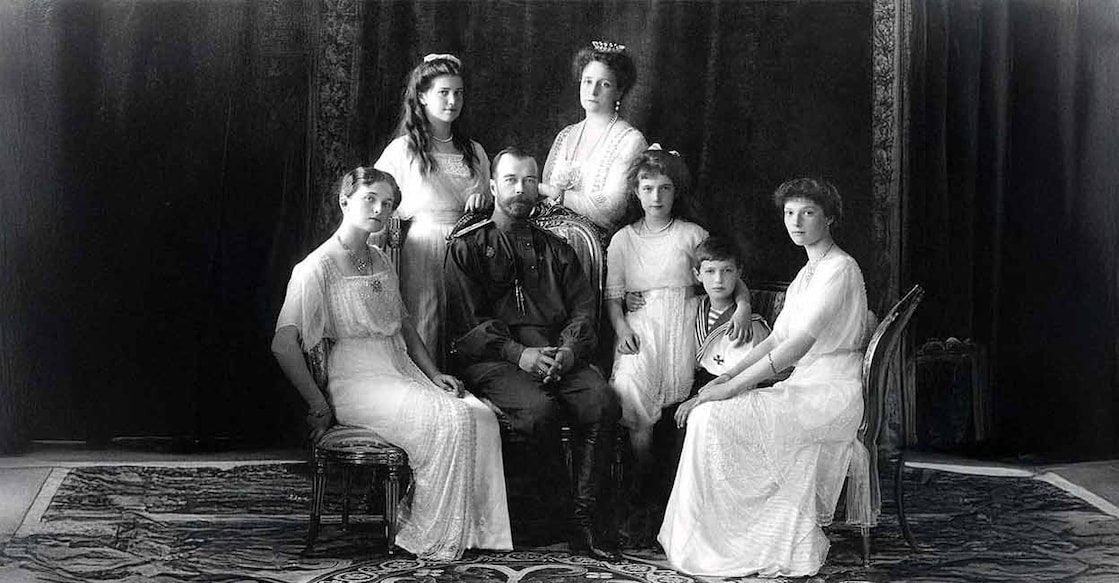
It was 2 am on July 17, 1918. In the semi-underground cellar of the Ipatiev House in Yekaterinburg, Siberia, abdicated Russian emperor Nicholas II shouted, ‘What? What? When Yakov Yurovsky, a Bolshevik revolutionary, read out the order for the execution of the royal family. Yurovsky headed the Cheka–secret police squad that guarded the Ipatiev House, where the royal family was detained. He was accompanied by armed men. He announced: ‘In view of the fact that your relatives continue their offensive against Soviet Russia, the praesidium of the Urals Regional Council has decided to sentence you to death.’ Confused, the emperor asked, ‘Did you say something?’ By then, the shooting had begun. Just a few minutes before, the family had been asked to line up against the wall for a photograph.
What drew me to Yekaterinburg was a history-freak’s fascination. The murder of the Romanov family was a shocking historical moment that has remained imprinted in my memory. The sole purpose of my travel from St. Petersburg to Yekaterinburg was to visit the Ipatiev House, the place decreed by the inscrutable hand of history to be the spot where one of the most powerful ruling families of the world would meet a terrible end.

The despotic political system the Romanovs represented did not deserve sympathy. But the human tragedy of the family struck me as poignant in a special way. Their fall from the heights of incalculable power was mind-bogglingly dire. It was imbued with all the characteristics of epic tragedy. Rivers of blood had flowed in the Russian Revolution. Yet the murder of the Romanov family stands out as a particularly inhuman and barbaric act, even as we accept that Emperor Czar Nicholas II was the chief enemy of the Revolution. But he had abdicated and was no longer the emperor. He and his family were unarmed and entirely at the mercy of the revolutionaries. They deserved at least the minimum guarantees of justice that even common prisoners of war were accorded.
The Czar had denied justice, directly and indirectly, to tens of thousands. However, the Revolution that held him and his family prisoners was one that had proclaimed Justice as a shining ideal. Nevertheless, the czar was not given even a farcical trial. The misdeeds of the empress, especially the Rasputin connection, had wrought havoc on Russia. But she too deserved a trial, going by civilizational yardsticks.
Perhaps it was too much to expect that the revolutionaries, in the heat of the upheaval, would show mercy to the czar and the czarina who headed the repressive system that they had overthrown. But there seems to be no such explanation for the killing of the innocent children – young adult girls aged 22, 21, and 19, a teenage girl of 17, and the crown prince, aged 13. Perhaps even that can be attributed to the fact that they represented a threat in the eyes of the revolutionaries - they carried royal blood. The crown prince must have been a particular threat. But there seems to be no logic to the killing of the four retainers – Dr Botkin, family physician (53), Anna, maid (40), Alexie, valet (62), Ivan, head cook (46) -- who had accompanied the family into imprisonment. They belonged to the same working class, whose cause the revolutionaries were fighting for. Perhaps only Dr Botkin was the exception.
Yekaterinburg is in the Ural Region of Siberia and is today Russia’s fourth-largest city. It is famous as a city situated on the border between Europe and Asia. There’s a made-for-tourists platform where an imaginary border between Europe and Asia is marked, and tourists can photograph themselves, one foot in Asia and the other in Europe.
I was aware that the Ipatiev House had been demolished in 1977 and that the demolition had been overseen by Boris Yeltsin, then the local party chief. The Politburo had ordered the demolition because the house was attracting people who wished to pay their respects to the murdered family. Later, in 2003, it was Yeltsin himself, as President, who had the church built on the site, naming it the Church on Blood. Yeltsin wrote in his memoirs that he regretted the demolition of the house, describing it as a ‘piece of barbarism.’ I went to the site of the Ipatiev House, hoping that something of the old environment might have survived. Nothing had. I was prepared for the church, but the actual sight of it came as a shock because it seemed such a blatant defiance of history.
The killing of the royal family was cruel and cold-blooded. I shall only make a muted summary. The details are repulsive, shocking and may disturb vulnerable readers. On 29th June 1918, the Ural Regional Soviet had met and decided the entire royal family should be eliminated. Historians have suggested that the Ural Soviet, a minor player, was merely acting on orders from the party leadership in Moscow; a decision of such momentous importance wouldn’t have been left to a local committee. In fact, some accounts suggest that Lenin had taken personal charge of all matters related to the detained royal family.
Filipp Goloshchyokin of the Ural Soviet went to Moscow to obtain final permission from party’s Central Executive Committee. It was granted in the presence of Lenin and other senior members. Goloshchyokin was then separately instructed that no information about the execution should directly be communicated to Lenin – the standard secret service strategy used to protect the identity of the person at the source. Preparations for the murder began immediately, including the selection of the site for the disposal of bodies.
On the midnight of July 16, Yurovsky ordered the royal family physician Eugene Botkin to wake the family up and have them get dressed, to move them to a safe place. The reason given was that the city was under attack from anti-Bolshevik forces. The family and the retainers were then taken to a 20’ x 16’ semi-basement room. The empress requested a chair to sit down because she was ill. The czar requested a chair for Alexie, his sick son. Yurovsky’s assistant Nikulin joked to him, ‘The heir wants to die in a chair.’ Yurovsky replied, ‘Very well then, let him have one.’
The family was told to wait for the arrival of the vehicle to transport them. They were also lined up for a supposed photograph. In a few minutes, the execution squad entered. The men did not carry rifles but handguns because they had to shoot at close range in a confined space and the noise level would be low. Yurovsky read out the execution order and the shooting began. He killed the czar with three shots to his chest. The empress and one daughter had lifted their hands to bless themselves but failed as the shots hit. A drunken squad member, Ermakov, killed the empress with a shot to the head, but his shot at Tatiana, the 21-year- old princess, only hit her in the thigh.
Then there was utter chaos. All the prisoners had not been killed in the first burst of fire as the killers had expected. They were running helter-skelter. The men fired frantically and haphazardly. The room was filled with smoke and dust. Visibility was zero. The sound of fire could be heard in the neighbouring households, and dogs were barking. Yurovsky ordered a stop to the firing and opened the doors to clear the smoke. Only cries and whimpers from the room broke the abrupt silence.
When the smoke lifted, they discovered that all the children were alive and only Tatiana was only injured. The crown prince was still seated on his chair. Squad member Nikulin shot him repeatedly. The boy still seemed to be alive. The drunken Ermakov then shot and stabbed him. Yurovsky put the final shot to his head. He also killed Tatiana with a shot to the back of her head. Princess Olga too was killed with a shot to the head. The remaining sisters Maria and Anastasia were huddled against the wall with pillows covering their heads. They too were shot in the head. The killers had resorted to the bayonet throughout as a backup to the gunshots. Anna, the maid, who was found alive was bayonetted to death. While the bodies were being loaded onto the truck, Princess Anastasia cried out and covered her face with her arm. Ermakov bayonetted her in the chest, but the bayonet did not penetrate. He then shot her again.
A couple of men tried to loot ornaments from the bodies, as well as the precious stones sewn into the garments of some of them. Yurovsky’s threat of shooting stopped them. He had to intervene again when a couple of them attempted to molest the empress’s body. The bodies were loaded in a Fiat truck and carried to the disposal site. Along the way, the truck got bogged down in mud, causing considerable delay and anxiety.
A group of revolutionaries had been asked to wait with horse carts at a particular spot to take the bodies to the burial site in the forest, because there was no motorable road. The waiting men had thought that the royal family was being brought alive and made an angry scene when they saw the dead bodies. They had expected to participate in the killing. Most of them were drunk. Yurovsky’s famished men dined on the boiled eggs that neighbourhood nuns had sent for the royal family. Soon they placed the bodies on ground, undressed them, set fire to the clothes and one by one threw them into the disused mineshaft selected for the purpose. Sulphuric acid was poured into the pit, and it was temporarily covered with earth and tree branches.
The next day, the Cheka team had second thoughts about the burial site, and it was decided that the bodies needed to be buried deeper. Thus, the bodies were dug up and carried to another site where the mine shafts were deeper. On the way the Fiat truck again got mired in mud. The fatigued men disobeyed orders to extricate the truck. Then Yurovsky ordered a grave to be dug on the spot. The faces of the dead were smashed with rifle butts and covered with quick lime before burial. Sulphuric acid was used again for rapid decomposition.
Only nine bodies went into the new pit because Yurovsky wanted to confuse possible investigators who would look for eleven bodies – seven members of the royal family and four retainers. He burned the bodies of Prince Alexie and an unidentified sister in a bonfire. Their bones were crushed with spades and thrown into another pit. It was 6 am on 19th July 1918 when they completed the burial.
A.G. Beloborodov, member of the Ural Soviet, sent the following telegram to Lenin’s secretary: Inform Sverdlov the whole family shared the same fate as the head. Officially the family will die at the evacuation. (Yakov Sverdlov was the powerful associate of Lenin.)
Yurovsky met Lenin three days after the killing. He received a promotion to the Cheka division of Moscow city. Later he was given several important administrative and party posts. He died in 1938, aged 60. Before his death, he gifted the guns used for the murders to the Museum of the Revolution in Moscow.
The Romanov family is today a tourism brand for Yekaterinburg. Hoardings with their portraits greet you as you drive into the city from the airport. I could not, of course, decipher the advertising copy in Russian. It must be something catchy. There are more hoardings around the church at the Ipatiev House site. The church is a gleaming, opulent structure built in the Byzantine-Slavic style with onion domes. Underneath, there is a cupola with an altar dedicated to the Romanov family. It is said to have been built on the exact spot where the death-cellar was. The family has been canonised – declared as saints – by the Russian Orthodox Church. The Romanov family massacre may be just one more footnote in history’s endless annals of horrendous deeds. Yet it seems to tell us something scary about our human status.
The historical information provided here has been gathered from various sources that are considered reasonably reliable. There are contradictions in the accounts of Yurovsky and his accomplices. Yet the primary picture that emerges is the same.
 Add as a preferred source on Google