

Muslim League & Kerala’s education portfolio: Legacy, controversy and fresh political debate on UDF cabinet berths
Mail This Article


Malappuram: When C H Mohammed Koya became Kerala’s Education Minister in 1967, very few would have imagined that the portfolio would go on to become closely identified with the Indian Union Muslim League (IUML) for decades. Across changing political alliances and ideological battles, the League has maintained a strong association with the department, playing a major role in Kerala’s educational landscape while also facing criticism from political opponents.
Now, even before the new UDF cabinet is sworn in, the Education portfolio has once again become the centre of political controversy. BJP leader and MLA-elect V Muraleedharan has urged the Congress not to hand the department to the IUML, while the EK faction of the Samastha Kerala Jem-iyyathul Ulama has come out strongly in defence of the League’s claim, arguing that the portfolio has historically remained with the party in UDF governments.
Muraleedharan expressed hope that the Congress would not allocate the Education portfolio to the Muslim League, arguing that such a move would go against the interests of the people of Kerala. Samastha leader Nazar Faizi Koodathayi retorted that such remarks reflected a pattern of opposition propaganda against the IUML holding the Education portfolio, maintaining that there was no basis for apprehension over the League's handling of education.
More than a routine cabinet negotiation, the debate underlines the political importance of the Education portfolio, split into General Education and Higher Education in 2016, and whether the UDF will continue its long-standing convention of entrusting the department to the Muslim League.
In every term of UDF governments in which the IUML handled the Education portfolio, the opposition has raised allegations of mismanagement and various controversies have emerged around the department. However, the Muslim League leadership has consistently maintained its control over the situation and managed to navigate the crises politically and administratively.
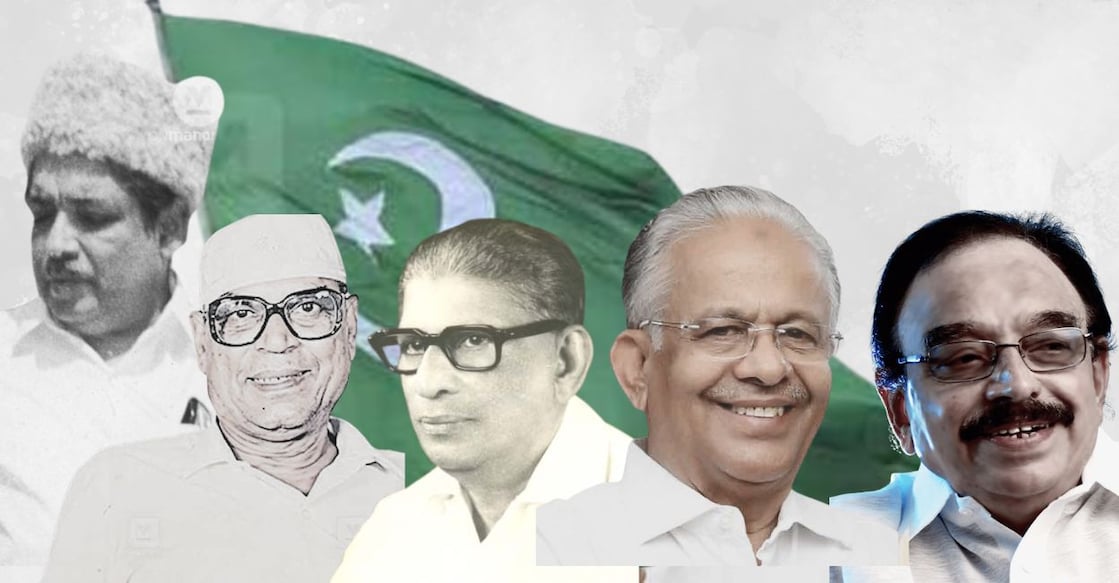
C H Mohammed Koya first handled the Education portfolio from 1967 to 1973 in the EMS Namboodiripad and C Achutha Menon ministries. He was succeeded by Chakkeeri Ahmed Kutty, who served as Education Minister from 1973 to 1977. Mohammed Koya again held the portfolio from March 1977 to January 1978 under the K Karunakaran and A K Antony governments. In the brief period between January 1978 and October 1978, U A Beeran served as Education Minister. Mohammed Koya later returned to the department from October 1979 to December 1979 in his own ministry as Chief Minister.
After a long gap, E T Mohammed Basheer handled the Education portfolio from 1991 to 1996 in the K Karunakaran and A K Antony governments, and again from 2004 to 2006 under Oommen Chandy. Nalakath Soopy served as Education Minister from 2001 to 2004 in the A K Antony ministry. In the previous UDF government led by Oommen Chandy, P K Abdu Rabb held the Education portfolio from 2011 to 2016.
One of the earliest and most politically charged controversies involving an IUML Education Minister emerged during the tenure of Mohammed Koya in the late 1960s and early 1970s. Critics from Left parties accused the Muslim League of attempting to consolidate influence over minority educational institutions through the Education department, while the League defended its role as protection of minority rights.
“After Joseph Mundassery, C H Mohammed Koya was the best Education Minister Kerala has had. It was during his tenure that the University of Calicut and the Cochin University of Science and Technology were established. Even opposition parties were impressed by his performance as Education Minister,” said writer and activist M N Karassery.
The District Primary Education Programme (DPEP), introduced in Kerala during the mid-1990s when E T Mohammed Basheer was Education Minister, had triggered widespread protests from sections of teachers’ organisations, Left parties and cultural activists. Critics alleged that the World Bank-supported programme would “saffronise” and “commercialise” primary education, weaken the public education system and dilute Malayalam-medium schooling through activity-based learning reforms. The CPM-led opposition and teacher unions organised statewide agitations even as the government defended DPEP as a modernisation initiative aimed at improving primary education and reducing dropouts. The controversy became one of the biggest political confrontations around education policy in Kerala during that decade.
The period also coincided with intense protests against the UDF government’s self-financing education policy, especially the move to expand private participation in professional education. The agitation culminated in the infamous Koothuparamba police firing on November 25, 1994.
Another controversial phase came during the tenure of P K Abdu Rabb between 2011 and 2016 in the UDF government led by Oommen Chandy. His decision to introduce reforms in school uniform rules, triggered political debate and accusations of 'communalisation' from opponents. Rabb also came under attack during the controversy surrounding the revision of school textbooks, with the CPM and BJP accusing the government of political and religious influence in curriculum matters. Another issue during his tenure was the approval and regulation of unaided and aided schools, particularly allegations that political considerations influenced sanctions for new institutions. Despite the criticism, the IUML defended its ministers arguing that they expanded educational access and protected minority educational rights.
However, Karassery, pointing out that the Muslim minority remains educationally disadvantaged, argued that IUML control of the Education portfolio could contribute to social justice. He dismissed communal interpretations of the issue, stating that there was nothing religious about the IUML handling the Education department. He also noted that during earlier IUML-led tenures, institutions such as the University of Calicut and Kannur University were established. IUML ministers also introduced scholarships for Dalits and minority students, he added.
It is expected that the IUML will begin discussions in the coming days on its ministerial nominees and the portfolios it will seek, after the Congress party finalises the leader who will take up the Chief Minister’s post.
 Add as a preferred source on Google