

Purple tongues and summer memories return with njaval pazham season in Kerala
Mail This Article


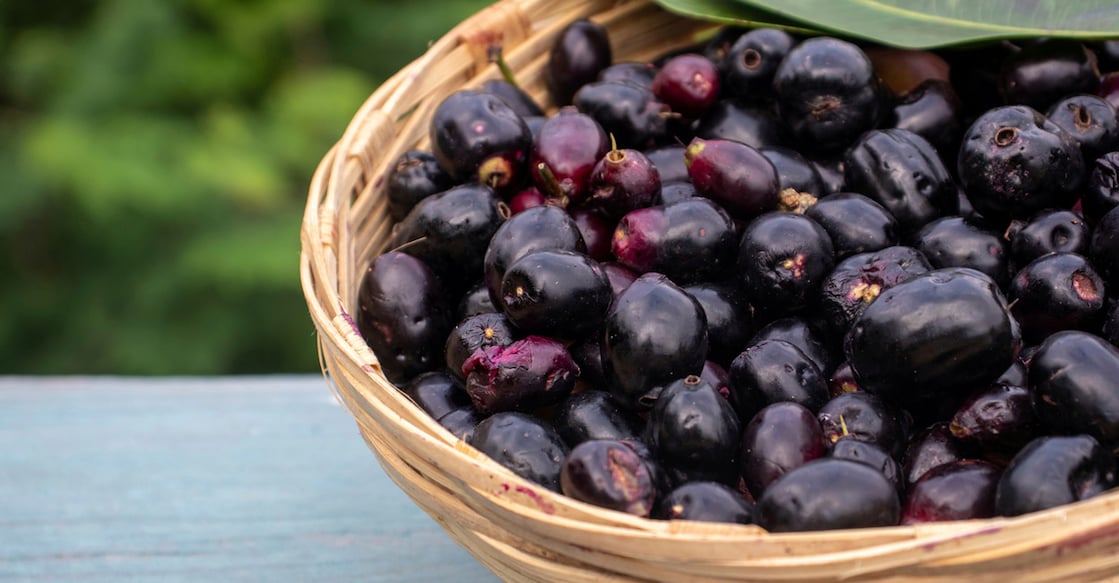
There was a time when the arrival of njaval pazham season was woven into everyday summer life in Kerala. Children gathered beneath roadside trees to pick the ripest fruits, their tongues turning purple after a few bites, while adults waited for the brief harvest to make wine, pickles and home remedies. The sweet-tart taste of java plum, known locally as njaval pazham, belonged to school holidays, village roads and long afternoons spent outdoors.
Today, njaval pazham has become harder to find in many places, making its short season feel even more precious. Yet every year, as trees begin to darken with clusters of deep violet fruit, the excitement returns. Travellers stop along Kerala’s roadsides to collect a handful, vendors bring in fresh harvests from Karnataka, and conversations around the fruit’s health benefits begin once again. Rich in memory, flavour and tradition, njaval pazham remains one of Kerala’s most cherished seasonal fruits.
The fruit of forgotten summers
Njaval pazham is usually in season during March, April and May. Over the years, every part of the tree has found a use in households and traditional practices. The fruit is used to make pickles, jams, juices, vinegar and wine, all known for their distinct sweet and tart flavour.
Traditionally, the juice of the fruit has been used to soothe sore throats, while many believe it helps dry mouth ulcers faster. Chewing the fruit is also said to reduce bad breath.
In earlier days, the tender twigs of the njaval tree were commonly used as natural toothbrushes. Its wood, known for its durability and resistance to moisture, has also been used for furniture and even musical instruments, including guitars.
Njaval pazham has long held a place in traditional medicine. The seeds are believed to help regulate blood sugar levels because of their antioxidant properties. Eating the fruit on an empty stomach is also considered beneficial for acidity and digestion.

Rich in vitamin C and iron, the fruit is associated with improved immunity and better iron levels in the body. It is also commonly regarded as helpful in managing cough, fever and fatigue.
Beyond household remedies, njaval pazham continues to be used in Ayurvedic and Unani medicine for its medicinal value.
From village abundance to seasonal rarity
There was a time when njaval trees were a familiar sight across Kerala’s villages and temple compounds. Today, they are far less common in many areas, turning the fruit into something people actively search for during its short harvest period.
Much of the njaval pazham currently sold along Kerala’s roadsides arrives from Karnataka, especially from the forest regions of Raichur district. The trees usually flower during the Malayalam months of Meenam and Medam, and the harvest lasts little more than a month each year. Once the fruits ripen, nets are spread beneath the trees to collect the falling harvest.
The fruit is also known as Nagappazham (snake fruit) in some regions, a name linked to its abundance around Kavu (temple groves) in the past.
Roadsides turning purple again
Along the AC Road connecting Alappuzha and Changanassery, roadside njaval trees heavy with ripe fruit are once again drawing travellers to stop by. Many pull over to gather the fruits, turning an ordinary drive into a familiar summer ritual.
A similar sight can be seen along stretches of the Edavanna–Kozhikode state highway and near Odaththeeram on the Mukkom–Areekode road, where trees laden with fruit have become a delight for passersby. Several of these trees were planted years ago by Abdukka, a nature lover and environmental activist from Areekode, whose efforts continue to offer shade, fruit and memories to travellers.
The season for homemade njaval wine
For many households, njaval pazham season was also the time to prepare homemade wine. The fruit’s deep colour and sharp sweetness make it ideal for a rich, flavourful brew that has long been part of seasonal kitchen traditions in Kerala. Here is how to make it at home:
Ingredients
2kg Njaval pazham/jamun
1 kg sugar
100gm cinnamon
100gm cloves
250gm wheat
3 litres of hot water
100 gm yeast
Preparation
- Remove the seeds from the fruits and grind the pulp well without adding water. Transfer the pulp into a large jar or vessel.
- Add cinnamon, cloves, sugar, yeast, wheat and hot water. Stir the mixture thoroughly for about 15 minutes.
- Cover the vessel with a clean cloth and tie it properly. After three days, open the jar, stir the mixture well again and cover it once more.
- After seven days, open and check the mixture. By then, the wine should have clarified well. Strain it and allow it to settle further if needed.
- Once clear, the njaval pazham wine is ready to serve.
