

‘Petrol costs 500 Srilankan Rupee/litre in IMF-run country’: Ex-President Gotabaya Rajapaksha’s aide on crisis
Mail This Article


Kochi: As the escalating Middle East crisis rattles global aviation routes and fuels uncertainty across international markets, Sri Lanka fears it could once again become collateral damage in a conflict unfolding far beyond its shores.
For the island nation, still struggling to recover from the devastating aftershocks of the Easter Sunday bombings, the Covid-19 pandemic, and the economic collapse that triggered the 2022 Aragalaya uprising, the latest geopolitical shock threatens the very industry keeping its fragile economy afloat: tourism.
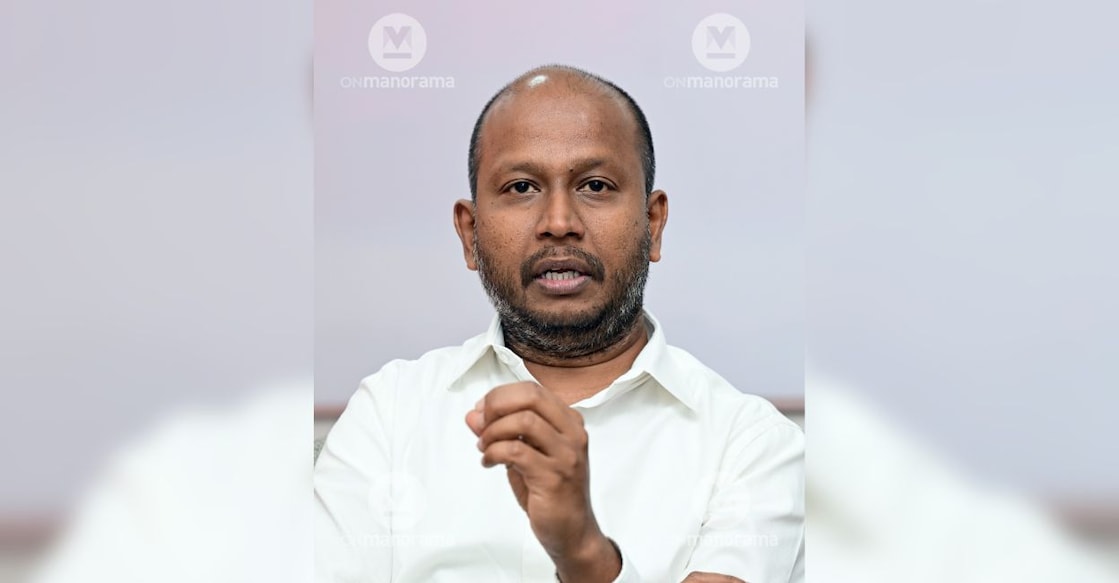
Speaking to Onmanorama in an interview during a visit to Kochi on Saturday, Milinda Rajapaksha, a Political Bureau member of the Sri Lanka Podujana Peramuna (SLPP)—the party founded by the Rajapaksa family that once dominated Sri Lankan politics before being swept from power during the mass anti-government protests—warned that the ongoing Middle East conflict is already beginning to severely impact Sri Lanka’s tourism-dependent economy, which has been inching back to normalcy.
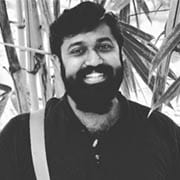
Milinda, who also hosts a widely followed daily political podcast alongside media personality Iraj in Sri Lanka, is a former councillor of Colombo Municipal Council and former official media spokesperson for then-President Gotabaya Rajapaksha.
Referring to the ongoing crisis in Sri Lanka, he said the country remains dangerously dependent on tourism revenues even as it attempts to rebuild from one of the worst economic crises in its history.
“We are completely riding on the tourism industry right now. If something happens to tourism, the economy collapses. Experts said that the number of tourists will dip by 40% by the end of the year because of the Middle East crisis,” Milinda said.
According to him, the threat goes far beyond tourist arrivals from the Gulf region. “The Middle East carriers are bringing people to Sri Lanka. Europeans come through the Middle East only, and airlines have already reduced flights by 40%, and no one can fill that gap,” he said.
A nation built on subsidies and tourism
Milinda argued that Sri Lanka’s post-war economy was always structurally vulnerable despite the tourism boom that followed the end of the civil war in 2009. The country sustained an expansive welfare model heavily dependent on a limited number of foreign exchange earners.
“In Sri Lanka, education is 100% free, health is 100% free; everything is subsidised. We were spending a lot of money on that, and we had only tourism, which is valued at over $10 billion, the apparel sector ($5 billion), and the tea industry ($4 billion) to manage the game. That delicate balance collapsed after a series of devastating blows,” he said.
The 2019 Easter Sunday terror attacks severely damaged international confidence in Sri Lanka as a tourist destination, especially among Europeans. Before the sector could recover, the Covid-19 pandemic froze global travel entirely.
While widespread corruption was attributed to the downfall of former President Gotabaya Rajapaksa and the SLPP following the uprising, Milinda denied it and directly linked the collapse of tourism during the pandemic as the main reason.
“Gotabaya Rajapaksa had to resign and go home simply because the pandemic killed the tourism industry, and immediately our dollar inflow got blocked. We didn’t have enough dollars to buy fuel. The crisis was very, very clear. What followed was a nationwide economic breakdown,” he added.
Sri Lanka, heavily reliant on imports, soon faced shortages of essential goods ranging from milk powder imported from Australia and New Zealand to cooking gas and fuel. LPG prices surged two to three times, while diesel shortages crippled transportation and electricity generation, helping ignite the Aragalaya protest movement that ultimately forced the Rajapaksa administration from power.
Milinda said the economic collapse initially began in rural farming communities after the abrupt ban on chemical fertilisers triggered widespread protests among lower-middle-class agricultural workers. But politically, the turning point came only when urban Colombo began to feel the pain.
“The day the crisis hit the air conditioners and vehicles in Colombo, the upper-middle class came out. Many of my middle-class friends who went to the protest had completely non-political reasons. My mother-in-law is from the upper-middle class. Even she was on the road protesting. When I called and asked her why, she said, ‘No electricity at home, nothing to do. Even the phone wasn't getting charged.’ So if the upper middle class comes to the road, you will lose power,” he said.
The Janatha Vimukthi Peramuna (JVP), capitalising on public fury, successfully shifted the narrative from a structural dollar shortage to state corruption, propelling their coalition (NPP) to power.
“ The shift left the traditionally dominant SLPP decimated. From a commanding 145 Members of Parliament, the party has been reduced to just three. The narrative they created around corruption was so beautiful and powerful,” he said.
“An IMF-run country”
Sri Lanka’s economic collapse eventually pushed the country into a bailout agreement with the International Monetary Fund (IMF), fundamentally reshaping economic policy. Milinda pointed to what he described as a major political contradiction involving the ruling National People’s Power (NPP) coalition led by Anura Kumara Dissanayake.
“Before coming to power, the NPP strongly criticised IMF involvement and campaigned aggressively against foreign debt dependency and externally imposed economic reforms. But once in office, the government was forced to embrace the very system it once condemned. They are realising that there are structural economic reasons, not just political ones. Sri Lanka is now an IMF-run country,” he said.
For ordinary Sri Lankans, however, the recovery has come at a painful cost.
“Fuel prices in Sri Lanka are at the highest price ever in history,” he said. “Petrol is almost 500 Sri Lankan Rupees per litre, and diesel is now more expensive than petrol. As soon as the fuel price doubled, consumption fell. The control is happening through the price increase,” he said.
Balancing India and China
Beyond the IMF, Sri Lanka also finds itself navigating a delicate geopolitical balancing act between regional giants India and China. Milinda described how both countries exert enormous influence over Sri Lanka’s economy through investments, infrastructure projects, debt exposure, and tourism flows.
“Both India and China have been valuable allies for us. But the financial dependence on China increased only after the Civil War ended, when India was not able to help us rebuild and develop infrastructure. The Chinese did it without delay. China continues to wield significant leverage as a major creditor and contributes a large number of tourists. India, meanwhile, remains deeply integrated into Sri Lanka’s economy through trade, tourism, and strategic infrastructure initiatives, including the controversial Adani-backed energy projects in the island’s north,” he added.
SLPP’s collapse and attempted revival
According to Milinda, former presidents Mahinda Rajapaksa and Gotabaya Rajapaksa have now fully stepped away from active politics, with leadership responsibilities transferred to Namal Rajapaksa.
Now serving on the SLPP Political Bureau, Milinda said the party is rebuilding through alternative media platforms, particularly podcasts and digital outreach, to reconnect with voters and counter the government’s narrative.
 Add as a preferred source on Google