

BIS introduces new standard for community seed banks

Mail This Article


• The Bureau of Indian Standards (BIS) published a new voluntary management framework for community seed banks.
• The standard — IS 20201:2026 — lays out requirements covering the full lifecycle of seed bank operations ‘from collection and viability testing to storage, documentation and regeneration practices’.
• It is formulated by the Biodiversity Sectional Committee (EED 06) under the Environment and Ecology Department (EED) of BIS.
• This standard introduces a comprehensive, structured management framework for community seed banks across the country.
What is the need for such a new standard?
• As an agrarian society experiencing the impacts of climate change including erratic precipitation, rising temperatures, and prolonged droughts, India’s native seed varieties represent an invaluable strategic resource.
• Different traditional seeds possess unique vital traits such as natural drought tolerance, disease resistance, and high nutritional value.
• By offering a standardised operating protocol for decentralised, community-led seed banks, IS 20201:2026 aims to promote conservation of these indigenous varieties, thereby enhancing agricultural resilience and securing long-term food safety.
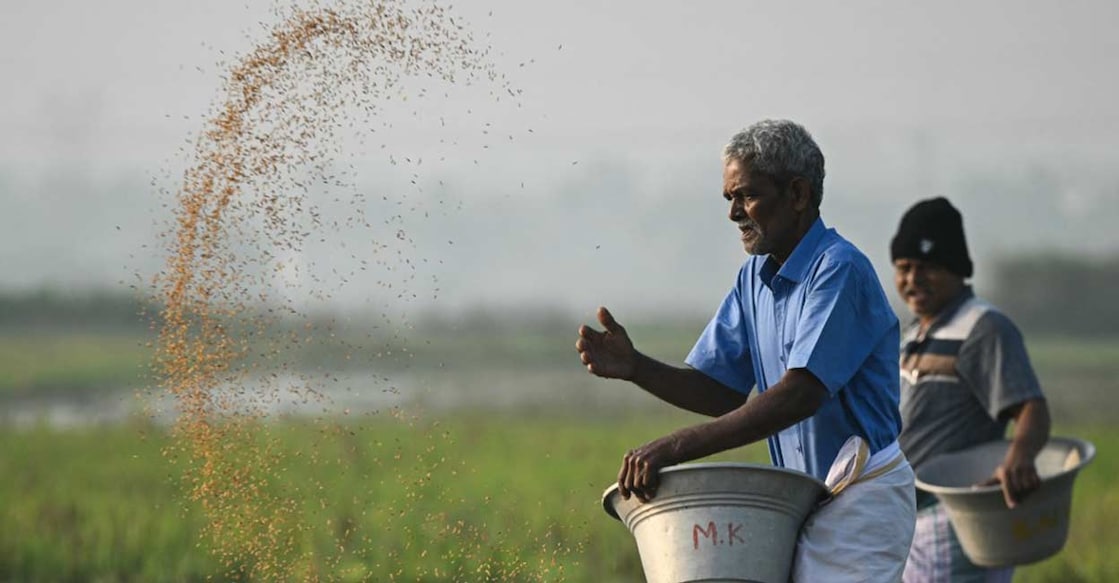
• By functioning as a decentralised repository, standard-compliant community seed banks empower local farmers to reliably collect, store, and exchange high-quality, locally adapted seeds.
• The standard outlines requirements relating to organisational arrangements, seed collection and acquisition, seed processing and storage.
-
1 HOUR 31 MINUTES AGO
Shigella infection confirmed in Thrissur, 2 children in Wadakkanchery test positive

• This protects the livelihoods of smallholders, builds grass-roots resilience, and ensures access to resilient, traditional crop varieties.
• The standard outlines rigorous requirements for the end-to-end lifecycle of seed bank operations, including organisational arrangements, seed collection and acquisition, viability testing, cleaning, drying, storage, documentation, quality assurance, seed regeneration practices, risk management, and continual improvement.
Genesis of BIS
• The erstwhile Indian Standards Institution (ISI) came into being on January 6, 1947.
• It was established with the objective of harmonious development of standardisation activity in India.
• In the initial years, the organisation concentrated on standardisation activity. To provide the advantages of standardisation to common consumers, the Indian Standards Institution started operating the Certification Marks Scheme under the Indian Standards Institution (Certification Marks) Act, 1952.
• The scheme, which was formally launched by ISI in 1955-56, enabled it to grant licences to manufacturers producing goods in conformity with Indian standards and to apply ISI Mark on their products.
• To meet the requirements of the Certification Marks Scheme, the nucleus of a laboratory was started in 1963. While the product certification was being operated under the Indian Standards Institution (Certification Marks) Act, 1952, the formulation of standards and other related work were not governed by any legislation.
• A Bill with this objective was therefore introduced in the Parliament on November 26, 1986.
• Bureau of Indian standards (BIS) came into existence, through an act of Parliament on April 1, 1987, with a broadened scope and more powers taking over the staff, assets, liabilities and functions of erstwhile ISI.
• Through this change over, the government envisaged building a climate for quality culture and consciousness and greater participation of consumers in formulation and implementation of national standards.
• BIS is an autonomous national body responsible for setting quality standards for products and services.
• In its capacity as the National Standards Body of India, BIS is actively involved in matters of international and regional standardisation.
• The Bureau of Indian Standards Act, 2016 was notified on March 22, 2016. It was brought into force with effect from October 12, 2017 that reinforces the activities of BIS in respect to standardisation and certification of goods, articles, processes, systems and services.
Functioning of BIS
• The Bureau consists of members representing both central and state governments, Members of Parliament, industry, scientific and research institutions, consumer organisations and professional bodies. The Union Minister of Consumer Affairs, Food and Public Distribution is its president and the Minister of State for Consumer Affairs, Food and Public Distribution is its vice-president.
• Indian Standards are formulated through specialist technical committees (functioning under the Division Councils) namely, Sectional Committees which may be supported by other technical committees like sub-committees and panels set up to deal with specific group of subjects.
• There are around 20,000 standards formulated by BIS so far through about 1,000 technical committees involving around 15,000 experts. These standards are subject to periodic review resulting in their reaffirmation, amendment, revision or withdrawal as may be required.
• BIS operates through a network of five regional offices and 36 branch offices across the country. It has 10 laboratories of its own which are a part of the testing infrastructure of more than 250 private recognised labs, more than 252 government empanelled labs. It also has a training institute (National Institute of Training for Standardisation, Noida) which organises training programmes for various stakeholders.
• India has been actively involved in the matters of international standardisation and was one of the founding members of International Organisation for Standardisation (ISO).
• BIS is a member of the International Electrotechnical Commission (IEC) and regional standards bodies like Pacific Area Standards Congress (PASC) and South Asian Regional Standards Organisation (SARSO).
BIS has been providing traceability and tangibility benefits to the national economy in a number of ways:
i) Providing safe reliable quality goods.
ii) Minimising health hazards to consumers.
iii) Promoting exports and imports substitute.
iv) Control over proliferation of varieties through standardisation, certification and testing.
 Add as a preferred source on Google