
Impact of women-targeted cash transfer schemes

Mail This Article


• Direct cash transfers have become one of the most widely adopted social protection instruments in developing economies.
• Rooted in welfare economics and poverty alleviation theory, cash transfers are designed to provide households with purchasing power while allowing beneficiaries the autonomy to allocate resources according to their needs.
• In India, the expansion of digital public infrastructure, particularly the Jan Dhan-Aadhaar-Mobile (JAM) architecture, has transformed the delivery of welfare programmes through Direct Benefit Transfers (DBT).
• The DBT system has significantly reduced transaction costs and leakages while enabling governments to transfer benefits directly into beneficiaries’ bank accounts.
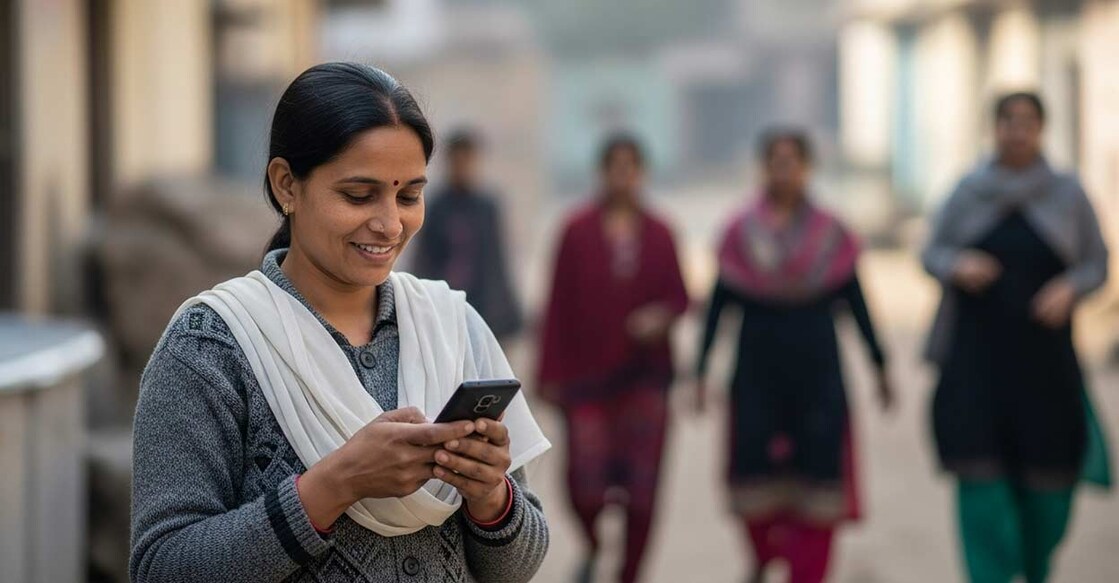
• The growing emphasis on women-centred welfare has led several Indian states to introduce unconditional cash transfer schemes targeted at adult women.
• These programmes seek to provide income support, enhance economic security, and improve women’s participation in household decision-making.
• Directing transfers to women can enhance their financial inclusion and strengthen their control over household resources, although social and institutional barriers may still constrain the extent of empowerment achieved through these transfers.
• The rapid proliferation of such schemes reflects a broader policy shift toward recognising women as independent economic agents rather than merely indirect beneficiaries of household welfare programmes.
• Cash transfer programmes targeted at women have become one of the fastest-growing categories of state-level welfare spending in India.
• By FY26, many states had introduced some form of unconditional monthly or annual transfer paid directly into women’s bank accounts, at an estimated aggregate cost of roughly Rs 1.7 lakh crore and reaching close to 12 crore women.
-
2 HOURS 33 MINUTES AGO
Holiday declared for educational institutions in Kozhikode, Wayanad on Wednesday

• The number of states running such schemes increased more than five-fold between FY23 and FY26.
• Direct income support placed in women’s hands is a powerful and cost-effective instrument for improving household welfare, advancing financial inclusion and reducing gender-based economic exclusion.
• The theoretical motivation draws on a substantial body of microeconomic literature demonstrating that income accruing to women generates proportionally larger household welfare improvements than equivalent income accruing to men.
• Women tend to allocate higher shares of marginal income to food, health, and children’s education, generating positive intergenerational externalities.
• Direct transfers into women’s individual bank accounts further confer the ancillary benefits of formal financial inclusion, digital literacy, and strengthened intrahousehold bargaining power.
Cash transfer schemes for women across states:
• Assam - Orunodoi Scheme
• Chhattisgarh - Mahtari Vandan Yojana
• Delhi - Mahila Samriddhi Yojana
• Himachal Pradesh - Indira Gandhi Pyari Behna Sukh Samman Nidhi Yojana
• Haryana - Lado Laxmi Yojana
• Jharkhand - CM Maiyan Samman Yojana
• Karnataka - Gruha Lakshmi Yojana
• Maharashtra - Mukhyamantri Majhi Ladki Bahin Yojana
• Madhya Pradesh - Mukhyamantri Ladli Behna Yojana
• Odisha - Subhadra Scheme
• Tamil Nadu - Magalir Urimai Thogai
• West Bengal - Annapurna Bhandar.
• Most schemes primarily target adult women from economically weaker households, with eligibility generally determined by age and annual family income thresholds.
• While some states impose additional conditions such as marital status, as seen in Chhattisgarh’s Mahtari Vandan Yojana (for married women over the age of 21), others adopt broader inclusion criteria, such as Karnataka's Gruha Lakshmi Yojana (for women over the age of 18 years).
• The monthly transfer amount also varies significantly across states, ranging from approximately Rs 833 under Odisha’s Subhadra Yojana to Rs 2,500 under schemes such as Delhi’s Mahila Samriddhi Yojana and Jharkhand’s CM Maiyan Samman Yojana.
Study by EAC-PM
The paper by the Economic Advisory Council to the Prime Minister (EAC-PM) provides a rigorous empirical evaluation of Odisha’s Subhadra Scheme and Maharashtra’s Mukhyamantri Majhi Ladki Bahin Yojana.
The Mukhyamantri Majhi Ladki Bahin Yojana was launched by the government of Maharashtra in June 2024. The scheme provides a monthly direct benefit transfer of Rs 1,500 to eligible women. As of FY2025-26, the programme enrolled approximately 2.38 crore beneficiaries at a budget outlay of Rs 38,310 crore. Following a comprehensive digital dragnet audit, beneficiary numbers declined to approximately 1.57 crore by FY2026-27, with over 86-90 lakh ineligible, deceased, or non-compliant users removed, reducing the budget outlay to Rs 26,500 crore. Eligibility criteria require women to be between 21 and 65 years of age, Maharashtra residents, with family annual income below Rs 2.5 lakh. Outsourced employees, voluntary workers, and contract workers earning below Rs 2.5 lakh are also eligible.
The Subhadra Yojana was launched by the government of Odisha on September 17, 2024, with the objective of empowering women from economically weaker sections. The scheme provides Rs 10,000 per year in two instalments of Rs 5,000 each, with a total planned benefit of Rs 50,000 over five years (2024-2029). The programme aims for holistic development through improving health and educational outcomes, encouraging financial independence and entrepreneurship, advancing digital financial literacy, and supporting women's personal and professional growth. Eligibility covers women aged 21 to under 60 who are Odisha residents and are either covered under NFSA/SFSS or have family annual income below Rs 2.5 lakh.
Key findings of the study:
• Both programmes generate large, statistically significant, and broadly consistent improvements in beneficiaries’ savings and consumption.
• Month-end account balances increase by approximately 84 per cent (Maharashtra) and 45 per cent (Odisha), a striking convergence that provides cross-programme validation of the magnitude of savings impact.
• The Maharashtra programme raised month-end balances by approximately 84 per cent (Rs 6,884 per beneficiary) and spending by approximately 46 per cent (Rs 1,349).
• The Odisha programme raised balances by approximately 45 per cent (Rs 6,887) and spending by 28 per cent (Rs 1,920).
• The programmes generate meaningful positive spill overs to male household members, whose financial positions improve and whose spending outflows decline consistent with reduced intra-household financial dependency as female beneficiaries’ income security improves.
• The spending basket analysis reveals that the consumption increases are qualitatively welfare-improving, with growing shares of spending directed toward lifestyle, medical, and educational purposes rather than inferior goods.
• UPI adoption accelerates significantly following transfer receipt in Maharashtra, documenting an important digital financial inclusion dividend.
• Such results are in conformity with global trends that reveal women-focused transfers generate stronger developmental outcomes than gender-neutral transfers.
• The policy implications are clear and actionable. Both programmes should be sustained and evolved toward cash-plus architectures that combine the income transfer with voluntary capacity-building, digital literacy, and SHG linkage components.
• Beneficiary targeting should be strengthened progressively through hybrid multidimensional verification frameworks that enhance precision while ensuring no deserving woman is excluded.
• Transfer amounts should be reviewed periodically for adequacy in light of inflation and evolving household expenditure patterns, with efficiency gains from improved targeting deployed to fund enhanced benefits and complementary services for beneficiaries.
 Add as a preferred source on Google