

How 'Drishyam' changed Malayalam cinema forever through one unforgettable climax

Mail This Article


There are very few moments in Malayalam cinema where an entire audience remembers exactly how a theatre felt.
The final stretch of Drishyam was one of them.
The silence before the police began digging. The growing panic inside the theatre. The unbearable pause before the reveal. And then that collective eruption when the camera revealed not Varun Prabhakar’s body, but the carcass of a calf buried in Georgekutty’s backyard. People did not merely watch the climax of Drishyam. They experienced it together. The film spread across Kerala not through marketing, but through whispers. ‘There’s a twist.’ ‘You have to watch the ending.’ ‘Don’t let anyone spoil it.’
By the time the credits rolled, something had shifted, not just for Mohanlal, but for Malayalam cinema itself.
When Drishyam released on December 19, 2013, expectations around Mohanlal were unusually uncertain. The superstar who had once defined Malayalam commercial cinema was going through a difficult phase at the box office. Films like Lokpal, Red Wine, Ladies and Gentleman, and Geethaanjali had failed to leave a meaningful cultural footprint. Audiences still respected Mohanlal the actor, but the unquestioned theatrical trust surrounding a ‘Lalettan movie’ had begun to weaken.
So when Jeethu Joseph’s modestly mounted family drama arrived during the Christmas season, many initially assumed it would be another routine domestic entertainer. Even the film’s first half encouraged that assumption. Life moved slowly in Georgekutty’s world. He ran a cable TV business in Rajakkad near Thodupuzha, argued with his wife Rani, worried about his daughters, and spent more time watching movies than engaging with society around him. Nothing about the film screamed ‘event cinema’.
And that was precisely the trick.
Jeethu Joseph understood something many thrillers forget. Suspense only works when audiences first believe in ordinary life. Before Drishyam becomes a thriller, it patiently becomes a family drama. The film spends time inside Georgekutty’s routines, his flaws, his stubbornness, and his affection for his family. By the time Varun Prabhakar enters their lives and everything spirals into catastrophe, viewers are no longer detached observers. They are emotionally embedded within the household.

That emotional investment became the film’s greatest weapon.
Most crime thrillers ask whether the guilty will be punished. Drishyam asks something much more uncomfortable: will audiences choose to protect someone who is legally wrong? The brilliance of Georgekutty lies in how carefully Jeethu Joseph manipulates audience morality. The film never presents Georgekutty as a conventional hero, nor does it frame him as a criminal mastermind from the beginning. He is simply a father reacting to fear.
And yet, somewhere during the film, viewers begin crossing ethical lines alongside him.
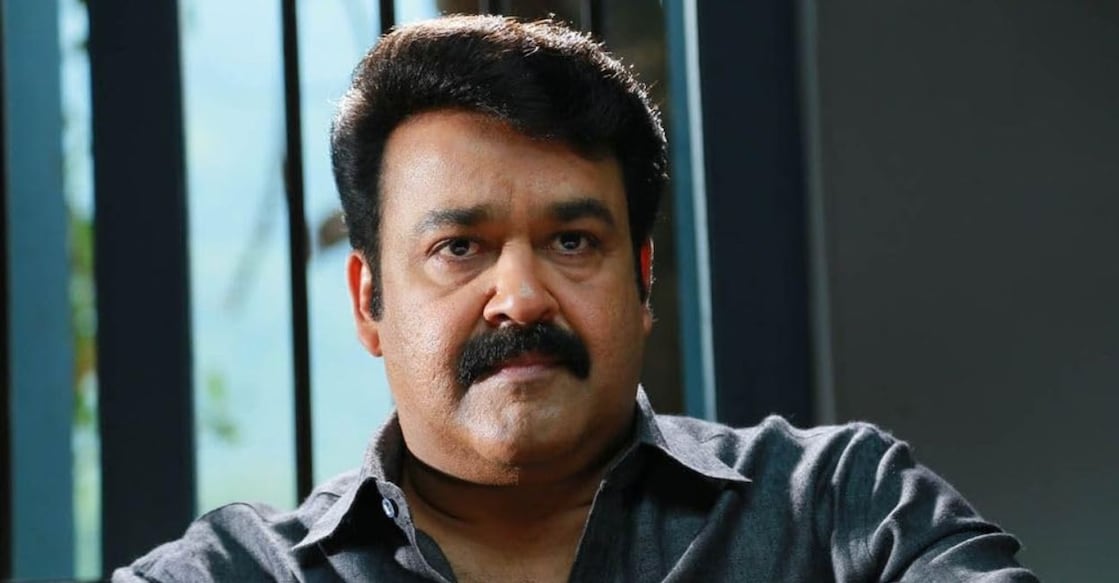
When Sahadevan brutally interrogates Georgekutty in the police station, audiences are not watching Mohanlal the superstar absorb punches. They are watching a frightened man trying desperately to hold his family together. The distinction matters. Drishyam stripped Mohanlal of theatrical heroism and rebuilt him through vulnerability. Georgekutty does not overpower systems physically. He survives through observation, memory, patience, and storytelling.
In many ways, Drishyam is a film about cinema itself.
Georgekutty’s obsession with movies initially appears almost comedic. His family complains about it constantly. He is undereducated and disconnected from intellectual spaces. But slowly, cinema reveals itself as his education. Every thriller he watched, every investigation scene he absorbed, every cinematic trick he internalised quietly transforms into survival instinct.
Society sees him as an ordinary cable operator. Cinema turns him into the smartest man in the room.
That idea resonated powerfully with Malayalam audiences because Georgekutty felt deeply familiar. He was not aspirational in the traditional sense. He represented the middle-class Malayali man who consumed stories obsessively, who understood human behaviour more than institutions realised, and who feared systems that seemed designed to crush ordinary people. One of the most important tensions in Drishyam is class. Georgekutty stands alone against police power, political influence, and bureaucratic authority. His fight is not just against the law, but against a structure that assumes men like him cannot outthink it.
And audiences surrendered willingly.
What followed was unprecedented. Drishyam became the first Malayalam film to cross ₹50 crore worldwide and ran in theatres for more than 150 days. More importantly, it travelled. Remakes emerged across languages and countries, from Hindi, Tamil, Telugu, and Kannada versions to Sinhala adaptations and even Chinese reinterpretations inspired by its core structure. In Hindi, Ajay Devgn stepped into Georgekutty’s shoes, introducing the story to an entirely new audience.
The film also altered the way Indian cinema viewed Malayalam storytelling. Long before the ‘content cinema’ conversation became fashionable nationally, Drishyam demonstrated that a tightly written screenplay could overpower scale, spectacle, and formula. The film did not depend on Mohanlal’s stardom to function. In fact, its greatest strength was how completely it humanised him.
Ironically, the film’s success also reshaped Jeethu Joseph’s career in complicated ways. After Drishyam, audiences began entering every Jeethu film expecting a giant twist. Suspense became his signature whether he wanted it or not. The success that liberated him creatively also trapped him inside audience expectation.
Then came Drishyam 2.
Released directly on OTT through Amazon Prime Video in 2021 during the pandemic, the sequel arrived under impossible pressure. Sequels to beloved thrillers often collapse under the weight of memory. But Drishyam 2 understood that Georgekutty’s greatest conflict was no longer external. It was psychological.
The Georgekutty of the sequel is not triumphant. He is exhausted.
His wife carries trauma. His daughters live under constant fear. Georgekutty himself has lost the ability to exist casually. Survival has become permanent performance. Even as a new investigation led by IG Thomas Bastin IPS tightens around him, the film quietly reveals the emotional cost of winning. One of the sequel’s most haunting lines arrives when Bastin realises the scale of Georgekutty’s preparation: ‘It was not us watching him. He was always watching us.’
That line captures why the character endures.
Georgekutty is not fascinating because he buried a body or fooled the police. He fascinates audiences because he transformed ordinary intelligence into resistance.
Now, with the third film preparing for release, anticipation feels different again. The brief glimpses released so far suggest a visibly shaken Georgekutty, a man carrying guilt more openly than before. Jeethu Joseph himself has hinted that the new film may move away from relying purely on twists. That decision feels fitting. After all, the emotional power of Drishyam was never really about shock.
It was about recognition.
Audiences saw themselves inside Georgekutty’s fears, his desperation, his love for his family, and the impossible choices he made to protect them. Years later, that emotional connection remains intact.
Not because viewers believed Georgekutty was innocent.
But because Drishyam convinced them they might have done the same thing.
