



















Kochi: A youth suspected to be behind Jisha’s murder was living in a rented accommodation at Malamuri in Perumbavoor till a month ago, according to the information collected by the probe team.
Investigators suspect that the culprit abused Jisha after her death and mangled the body to mislead the police into suspecting migrant labourers.
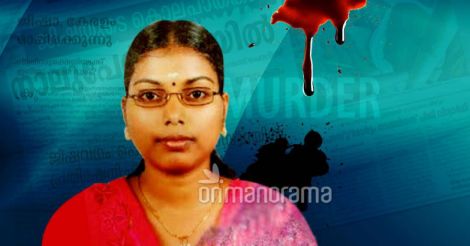
Jisha rape-murder: one more taken into custody, but is he the real culprit?
Neighbours told the police that the suspected youth had earlier visited the residence of Pappu, Jisha’s father, to meet her sister Deepa.
The investigators, however, were yet to find the motive of the murder of Jisha, who had led a frugal life. In most cases, motives lead the police to the culprit.
Meanwhile, the state Women’s Commission Chairperson, K. C. Rosakutty, spent about three hours with Deepa and recorded her statement on Saturday. The police were hoping to get leads from her statement.
Deepa had earlier worked in a studio at Perumbavoor, and Jisha had visited the place to get photographed. The photograph was meant to be uploaded to matrimonial websites.
Jisha’s mother Rajeshwari was concerned over her 29-year-old daughter remaining single, and was hoping to marry her off after the completion of their house at Thrikka in Mudakuzha.
The mother had sought financial help, even on the day Jisha was murdered, from a few people in Vaykkara, where Rajashwari had lived with her husband Pappu before they separated.
Meanwhile, the post-mortem examination found that Jisha had eaten food that was not cooked at home, the day she was killed. Police felt she might have eaten out or someone else had brought her food.
Rajeshwari, however, was unaware of what Jisha had eaten on that fateful day. Investigators, however, felt the forensic finding would provide headway in the sensational case.
State police chief T. P. Senkumar, meanwhile, met forensic expert and former director of medical education Dr B Umaduttan at the latter’s residence here.
The meeting, also attended by rural SP Yathish Chandra and DySP M Jijimon of Aluva crime detachment, lasted for about two hours.
Dr Umaduttan recommended a detailed examination of blood found in Jisha’s nails since she might have tried to defend herself. He also pointed out that body fluids found—if the victim was abused—were critical to cracking cases with no eyewitnesses.
