

‘We just want him back’: Family’s desperate bid to bring Malayali seafarer stranded in Iranian port home

Mail This Article


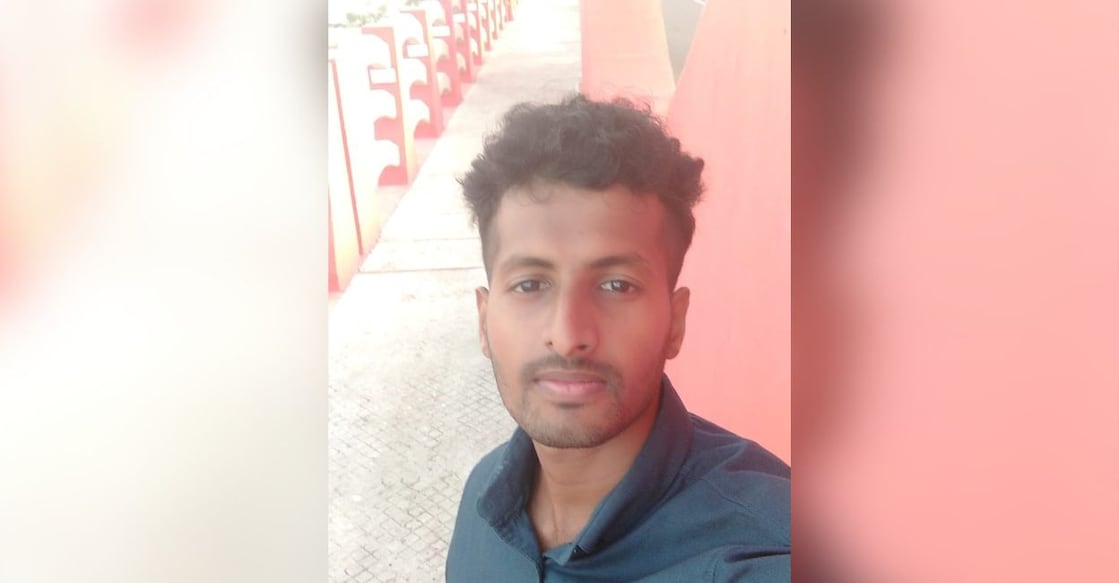
The calls come without warning, often cutting off mid-sentence, and that is the only way 29-year-old Jerin George’s parents in Haripad know he is still safe.
Stranded aboard an Iranian vessel since the outbreak of the West Asia conflict, the young seafarer has been unable to return home, leaving his family scrambling for help. In the weeks since, his parents have written to authorities, approached political representatives, and tried every possible contact they have, but with little response. “We can only speak when he calls us. We don’t know how he is most of the time. All we want is for him to come back to us. For us, he is everything,” says his mother, Lilly George.
Jerin left home eight months ago for work, taking up a position as an engine rating technician with Sea Star Shipping Company. Like many young men from coastal Kerala, he went abroad with borrowed money, hoping to ease his family’s financial strain. His return was expected by March 3. That date has long passed.
Now, more than 45 days into the escalation of tensions in West Asia that began on February 28, he remains stuck on the ship, unable to leave as the situation around him grows increasingly uncertain.
For his parents, both daily wage workers, the wait has been relentless. “We sent him there with borrowed money and are still paying the interest,” Lilly says. “He has not received his salary for five or six months.”
Their daughter, Jerin’s younger sister, has been trying to help in whatever way she can, drafting letters and appeals in a language her parents are not fully comfortable with. But the responses have been slow, if they come at all. The first signs of trouble came when Jerin called home as the conflict began to intensify. His ship was then at a port in Dubai.
“He called us and said everything around him had gone dark,” Lilly recalls. “There were no flights, nothing moving. We told him what we had seen on the news about the Iran-Israel conflict. He did not know much because he was on the ship. Then they were told they had to return to Iran because it was an Iranian vessel.”
Since then, the uncertainty has only deepened.
Communication is sporadic and fragile. Jerin carries a Kerala SIM card, which he uses to call home when he finds a signal. But his family cannot reach him directly. His cousin Varghese says those calls are often brief and unpredictable. “He called two or three times the other day, but we cannot call him back,” he says. “There is no way to reach him from here.”
What Jerin has managed to share paints a difficult picture. Several ships are anchored together in the region, with limited access to basic resources. There are other Malayalis aboard nearby vessels, all navigating the same uncertainty.
“They are raising their phones with rods from the ships to catch signal,” Varghese says. “Food is limited. The area where his vessel is now is calm, but outside, there have been shell attacks and bombings.”
Back home, the family’s attempts to seek help have been met with frustration. Ajith Kumar, Jerin’s line manager and an agent from Uttar Pradesh, has been their main point of contact regarding his employment. But communication has been difficult, both due to language barriers and a lack of concrete updates.
“We try to ask him about our son with the help of relatives,” Lilly says. “He keeps saying he will do something, that everything will be fine. But nothing has happened so far.” The family even suggested that Jerin’s pending salary be used to arrange his return, including visa expenses. That, too, has not moved forward. According to Varghese, the agent has indicated that action can only be taken once the vessel reaches Dubai port again. But there has been no sign of that happening.
In the meantime, the family has been reaching out to authorities wherever they can. They have submitted a plea to External Affairs Minister S. Jaishankar through MP K. C. Venugopal, requesting urgent intervention. Appeals have also been filed through the Kerala government’s CM Connect portal. Letters have been sent directly to the Ministry of External Affairs and the Indian Embassy in Tehran.
So far, they say, there has been no meaningful response.
Attempts to reach out for help during the ship’s earlier stop in Dubai also led nowhere. “We contacted people we know there and even tried the embassy,” Varghese says. “They told us that help could have been provided if it was by air or road. Since this is by sea, they said they could not do anything.” The limitations of jurisdiction and logistics have left families like Jerin’s in a painful limbo.
There have been brief moments of reassurance. The captain of Jerin’s ship, an Iranian national, has spoken to the family and urged them to stay strong. But reassurance is a thin substitute for certainty. Before the vessel moved toward Iran, Jerin had managed a video call from Dubai. Since then, even that has not been possible.
For Lilly and her husband, each day begins and ends with the same thought. Whether the phone will ring. Whether their son is safe. Whether someone, somewhere, will finally step in. “It has been more than 45 days now,” she says. “It is scary.” There is no clear timeline for when Jerin might return, or what it will take to bring him home. For now, the family is left with fragments of conversation, uncertain assurances, and the hope that their appeals will reach someone who can act.
