

Summer heat makes Kerala elephants edgy, violent incidents on rise at festivals

Mail This Article


Kochi: With temperatures soaring past 40°C this summer, the season has already seen a surge in snake sightings and bite cases in Kerala, as wildlife struggles to cope with shrinking habitats and rising ground temperatures. But beyond the immediate human concern, another, less visible crisis is building, among the state’s captive elephants, central to its temple festivals.
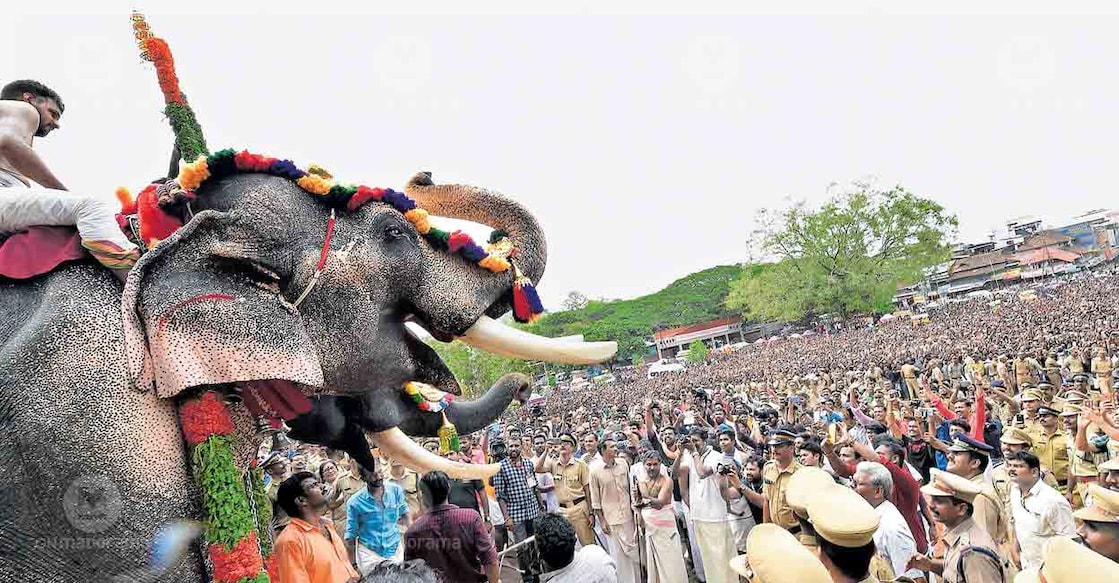
Figures from the Social Forestry division of the Forest Department suggest that the peak summer is pushing the jumbos to a psychological breaking point, triggering a rise in “running amok” and violent incidents involving captive elephants during the January-May festival season.
The ‘elephant capital of Kerala’, Thrissur, which hosts the largest number of festivals featuring elephants, has already recorded 19 incidents by April. With several major events lined up in May and temperatures continuing to climb, officials fear the district will easily surpass last year’s total of 26 during the same period.
Ernakulam has reported 6 incidents so far, double the 3 cases recorded during the same period last year. In Palakkad, known for its dry and intense heat, 9 incidents have been logged in the first four months of 2026, already exceeding the 7 recorded in the previous season.
These three districts account for a large share of festivals involving elephants, while other districts have reported fewer cases. Regions such as Wayanad, Idukki, and Kottayam have not recorded any incidents so far. However, officials caution that the real numbers may be significantly higher.
“We report only high-intensity incidents involving violence, injuries, deaths, or major panic,” a senior forest official told Onmanorama. “There are many other cases where elephants become agitated or disobey commands, but they go unreported. Often, owners or mahouts hide such incidents fearing a ban, as the festival season is when they earn lakhs by parading elephants,” he added.
Forest officials and experts say rising temperatures are a major factor driving the surge. According to Manoj K, Assistant Conservator of Forests (ACF), Social Forestry, Thrissur, the district alone hosts over 2,000 festivals annually and has more than 105 registered elephants, the highest in Kerala.
“Most elephants in Kerala are over 50 years old and suffer from various ailments, much like humans. While elephants in musth are barred in advance, we are seeing an increase in violent incidents during festivals. The rising atmospheric heat is a major catalyst. Elephants obey mahouts largely out of fear of pain, but when their bodies overheat, their tolerance levels drop significantly,” Manoj said.
In Palakkad, ACF Sumu Scaria echoed similar concerns, noting that regulatory measures have only partially contained the problem.
“Elephants are overstressed, and their workload has increased. Many have died, but the number of festivals hasn’t reduced. So the remaining elephants are used more frequently. We restrict direct exposure to sunlight between 11 am and 4 pm, but even then, the stress is rising due to the heat,” she said.

A biological disadvantage
Experts describe the situation as a “metabolic meltdown” linked to Kerala’s changing climate. Elephants lack sweat glands across most of their bodies and rely on flapping their ears to dissipate heat. When made to stand on tarred roads or stone surfaces that can reach temperatures of 50°C, this cooling mechanism becomes ineffective. Stimuli like loud percussion or firecrackers, which they might tolerate earlier in the season, become unbearable triggers in peak summer.
Elephant expert PS Easa said the animals are biologically ill-equipped for such conditions.
“Elephants generate a huge amount of internal heat, but they cannot sweat due to lack of sweat glands. They rely on ear-flapping to cool down, which is often insufficient when temperatures are extremely high,” he said.
“By mid-afternoon in a heatwave, they are effectively simmering from the inside out. In the wild, they use mud as a protective layer against heat, but during festivals they are cleaned and decorated, which makes things worse,” he added.
Easa also highlighted the human factor. “Mahouts are also exhausted in this heat. Their behaviour and attentiveness are crucial. If elephants are not properly cooled and cared for, they will get agitated.”
Dr Arun Zachariah, Chief Forest Veterinary Officer, explained that elephant thermoregulation is far more complex than in most animals. “In the wild, elephants adapt their diet seasonally. During rains, they graze on fresh grass for energy. In summer, they switch to browsing, which means eating leaves, bark, and twigs that retain moisture and provide hydration. Captive elephants don’t have this flexibility. They are deprived of both dietary adaptation and natural cooling strategies,” he said.
“The physiological impact is profound. We all feel irritable on a humid 40°C day. For elephants, that stress is magnified ten-fold. High temperatures flood their system with cortisol, lowering their patience. When they cannot cool their core body temperature, their ‘patience meter’ hits zero,” Zachariah added.
He also raised concerns about the practices. “Using trucks was meant to reduce stress, but it now enables owners to shuttle elephants rapidly between festivals. An elephant needs to walk at least 40 km a day to regulate metabolism. Instead, they get little exercise during back-to-back events, increasing stress,” he added.
Regulations and realities
Forest officials say strict safety and welfare guidelines are in place and are being monitored during festivals. According to Mohammed Zainulabdin, ACF, Social Forestry, Malappuram, these include maintaining barricades at least five metres away from elephants, banning high-decibel instruments like Nashik dhols, DJ systems, intense lighting, and fireworks near elephants.
Elephants that are in musth, injured, or unwell are prohibited from being used. Continuous walking beyond three hours or transport beyond six hours without breaks is not allowed. Walking on hot tar roads without rest is also banned.
Festival committees are responsible for ensuring adequate food and water, at least 200 litres per elephant, along with cooling breaks every two hours. They must also ensure that mahouts are not intoxicated and arrange basic infrastructure such as generators. Despite these measures, enforcement gaps and economic pressures persist.
With temperatures expected to remain high and major festivals still ahead in May, officials and experts warn that the situation could worsen.
The issue comes at a time when the debate over parading elephants is already deeply polarised. While many devotees see caparisoned elephants as integral to temple traditions and festivals, animal welfare advocates have increasingly pushed for alternatives such as robotic elephants, which is gaining ground in some parts of the state.
