

India exercised right to respond, carried out ‘measured, non-escalatory’ strike to deter any further attacks: Govt
Mail This Article
India carried out a "measured, non-escalatory, proportionate, and responsible" military strike targeting terrorist infrastructure in Pakistan, aimed at deterring and pre-empting future attacks, Foreign Secretary Vikram Misri announced hours after the country responded to the Pahalgam terror attack.
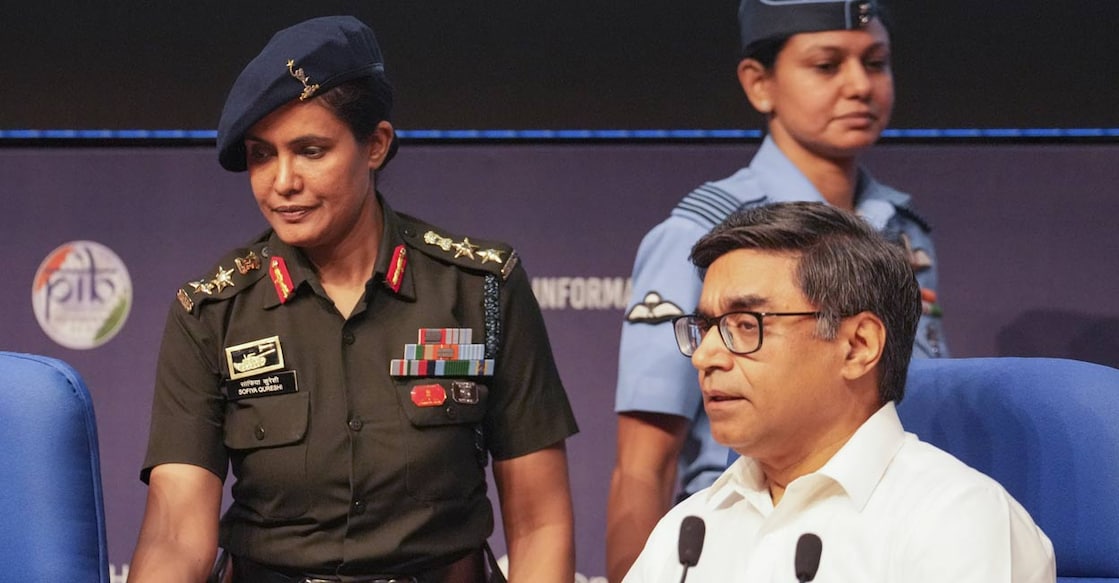
Speaking at a packed press conference alongside Col Sofia Qureshi and Wing Commander Vyomika Singh, Misri stated that the action became imperative after it became clear that Islamabad had taken no concrete steps to dismantle terror networks operating on its soil or in territories under its control.
“Intelligence monitoring indicated that Pakistan-based terrorist modules were preparing for more attacks,” he said, adding that India had no option but to act in self-defence.
The retaliatory operation, codenamed Operation Sindoor, involved precision strikes with missiles and drones on nine terror camps in Pakistan and Pakistan-Occupied Kashmir. According to Misri, the objective was to dismantle key terror infrastructure and neutralise operatives poised to infiltrate India. “It was essential to act both to deter and to pre-empt,” he said. “The strikes were calibrated and focused, targeting only terror facilities.”
Referring to the April 22 Pahalgam attack, Misri confirmed that 26 Indians—mostly tourists—were brutally killed by members of the Lashkar-e-Taiba. It was the deadliest terror strike on civilians since the 2008 Mumbai attacks.
He described the attack as marked by "extreme barbarity," noting that many victims were executed at close range in front of their families. “The attackers sought not just to kill, but to traumatise survivors and send a chilling message,” he said.
Misri underscored that the strike was an attempt to disrupt the growing sense of peace and normalcy in Jammu and Kashmir, particularly targeting its tourism-driven economy, which saw a record 23 million visitors last year.
“The calculation was clear: hurt development and create conditions conducive for ongoing cross-border terrorism,” he said, adding that the attack also seemed aimed at provoking communal tensions across India. He credited the restraint and resilience shown by the Indian public in thwarting these divisive aims.
Misri also pointed to The Resistance Front (TRF), which claimed responsibility for the Pahalgam attack, calling it a proxy for the Pakistan-based and UN-designated terror outfit Lashkar-e-Taiba. He highlighted that India had provided detailed intelligence on the TRF to the UN’s 1267 Sanctions Committee in 2024.
He confirmed that law enforcement agencies have made significant progress in identifying the attackers, with inputs from eyewitnesses and other intelligence. “We now have a clear picture of the individuals and groups involved in planning and backing this assault,” he said.
(With PTI inputs)
 Add as a preferred source on Google