

Cigarette stain, stent & DNA help Kerala identify Mundathikode cracker unit blast victims
Mail This Article


When relatives of one of the victims in Mundathikode firecracker unit blast struggled to identify the charred remains, the forensic surgeons asked for something specific. It was difficult to find hints in the dismembered, blackened body parts. The victim's son told them he had undergone an angioplasty. The stents implanted inside the body eventually helped in the identification.
Where body marks and tattoos failed, the forensic wing of Thrissur Medical College looked for anything that was intact in what they recovered. In the process, they also probed the person's profile, habits, defects and diseases. In one case, dental caries (a decayed tooth) helped relatives identify a victim.
The identification process was done in an open space, and whenever there was confusion among relatives, the authorities stepped in and asked about the lifestyle and medicines suspected victims took.
"This was really helpful. We identified one person with a diabetic toe, which was the only way of identifying him. In another case, identification was completed, but relatives and friends looked unconvinced. They said that the victim had a sizeable arm bulk, which did not match the body that was to be handed over. We understood that he went to the gym frequently and had well-developed muscle mass. A close scrutiny showed there were shreds of ears sticking to the upper arm and we also spotted an earring," said Dr Hitesh Shankar, Professor, Department of Forensic Medicine, Thrissur Medical College.
One body, which is yet to be identified, has been kept at the Medical College mortuary. A victim, who was a chain smoker, was identified by spotting stains in the mouth.
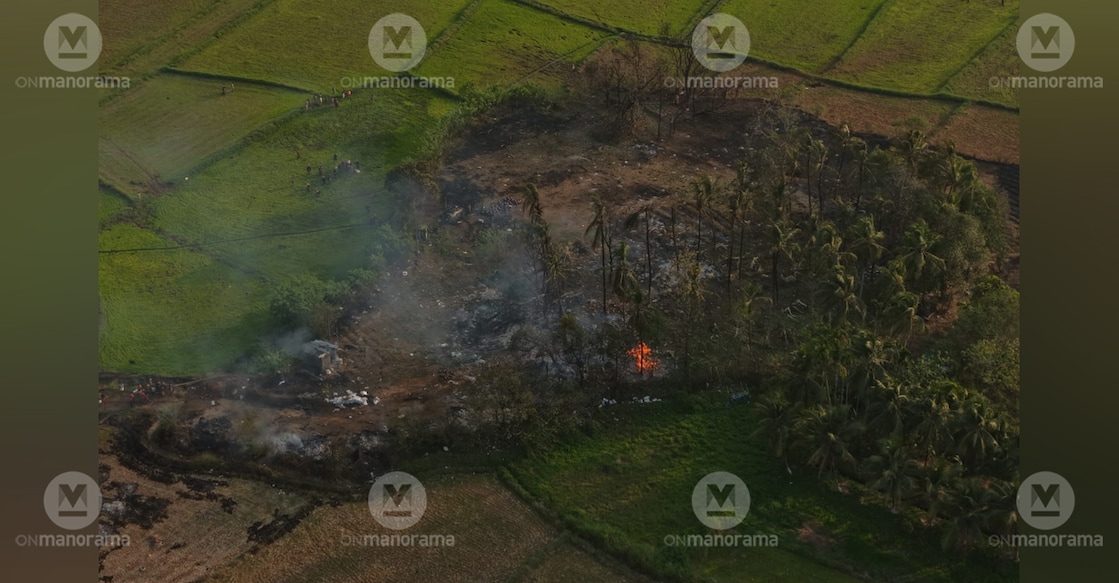
The next process is the identification of four people who are reported missing by their relatives. Over 100 body parts were gathered from the paddy field and from within the perimeter of the accident site. Samples have also been collected from the relatives.
A specialist team of the Molecular Forensics & DNA Technologies division of Rajiv Gandhi Centre for Biotechnology (BRIC-RGCB) is now tasked with DNA extraction and sequencing of around 130 body parts and then cross-matching with the samples collected from the relatives. "The first step is to find out if the body parts of the missing people are included in the samples which we have received. Once this is done, we will be able to give some answers to the relatives," said a source associated with the DNA identification process.

The forensic wing of the medical college has given parts of burnt flesh, bones and teeth to the RGCB team for identification. The RGCB team is equipped with an advanced bone DNA extraction unit for the process, which was effectively used for the identification of missing people during the Wayanad landslide in 2024. Bone and teeth are considered the best resource for victim identification as DNA is preserved better in the calcified matrix, according to an article published in the Forensic Science International.
Following the Puttingal temple firework disaster in 2016, the DNA analysis by the RGCB identified 15 of the 17 missing people by comparing DNA profiles obtained from the burnt flesh and bone samples. In 2017 Ockhi cyclone disaster, as many as 74 unidentified, decayed dead bodies recovered from the sea were identified using DNA analysis by comparing with 536 blood samples collected from the relatives, notes an RGCB document.
As of Monday, officials have confirmed a total of 13 deaths. The latest fatalities include Rakesh (29), a native of Kundannoor, who died on Monday, and Unnikrishnan (55), a native of Edappal, who died on Sunday evening. Officials said the DNA identification process for missing persons is ongoing.
