





















Bengaluru: Bowing to public pressure, a bill to legalize traditional buffalo race "Kambala" and bullock cart races in Karnataka was passed by the state Assembly Monday with all parties backing the move.
The Prevention of Cruelty to Animals Act, 1960, was amended in its application to Karnataka by the bill which was tabled after the clamor for Kambala grew, spurred by the success of pro-jallikattu (taming of bull) stir in Tamil Nadu.
Reacting to the state government's decision, the People for Ethical Treatment of Animals (PETA) said that allowing this "cruelty" to be afflicted on animals is "shameful" and leaves a "black mark" on India.
PETA said India has long enjoyed the admiration of nations for its cultural reverence for animals rights but today it moved "backward" when other countries are progressing by banning the use of animals in circuses, bullfights, and other "cruel" spectacles.
Piloting the Bill, animal husbandry minister A Manju said Kambala was a traditional folk sport and involved no cruelty to animals and it was a "popular will" that it be allowed.
A committee headed by law minister T B Jayachandra had recommended that Kambala, as also bullock cart race, be permitted as no betting or cruelty to animals was involved and it related to agriculture and farmers' beliefs, Manju said.
The government did not want to take the ordinance route and preferred legislation to legalize them. Heeding to his appeal, the bill was supported by all parties and passed.
Kambala Committees and various Kannada outfits had recently held protests against the ban and demanded it be allowed.
A Karnataka High Court division bench had in November last year stayed holding of Kambala on a petition by PETA challenging it in view of orders passed by the Supreme Court on jallikattu.
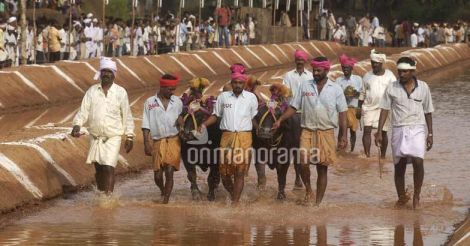
Kambala, held from November to March, involves a pair of buffaloes tied to the plough and anchored by one person.
They are made to run in parallel muddy tracks in a competition in which the fastest team wins. It is believed to be held to propitiate the Gods for a good harvest, besides being a recreational sport for farmers.
