























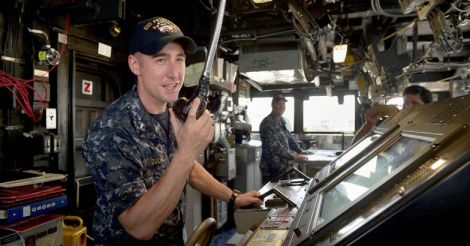
Onboard INS Jalashwa: India, Japan and the US kicked off their trilateral 'Malabar' naval exercise on Monday featuring 95 aircraft, 16 ships and two submarines, seeking to forge "deeper" military ties amid growing Chinese assertiveness in the region.
USS Nimitz, the world's largest aircraft carrier, will figure in the five-day exercise in the Bay of Bengal involving the US, Japanese and Indian maritime forces that is aimed at "achieving deeper military ties between the three nations."
The 21st edition of the Malabar exercise, conducted ashore and at-sea, assumes significance as it is being held at a time when China has become more assertive and the forays by their submarines in the Indian Ocean region have increased. China has stepped up its activities in the Indian Ocean in recent years and is building ports in Sri Lanka, Bangladesh and Pakistan.
It also comes amid the current military stand-off between the armies of India and China in the Sikkim section and Beijing ramping up its naval presence in the South China sea.

"I would like to say that the strategic message to China is the exact strategic message that we are sending to Canada or to Republic of Korea or to Australia or to any other maritime force," US Navy commander rear admiral William D Byrne Jr said when asked by newsmen whether the exercise was intended to send any "strategic message" to China.
"Operating together and practicing together is a good thing. It is because - we are better together and we learn from each other. We know who we are and what is our capability. That is the strategic message to the entire world. I think, we are setting a great example here in Malabar (exercise) 2017," he told reporters after the inauguration of the Naval Exercise off the coast of Chennai.
Responding to a query whether the exercise had anything to do with the standoff in Sikkim, Indian flag officer, commanding-in-chief, Eastern Naval Command, HCS Bisht said, "it has nothing to do with Malabar Exercise."
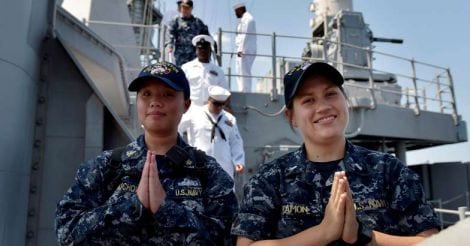
"The process of Malabar exercise starts a year before (its scheduled beginning) and the initial planning takes place six months in advance. The stand-off you are talking about has got nothing to do with the Malabar exercise. Through this exercise we learn from each other," he said.
The exercise would include professional exchanges on carrier strike group operations, maritime patrol and reconnaissance operations, surface and anti-submarine warfare.
Medical operations, damage control, explosive ordinance disposal, helicopter operations and anti-submarine warfare would also take place.
The at-sea exercise includes events such as submarine familiarisation, air defence exercises, medical evacuation drills, surface ware fare exercises, communication exercise and search and rescue operations.
Indian, Japanese and the US maritime forces have an understanding and knowledge of shared working environment at the sea, the release said.
Read: Latest Nation News | Dalit girls denied temple entry in Gujarat
