























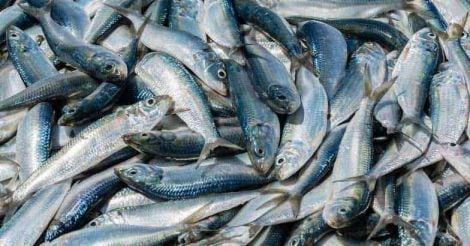
 The draft bill that seeks to ensure quality of fish that is auctioned and sold will be discussed by the cabinet in its next meeting.
Kollam: In the wake of large-scale seizure of adulterated fish, the Kerala government is planning a new set of rules, including jail term for those selling fish laced with chemicals. The new norms will also facilitate the sale of fish directly by fishing workers thus avoiding the role of middlemen.
The draft bill that seeks to ensure quality of fish that is auctioned and sold will be discussed by the cabinet in its next meeting. The government is planning to introduce the bill to either promulgate it as a law or as an ordinance. The draft bill has stricter norms than the existing rules and regulations.
The sudden move by the fisheries department is prompted by the large-scale arrival of fish preserved in chemicals like formalin from neighbouring states and the exploitation of fishing workers by middlemen denying the right price for their catch.
According to the existing food safety rules, a maximum fine of Rs 10,000 can be slapped for selling fish laced with chemicals. The government doesn't have the powers to seize such fish.
If it is proved that the fish has been laced with chemicals, as per prevailing norms, the cargo can only be sent back to the state from where it originated. As per new norms, those responsible for chemically-contaminated fish will have to pay a fine ranging from Rs 1 lakh to Rs 2 lakh and even get a jail term.
Stricter checking
Apart from check posts, inspections will be intensified at fish markets, said health minister K K Shylaja. If presence of chemicals is detected during preliminary tests conducted using paper strips developed by the Central Institute of Fisheries Technology (CIFT), a case will be registered immediately. If the presence of chemicals is confirmed in further tests at the laboratory of CIFT, proceedings will be initiated under the food safety act. Help of cops will be sought for carrying out inspections.
Exports to be hit
The presence of chemicals like formalin could affect the export of fish from Kerala. Markets like the US and Europe allow the presence of 0.2 microgram formalin in fish under strict conditions. At the same time, 8.5 microgram unit of formalin was found in prawns here. India exported fish worth Rs 37,400 crore last year. Though chemicals were found in fish bought from outside the state, it still could affect the export prospects since it was caught in Kerala. At present, Sri Lanka is facing such a ban, while Indonesia and Thailand are facing the treat of a ban.
100 amendments
The Food Safety and Standards Authority of India (FSSAI) has proposed a new special section to the Food Safety and Standards Act (2006) to crack down on food adulteration, apart from 100 amendments.
The FSSAI has sought seven years' jail term and a fine not less than Rs 10 lakh if an adulterant is added to food that renders it injurious for human consumption and can cause death or grievous hurt. The jail term can be extended to life sentence depending upon the severity of the crime.
The consumer protection bill that is awaiting the Parliament nod also proposes similar punishments. Another recommendation seeks six months to two years' jail term and a fine of up to Rs 5 lakh for preventing officials from carrying out their duty and threatening them.
Read: Latest Kerala News | Congress MLA urges AMMA to reconsider decision on Dileep
