
























Michael Jackson's amazing dance was powerful and had a big impact on youngsters. Fans around the world have tried to imitate his smooth slides and spins and, of course, his signature style moonwalk. Jackson executed dance moves we thought were impossible, at the time and even now. Almost every fan tried to dance like him, but only very few could pull it off.
In a study published in the 'Journal of Neurosurgery', the researchers described the basics of spinal biomechanics to show just how impressive the Jackson's feat was.
Trying to copy Jackson's difficult moves is giving rise to new forms of spinal injuries among dancers, warn scientists who decoded how the 'King of Pop' pulled of his iconic gravity-defying tilt.
In a 1987 music video "Smooth Criminal," Jackson pitches forward 45 degrees, with his body straight as a rod and his shoes resting on the ground, and holds the position.
Three neurosurgeons from the Postgraduate Institute of Medical Education and Research in Chandigarh - Nishant S Yagnick, Manjul Tripathi, and Sandeep Mohindra - set out to examine the antigravity tilt introduced in "Smooth Criminal" from a neurosurgeon's point of view.
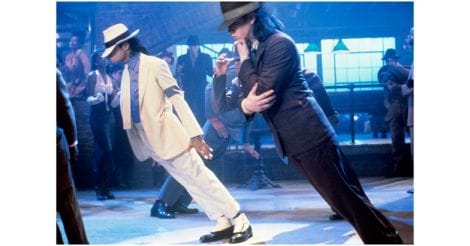
However, they warn that as dancers attempt to follow Jackson's example and try "to jump higher, stretch further, and turn faster than ever before", neurosurgeons are witnessing new forms of spinal injuries.
The neurosurgeons documented how the antigravity tilt was accomplished, taking into account the talent and core strength of the artist, as well as his inventiveness and use of a patented aid, that together seem to move his body past human limits.
Even the strongest of dancers can only maintain a 25- to 30-degree forward tilt from the ankle, they said.
