























 The sense of modernity and the perpetual power to refit his cinematic ensemble for the new and changing world made Sasi relevant to the modernists
I.V. Sasi, the non-conformist Malayalam film-maker of the 1970s and 80s, is no more. He passed away in Chennai on Tuesday. Born Irruppam Veedu Sasidaran in Kozhikode on March 28, 1948, he was audacious in his experiments with mainstream cinema. His first film Ulsavam (1975) starring K.P. Ummer, Sukumaran, Raghavan and Sreevidya did not have his credit in the titles. But, the film catapulted him to instant fame, thereby giving the new director the much-needed boost.
When his contemporaries like A.B. Raj and Sasikumar walked down the safe and formula-driven boulevards precast by Tamil and Telugu filmdom, I.V. Sasi was forging new ties with the best of creative minds to ride the 'mainstream new wave' in Malayalam.
Critics and film buffs hail the opening shots of his film Ulsavam as the best of its class, the frame trying to segue multiple entities like never before. The shot uses the 'protagonist against the infinite' technique of introduction which contrasts men and living beings against the immensity of nature, a technique widely used in European films of yore.
Also read: IV Sasi’s name synonymous with good films: Innocent
I.V. Sasi's craft is denoted by a profound understanding of the medium. The director enthusiastically embraced new technologies and formats. His film Avalude Raavukal was the second Malayalam film to be certified in 'A' category. As the film turned out to be a huge success, with remakes coming out in all major Indian languages, the director was elegantly creating a nuance for eroticism in Malayalam. This, critics say, is the director's greatest contribution to cinema.
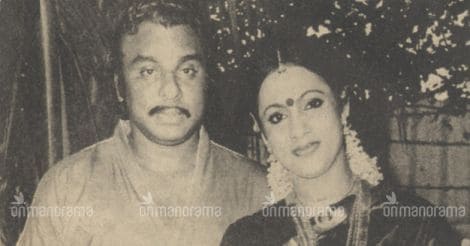 IV Sasi and Seema. File photo/Manorama
His partnership with stalwarts like M.T. Vasudevan Nair (Aaroodam), John Paul (Athirathram) and Padmarajan (Itha Ivide Vare) elevated Malayalam cinema to a new plane.
He won the Kerala State Award for the best art director in 1976 (Anubhavam), the state award for the second best film in 1984 (Aalkoottathil Thaniye), and best director in 1989 (Mrugaya). The M.T. Vasudevan Nair-scripted Aaroodam won the national award for the best film for national integration in 1982.
The sense of modernity and the perpetual power to refit his cinematic ensemble for the new and changing world made Sasi relevant to the modernists too. Rather, time failed to catch up with the director who boldly cast his wife, Seema, in characters which were understated, subtle and revolutionary (Aalkkottathil Thaniye and Aksharangal).
